
In April of 2021, I found myself sitting outside a tattoo shop in Lynchburg, Virginia, at two-thirty in the morning. I would be doing this for five consecutive nights.
I would arrive with a folding camp chair, a blanket, and a travel mug full of coffee. The shop wouldn't open until noon. The sun wouldn't come up for hours. Most days, I was completely alone when I arrived. Over time, I started noticing the same things every morning. The city buses beginning their routes. Employees arriving to open nearby businesses. The maintenance worker who crossed the parking lot with a broom and dustpan. Even the same vehicles making their way through the shopping center on their morning commute.
Eventually, the sun would rise.
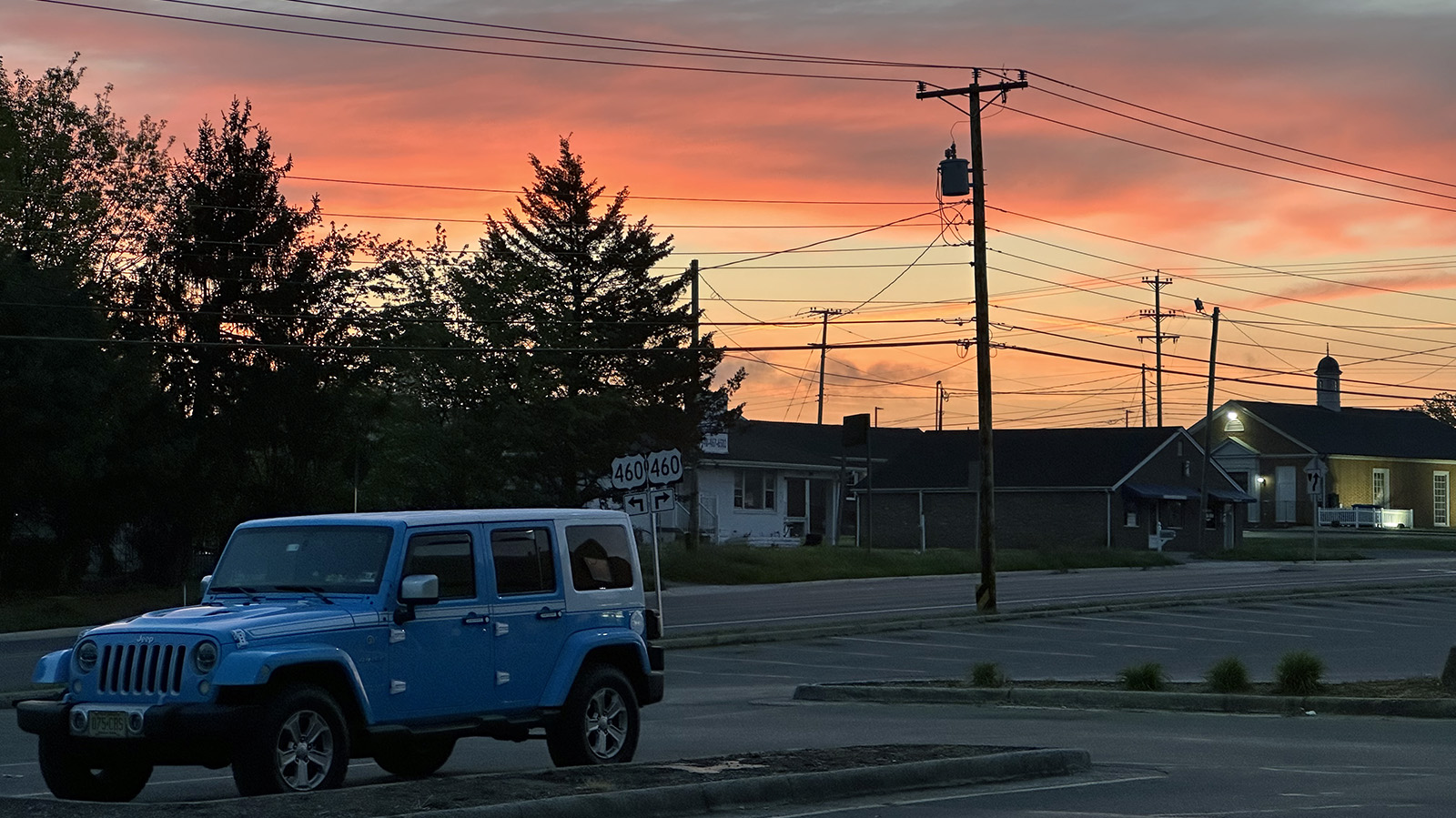
That was always my favorite moment. Not the sky gradually brightening, but the instant the sun cleared the horizon and started warming me up. I was facing east, and once the sunlight hit me, it always felt like the hardest part of the day was over.
This was not where I expected to be when I started the project.
Over a year earlier, I was sitting comfortably in a tattoo chair in Trenton, New Jersey, working with an artist I trusted to cover up work I had gotten when I was nineteen years old.
The Work No Longer Fit
The tattoos I wanted to cover up weren't terrible. I loved them when I got them.
The problem was that I got most of them between the ages of nineteen and twenty-two, and a lot changes as you get older. The tattoos were products of a different time in my life, a different version of myself, and a different budget. Like many people who start getting tattooed young, I had accumulated work from different artists over different periods of my life. Some pieces had been expanded. Others had been touched up. Everything had aged differently.
Eventually, they became a haphazard collection rather than a cohesive whole.
I noticed it most at the beach. There is a strange feeling that comes from looking at something you were once proud of and realizing you've outgrown it. It wasn't exactly embarrassment. It was more a feeling that the work no longer represented the person I had become.
There is a strange feeling that comes from looking at something you were once proud of and realizing you've outgrown it.
It reminded me a little of the dental makeover I eventually traveled to Mexico for. Neither project was about vanity. Both were about correcting something that had been bothering me for years.
So I decided it was time to fix it.
Finding the right artist took years. Every summer, I attended the Visionary Tattoo Arts Festival in Asbury Park, walking the aisles and collecting business cards from artists whose work caught my eye. Every year I came home optimistic, only to discover that none of them felt quite right after looking more closely at their work.
That changed in 2018.
I was walking through Convention Hall when I came across a booth for a shop called Kiss of Ink. The artist, Joe Matisa, was tattooing someone while his girlfriend worked the booth. Sitting on the table was a photo album labeled "Cover-Ups."
I started flipping through it.
The work was extraordinary.
Cover-up tattoos are a unique skill. You're not creating on a blank canvas. You're solving a problem. You're hiding something that already exists while creating something new that looks like it was always meant to be there. Every page I turned felt impossible. Old tattoos disappeared beneath vibrant flowers, animals, and landscapes. The original work wasn't merely hidden. It was erased.
I remember looking through that album and feeling something I hadn't felt during any of my previous convention visits: relief. After years of looking, I had finally found the artist.
A few months later, we started on my right arm. Two sessions transformed a collection of old tattoos into a half-sleeve of autumn leaves. The results exceeded every expectation I had.
A year later, we started my left arm, a floral sleeve built from photographs I had taken of my own garden beds around my home.
Then the World Shut Down
The first session of my floral sleeve took place on February 19, 2020.
Less than two weeks later, everything changed.
When the lockdown began, I assumed the project would simply be delayed. Businesses, including tattoo shops, closed. Everybody was waiting for normal life to resume.
What I didn't expect was for all three of my artist's New Jersey shops to close permanently. Joe relocated to Virginia and set up shop at the Kiss of Ink location in Lynchburg.
That's when the project became complicated. I was left with a puzzle piece on my left bicep, with negative space cut-outs meant for future parts of the piece. It would be that way for the next 14 months.
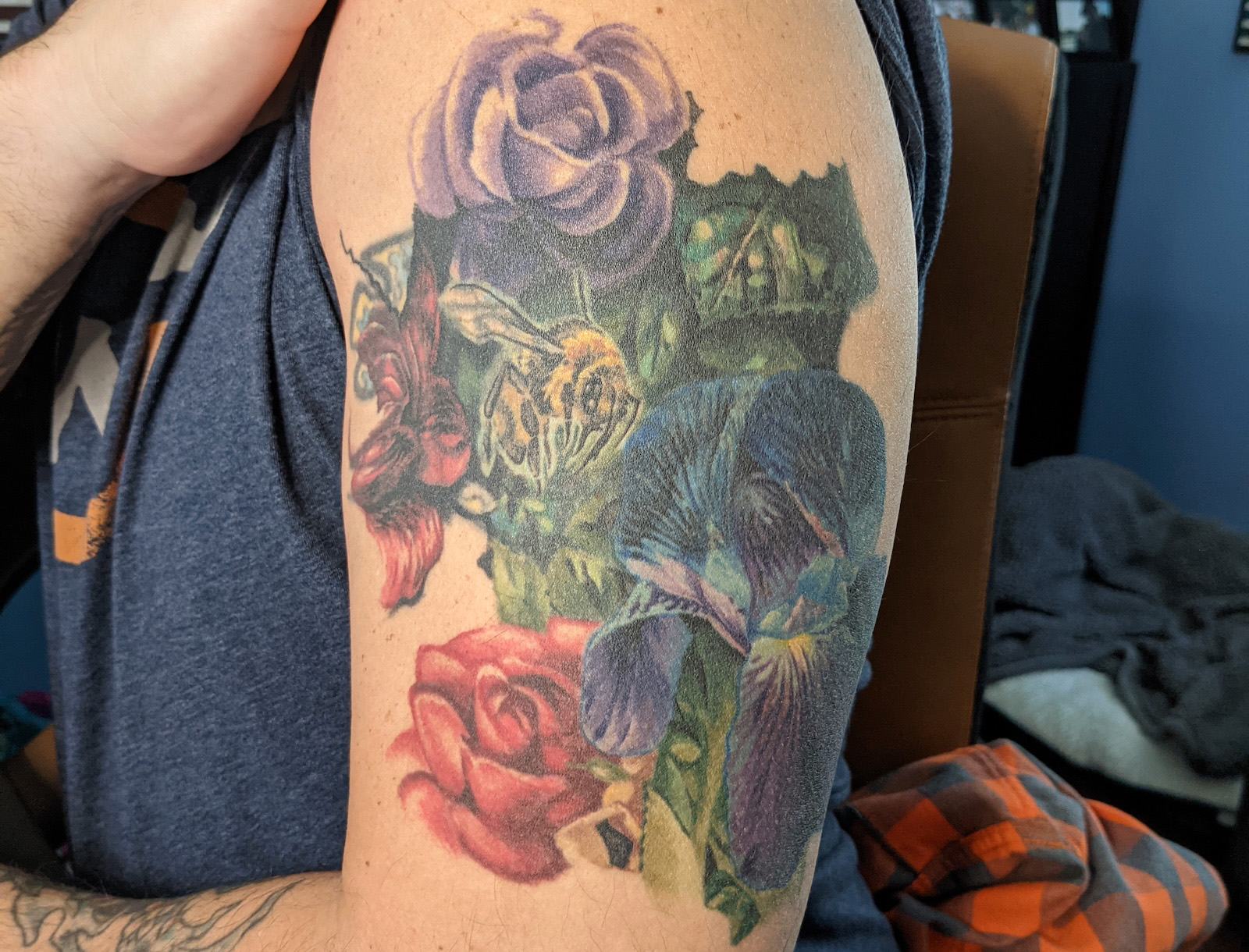
Finding another artist was technically an option, but it wasn't one I wanted. The cover-up work was already complete. The sleeves had already begun taking shape. Handing the project to somebody else felt wrong.
For a large portion of that time, I treated the predicament like a puzzle I hadn't solved yet. Then one day I realized the only viable answer was obvious. If the artist wasn't in New Jersey anymore, I would go to Virginia.
Life on the Line
The first trip was in April of 2021. The drive took more than seven hours. I rented an Airbnb a few minutes from the shop and planned to spend five consecutive days getting tattooed.
There was only one problem. The shop didn't take appointments.
Instead, customers lined up outside and waited for roll call, first come, first served, with a max appointment time of 4 hours. The doors opened at noon. The line started forming as early as sunrise.
That first trip quickly settled into a routine. I'd wake up at two, make coffee, load the Jeep, and drive to the shopping center. By 2:30, my chair was unfolded, and I was waiting for the rest of the world to wake up.
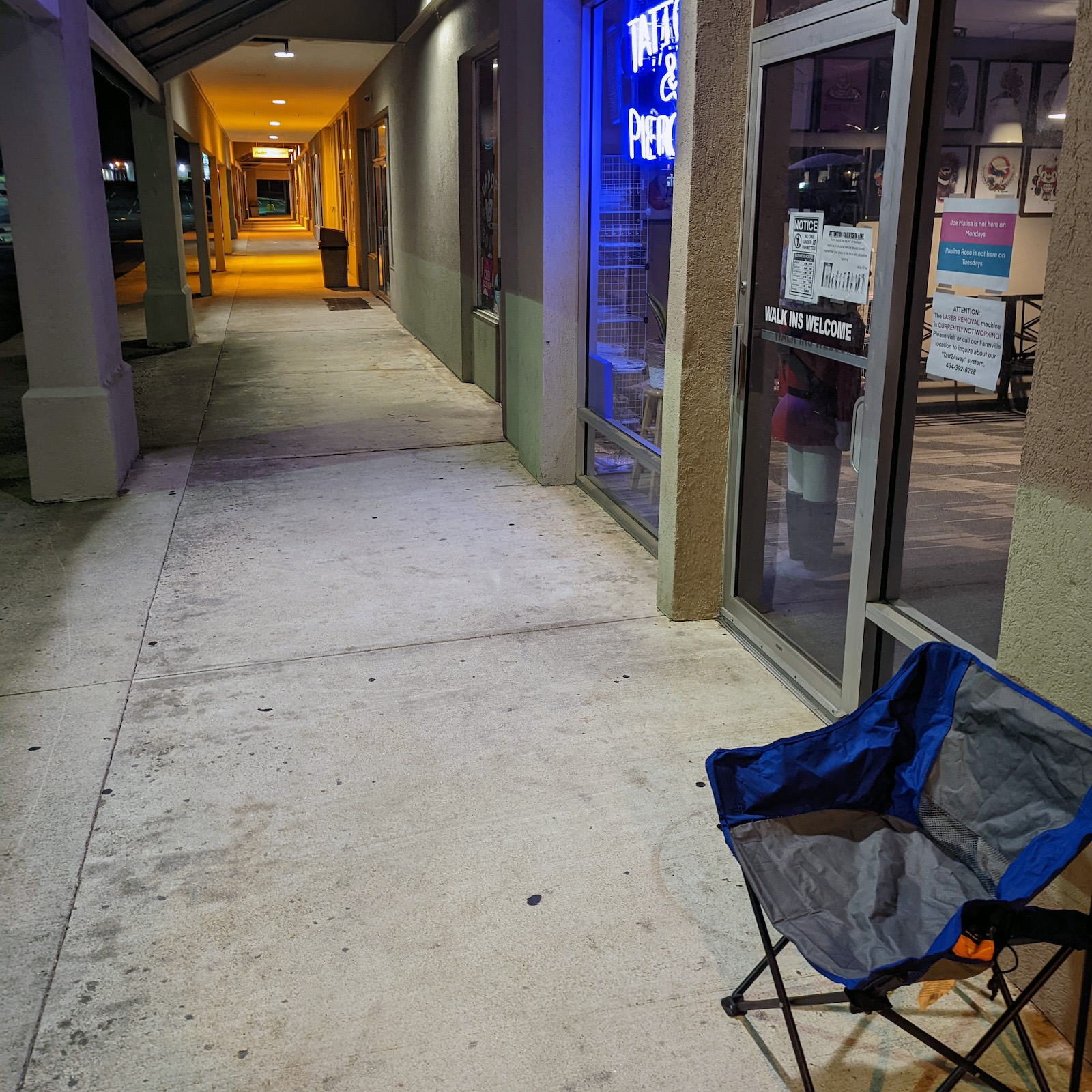
I didn’t have any flexibility. I had to be one of the first two people to get in line to ensure I got tattooed. So if people were going to be getting in line by sunrise? I’d be there more than four hours before that, just to be safe.
And without fail, early in the morning, hours before opening, people would start arriving. And they were amazing.
The first morning, I was sitting with three women in complete silence other than the initial hellos.
There were still reminders of the pandemic everywhere. Social distancing. Masks were still required inside the shop. A general awkwardness that came from spending so much time isolated from one another.
Eventually someone asked a simple question: “Have you been here before?" That was all it took.
And because the first trip was still very much during the pandemic, they were hungry for conversation. What started as polite small talk usually turned into hours of stories about work, relationships, travel, tattoos, and what lockdown had been like for each of us. They were a yoga instructor. A military police officer. A drug rehab counselor. I'll never forget that.
Every morning brought a new cast of characters.
A couple who had driven down from Pennsylvania in a camper van to finish a project they had started in New Jersey. They had arrived at the shop before midnight, but I lucked out. Only the husband was getting tattooed by Joe, so I was able to get the evening appointment. His was in the same boat as me, finishing a piece started before the lockdown. We had a lot to commiserate about.
One day I met a mother and daughter who arrived in a heavily customized Jeep. I learned that the mom and her husband customized their Wranglers using Catwoman and Batman as their inspiration and that they had movie-quality costumes they wear to cosplay events. Later that morning, Batman showed up with breakfast for his wife and daughter. We all traded ducks.
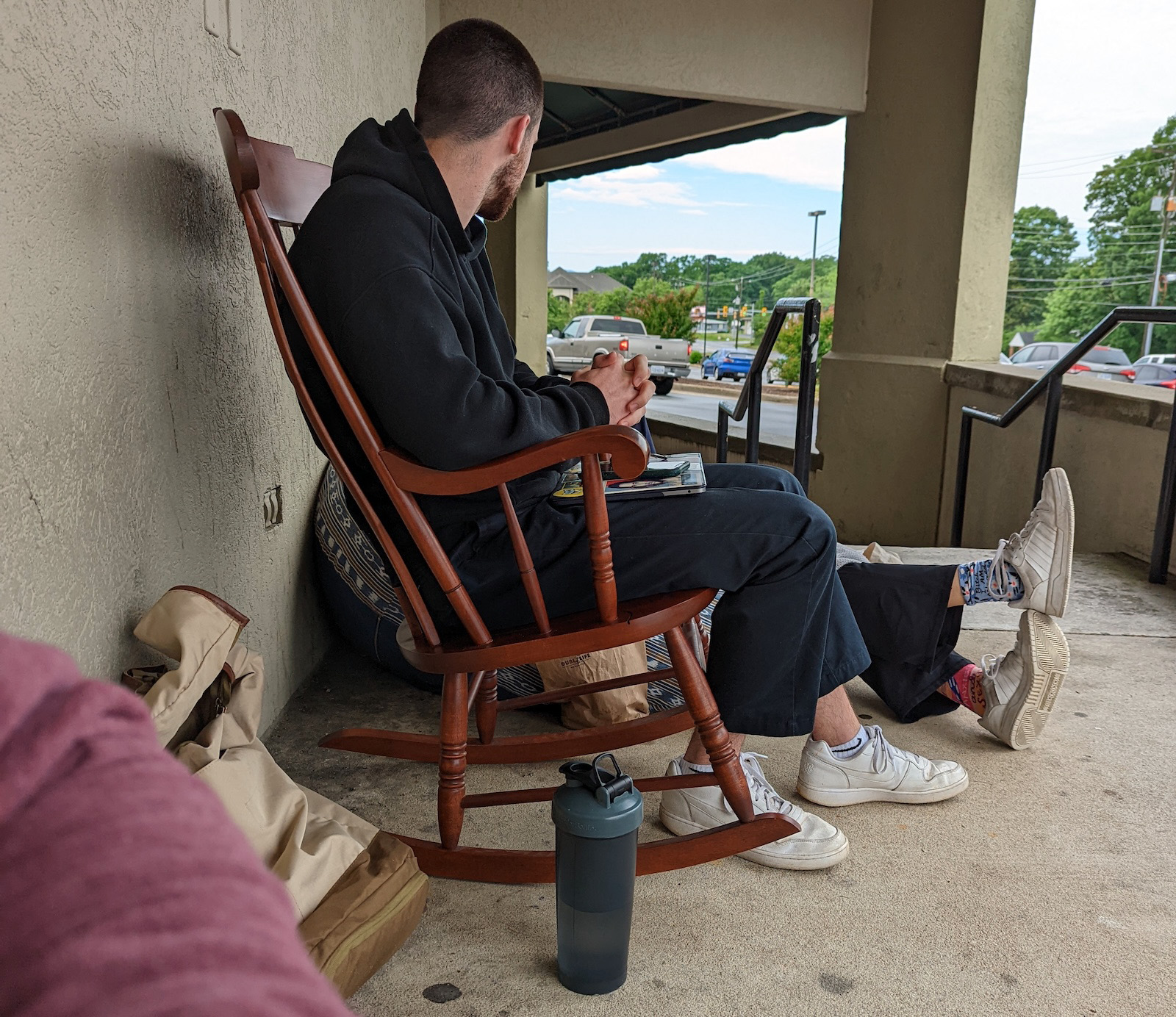
There was the guy who parked his hatchback, pulled out a full-size wooden rocking chair that belonged on a farmhouse porch, and carried it to the end of the line, while the rest of us watched in disbelief.
Playing Chess, Not Checkers
The line developed its own culture.
Everybody asked the same question when they arrived: “What time did you get here?” And I immediately knew not to answer honestly. I would always say, “About 20 minutes ago.”
This was a game of strategy. If they were also doing multiple days in a row, they would be tomorrow’s competition.
The funny part was that everybody understood it.
The shop staff understood it.
The people in line understood it.
One afternoon while I was in the chair getting work done, someone walked into the shop and asked what time they should arrive the next day. My artist pointed at me and said, “Ask him.” I replied, “Around 6:30.”
My artist laughed. The shop staff laughed. The future customer didn’t get it, but he would if he showed up the next morning.
The funny thing is that I expected the waiting to be miserable. Instead, it became one of my favorite parts of the experience.
The funny thing is that I expected the waiting to be miserable. Instead, it became one of my favorite parts of the experience.
Complete strangers would arrive before dawn, spend half a day together, and leave knowing more about one another than many acquaintances ever learn.
There was a sense of community I never expected to find in a shopping plaza parking lot.
After a while, the waiting stopped feeling like something I had to endure to get tattooed. It became something I looked forward to.
A Mission, Not a Vacation
Over three years, I made three trips to Virginia to complete the full sleeves and my hands. Each trip became easier.
The first trip was stressful because I was racing the clock. We needed the last day I was in town to finish the left half sleeve. I was up at 1 AM, packed the Jeep, and checked out of the Airbnb by 2 AM. When I got to the shop, two women were already waiting in line. They had driven there from Virginia Beach and arrived just after 10 pm. I was sure I was cooked, but neither was there to see my artist. My knees buckled; I couldn’t believe the luck. I was in the tattoo chair at noon, and once I was done, I had to jump on the road and head for Jersey. That was a long day.
I learned my lesson, and for the second and third trips I included insurance days in case something went wrong. By then, it seemed like most of the backlog from New Jersey and Pennsylvania had worked its way through the system. Not only did I not have any encounters with people from my neck of the woods, but nobody ever joined the line before sunrise. In fact, some days people didn’t show until after 10. That meant getting tattooed became much more predictable and less stressful. I was always first in line for the second and third trips.
For both trips, the insurance days ended up not being needed, so I had opportunities to explore Lynchburg itself.
The truth is that I never fell in love with the city. That's not an insult. It's just reality.
Lynchburg gave me everything I needed. Good grocery stores. Comfortable places to stay. Friendly people. Decent restaurants. Well-stocked liquor stores. A place to accomplish my goal. But I wasn't there because I wanted to experience Lynchburg.
I wasn't on vacation. I was on a mission.
What stayed with me wasn't the city itself. It was the routine. The people. The conversations. The absurdity of spending hours outside a tattoo shop before sunrise.
Lynchburg was simply a means to an end. It was where the solution happened to be.
Finishing What I Started
By the final trip in 2024, I wasn't thinking about the drive anymore. I wasn't thinking about the waiting. I wasn't even thinking much about the logistics.
I was thinking about finishing.
Five years earlier, I had started a project. The timeline had changed dramatically, but the goal remained exactly the same.
During the final session, Joe quickly moved from closing the sleeves to tattooing my hands. I remember looking at the clock, convinced we were running out of time and would need another day.
Then suddenly it was over. He said those magic words, “That’s it, you’re done.”
Just like that, five years of work, three road trips, and hundreds of hours of planning, driving, waiting, healing, and returning were behind me.
Done.
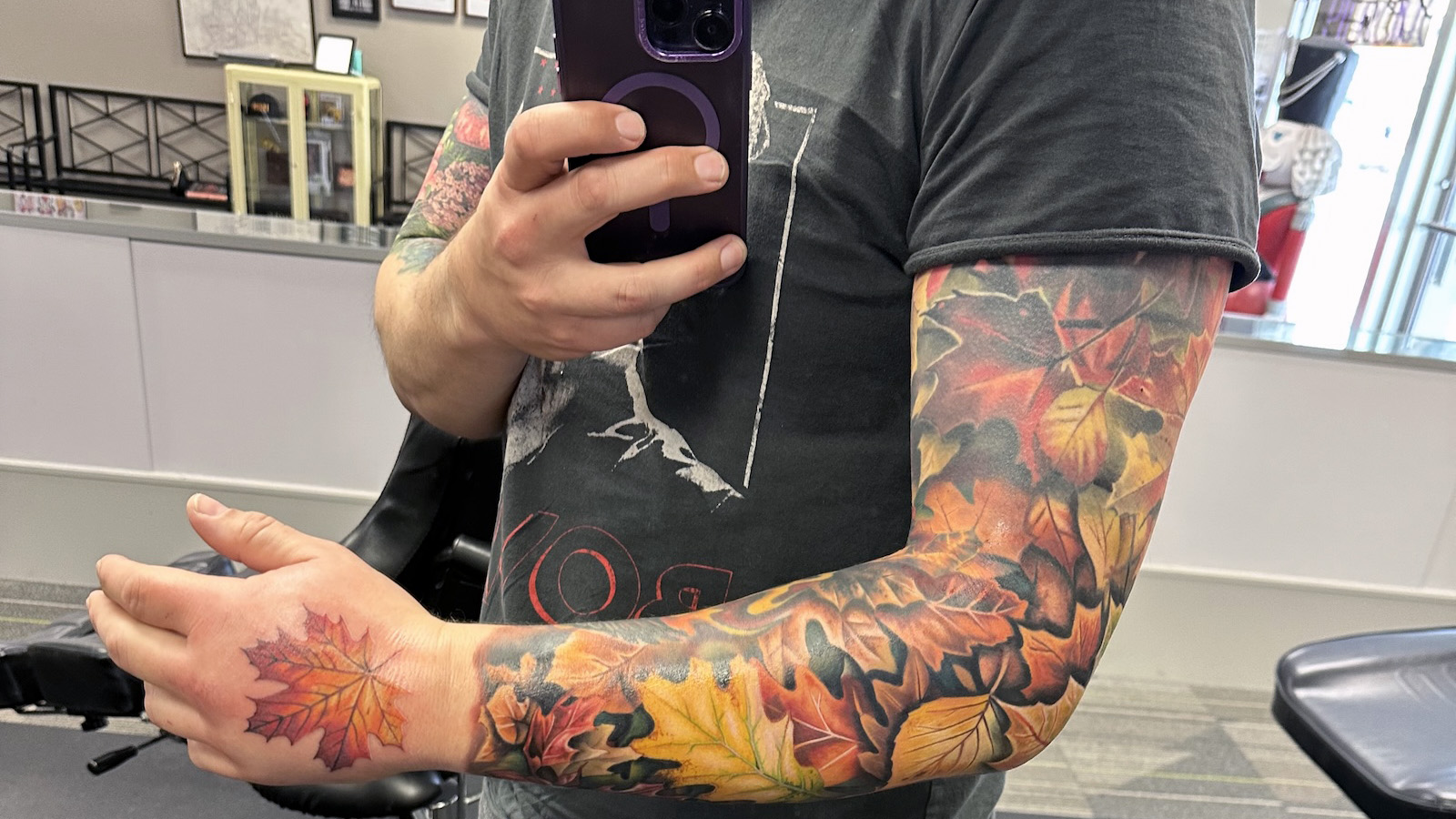
I remember standing there looking in the mirror and repeating the same thing over and over: "I can't believe they're finished."
The feeling wasn't just happiness. It was relief, accomplishment, and the satisfaction that comes from finally crossing a finish line you weren't always sure how you would reach.
There was no next session to schedule. No unfinished section. No puzzle piece waiting to be completed.
The sleeves project started in January of 2019, and over five years later, the project was done.
When the Plan Changes
Life has a habit of disrupting our plans.
You think you know how a project is going to unfold, and then something happens. Maybe it's a pandemic. Maybe it's a layoff. Maybe it's something far more personal. The original plan disappears, and suddenly you're forced to decide whether the goal still matters enough to pursue.
The details don't really matter. What matters is what happens next.
The pandemic changed the route, the logistics, and the timeline. It never changed the commitment to the project.
I've always loved solving puzzles. I've always enjoyed untangling knots. When something gets in my way, my first instinct isn't to quit. It’s to figure out the solution. The pandemic changed the route, the logistics, and the timeline. It never changed the commitment to the project. I just needed to work the problem.
That's what those trips to Lynchburg became: a solution
And looking back, that's probably the real lesson hiding underneath all those miles, all those cold nights, and all those hours spent waiting for the sun to rise.
Some things earn the need to be finished.