
Why one small tool earns a permanent place in your pocket
Where It Starts
At some point, it just became part of the rotation.
Phone, wallet, keys… pocket knife.
I can’t pinpoint the moment when I decided I was going to start carrying one. Having a knife at the ready kept proving useful until it earned its place. Maybe it was opening boxes from the steady stream of online orders. Or cutting through packaging that refuses to cooperate. It handles small problems without having to stop what I’m doing and go looking for the right tool.
After a while, it stops feeling like a debate and starts feeling like an obvious necessity.
Of course, you need one.
There’s also something familiar about it. My dad always had one on him. Any time we were working on something together and needed it, he’d just pull one out of his pocket without a second thought and hand it to me. No searching, no delay. It was just there… Dad’s pocket knife.
That idea stuck with me, not as nostalgia, but as a standard. Be prepared. Be capable. Don’t overcomplicate simple problems.
Why the Kershaw Cryo
I didn’t land on the Kershaw Cryo immediately, but once I did, it stuck.
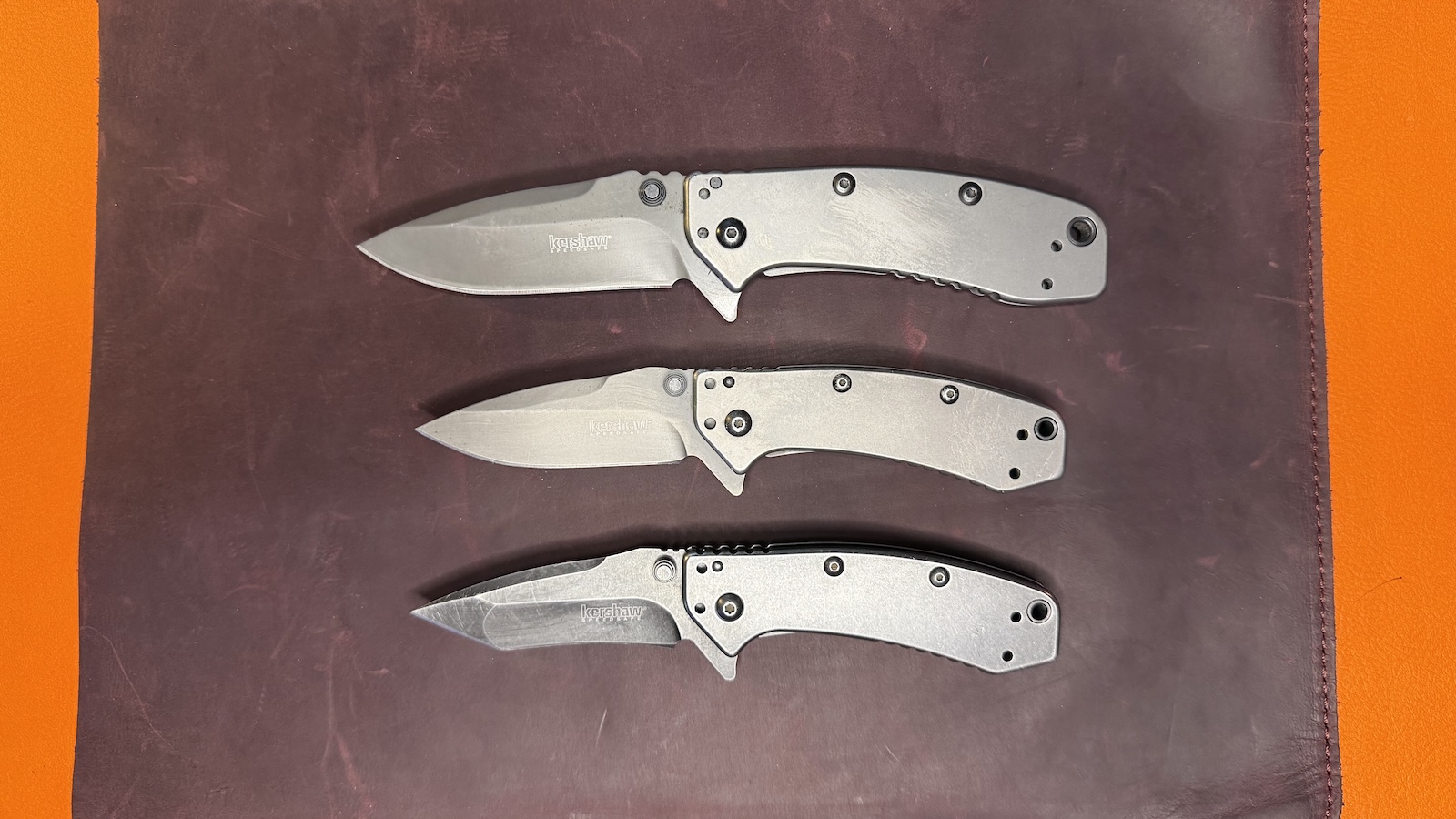
I’ve owned a few versions over the years. The standard Cryo with the drop point blade is excellent and still very much in my rotation. But my everyday carry is the DarkWash tanto version, which has unfortunately been discontinued. No drama there, though. The current models are just as solid. I know because I own them too. I also own the Cryo II drop point, but it’s significantly bigger. If I’m carrying that, it’s usually clipped into my back pocket so it doesn’t interfere with my phone or front-pocket wallet.
What separates the Cryo isn’t one flashy feature. It’s how perfectly everything comes together. The assisted opening is the first thing you notice. Once you’ve used it, it’s hard to go back. If one hand is occupied and you need to cut something, it just works. No learning curve, no fumbling. Opening it becomes instinctual.
Beyond that, it hits a surprisingly rare balance. It feels solid, well-made, and reliable without being expensive. It’s not something you worry about scratching or babying. It’s something you use multiple times a day, and it stands up to that rigor.
The size is part of what makes it work so well. The standard model disappears into the coin pocket of a pair of jeans. It’s completely out of the way until you need it, but when you do, it’s easily accessible.
What It Actually Gets Used For
When you start to carry a pocketknife on the reg… you end up using it more than you’d expect.
Not in dramatic ways, but in small, constant ones. Because it reinforces how versatile and useful it actually is.
Opening boxes. Breaking down packaging. Cutting a loose thread off a shirt before heading into a meeting. Stripping a wire to fix a landscape light. Snipping the ends off zip ties during holiday decorating. Removing tags from something new. Solving the kind of minor problems that show up every single day.
There isn’t one standout moment where it saved the day. That’s not really the point.
It’s useful because it removes friction from a myriad of daily snags, and it does it in a blink.
The Misconception
The never-ending usefulness is where most of the misconceptions fall apart.
When people hear “guy who carries a knife,” they tend to picture something tactical, aggressive, or over-the-top testosterone. Or maybe something more… backwoods… rural… country.
That’s not what this is. Most of the time, no one even knows it’s there. It sits quietly hidden in a pocket until it’s needed.
And when it is used, context matters. If you’re in a setting where it might make someone uncomfortable, you don’t flick it open aggressively like you’re trying to prove a point. You open it slowly and deliberately. You use it, you close it, and you move on.
The goal isn’t to be noticed. It’s to be useful. That’s how you avoid being “weird knife guy” and get to “Hey, I need a hand, do you have your knife?”
The Misconception
The never-ending usefulness is where most of the misconceptions fall apart.
When people hear “guy who carries a knife,” they tend to picture something tactical, aggressive, or over-the-top testosterone. Or maybe something more… backwoods… rural… country.
That’s not what this is. Most of the time, no one even knows it’s there. It sits quietly hidden in a pocket until it’s needed.
And when it is used, context matters. If you’re in a setting where it might make someone uncomfortable, you don’t flick it open aggressively like you’re trying to prove a point. You open it slowly and deliberately. You use it, you close it, and you move on.
The goal isn’t to be noticed. It’s to be useful. That’s how you avoid being “weird knife guy” and get to “Hey, I need a hand, do you have your knife?”
Why It Matters
What changes when you carry something like this isn’t dramatic, but it’s noticeable over time.
You stop improvising with the wrong tools… like using a butter knife to open an Amazon box. You cease to be helpless because you lack a tool to solve a simple inconvenience. You handle things as they come up, quickly and without thinking too much about it.
That does something subtle to the way you function daily. It makes you more resourceful. More prepared. More capable of dealing with whatever shows up in front of you.
It also puts you in a position to help other people. A loose screw in a pair of glasses. Packaging that someone can’t open. A quick fix during a project. You become the person who can solve the problem with ease.
And that has value.
Where It Doesn’t Belong
There are limits, obviously.
Airports are simple. If it’s coming with you, it goes in a checked bag. No exceptions.
Traveling internationally requires a little more thought. Laws vary, and what’s normal in one place can be illegal in another. That’s not something you guess on.
And socially, you read the room. There’s a difference between using a tool when it’s appropriate and making people uncomfortable because you weren’t paying attention to context.
It’s a tool, not a statement, not a personality, not a lifestyle choice.
The Takeaway
Carrying a pocket knife isn’t about self-defense posturing. If that’s your mindset, you need to take a beat, do a self-assessment, and recognize that you’re in the wrong mindset.
It’s about having something on you that solves problems quickly and without friction.
And once you get used to that, it’s hard to go back. It becomes an integral part of your everyday carry list. Phone. Watch. Wallet. Keys. Pen. Pocket knife.
Latest From Style & Substance
Ape & Bird
Ape & Bird proves that craftsmanship still matters. Handmade hats from a Rhode Island workshop built on personality, durability, and real design.
Two Spring Scents, Done Right
Y by YSL and Penhaligon’s Sartorial are spring scents that balance freshness, depth, and restraint, and are built for the season ahead.
Kaweco SUPRA Fountain Pen (Brass)
A tactile, beautifully balanced brass fountain pen that slows you down and makes the act of writing feel deliberate and important again.