
Some places enter your life because you plan them carefully. They’re bucket list items, places you have always dreamed of seeing. Others arrive because you are trying to find the best solution to fit a set of specific circumstances. For me, Curaçao was the latter.
For years, my vacations landed in mid-October, that dead zone on the calendar where summer is gone, winter has not yet arrived, and the Northeast feels permanently gray and dreary. The problem with traveling to warmer climes in October is the threat of hurricanes. Traveling to the Caribbean during the fall is a bit of a gamble. The ABC islands of Aruba, Bonaire, and Curaçao, sitting far south and west of the hurricane belt, are not. Storms almost always turn north before they reach it. They are not immune, but as far as the odds go, they are a safe bet.
That practical detail was the door. Everything else came later.
The more I researched, the clearer the distinction became. Aruba leans hard into mass tourism and spring break energy. Bonaire is quieter and stunning, but with rockier beaches and lighter on infrastructure. Curaçao sat in the middle. It’s less touristy and more lived-in. Curaçao is more layered and rich in history, neighborhoods, a real food scene, and a culture that does not revolve solely around visitors in flip-flops. A large part of their economy is based on shipbuilding, maintenance, and repair. People live there, work there, and raise families there.
Curaçao felt real before I ever set foot on the island.
First Impressions That Stick
If you expect Curaçao to look like a rainforest, you will be surprised. The island is a desert climate with cacti, scrub, and pale earth. In places, it looks more like Arizona than the Caribbean. And then the color hits you.
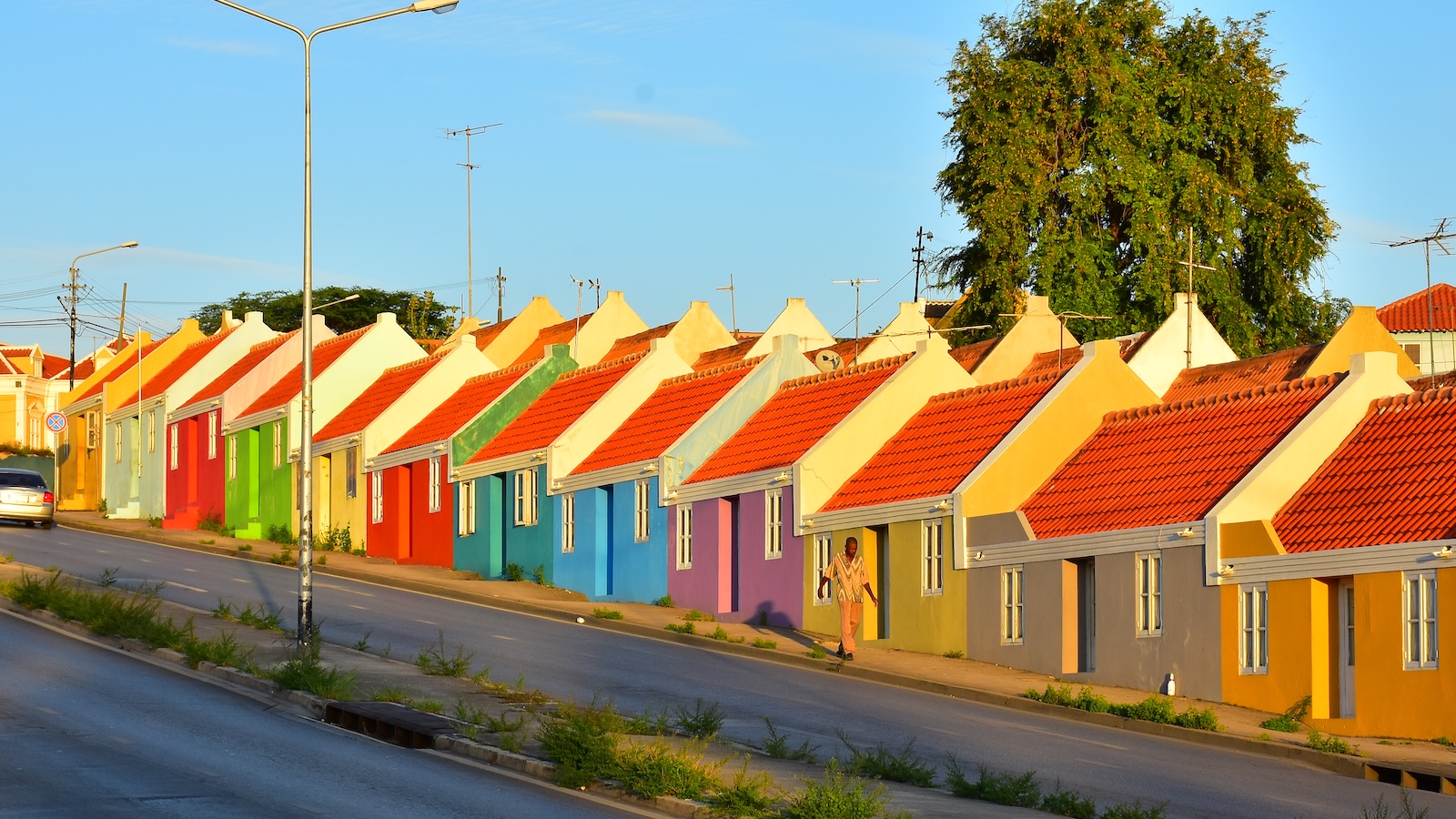
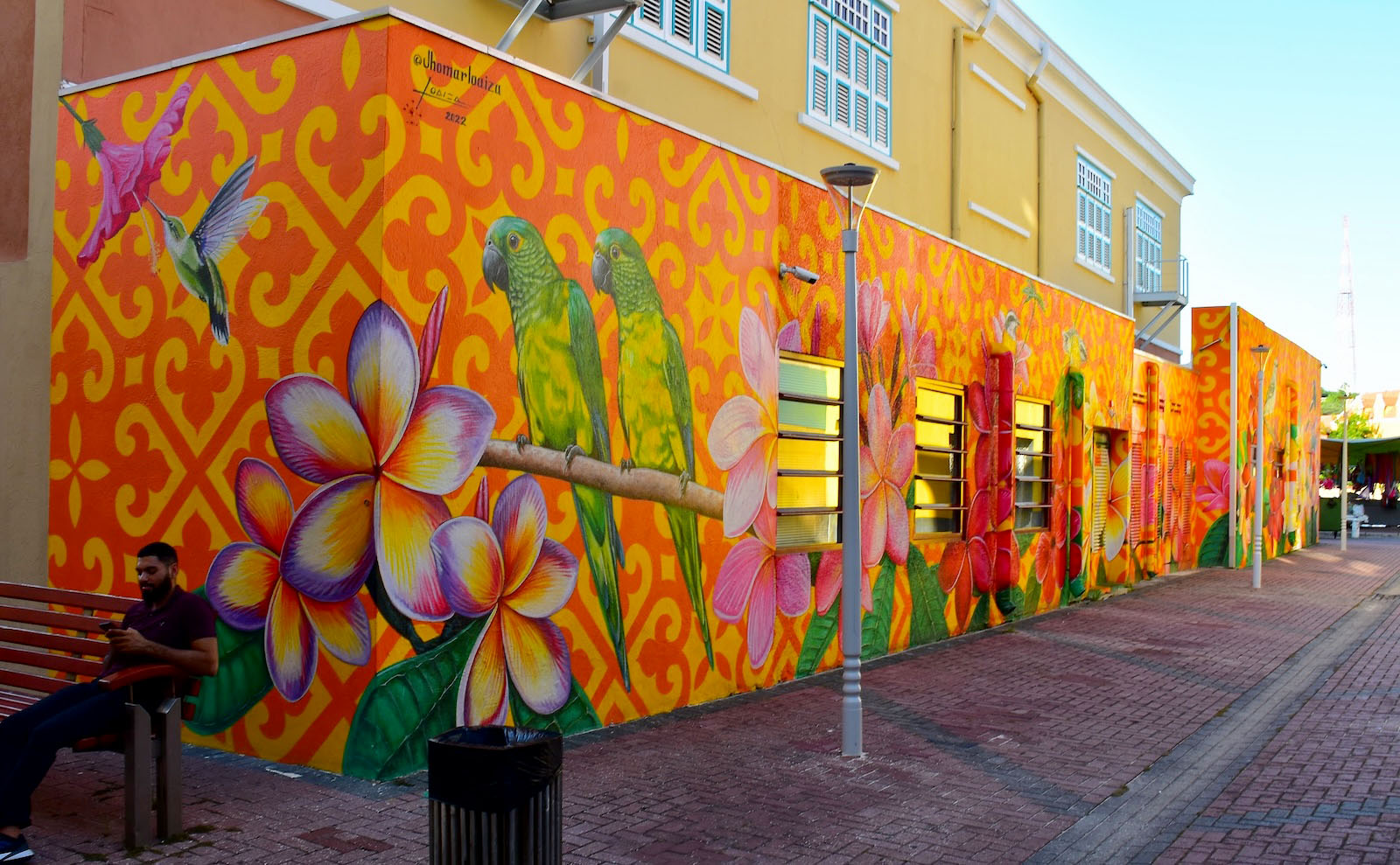
Willemstad is a rainbow. The houses are painted in pastels, primaries… colonial facades painted unapologetically bright. The street art scene is epic, with murals everywhere you look. It does not feel curated. It feels expressive. The result is joyful without trying too hard.
What surprised me most was not the scenery, though. It was the food.
Some of the best meals I have ever had in my life were in Curaçao, and many of them did not come from formal dining rooms. They came from food trucks tucked away in parking lots. Places where locals and tourists line up together and eat side by side because the food was simply that good.
BBQ Express is the canonical example. Brisket, ribs, chicken, fries, and an island of sauces that includes a peanut sauce I still dream about. Plastic tables, chairs, and cutlery. No pretension, just absolute perfection. If I am on the island for a week, I am eating there at least twice. Probably three times, and with zero shame.
And then there was the moment Curaçao truly sealed itself into my memory: Playa Piskado.
A Beach for Everyone
Curaçao does not have one perfect beach. It has many, each serving a different mood.
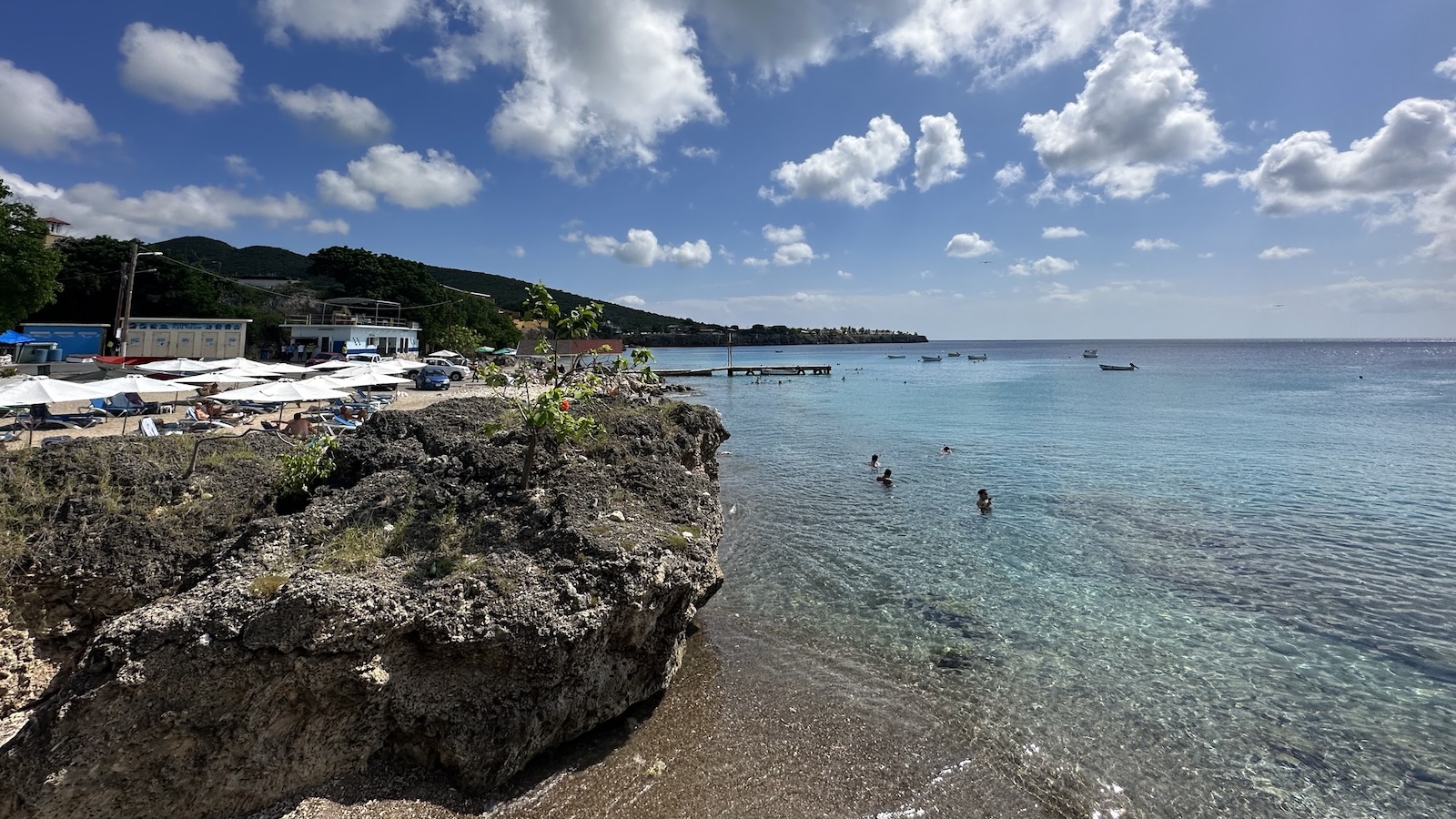
Playa Piskado is tight and busy, but you are almost guaranteed to swim with sea turtles. Fishermen clean their catches on a pier extending over the water, tossing scraps into the sea. Schools of fish gather. Octopuses appear. Sea turtles glide through the shallows. You snorkel shoulder to shoulder with strangers and end up talking to them. It is communal in the best way. As a side note, I collect sea glass wherever I travel, and Playa Piskado is a sea glass gold mine.
Playa Porto Mari offers lounge chairs, sweeping views, the occasional pig wandering through the sand, a beach bar with cold beers and decent food, and that feeling of being exactly where you are supposed to be while on vacation in the Caribbean.
Daaibooi Beach is framed by tall cliffs with thatched umbrellas to lounge under and excellent snorkeling. It’s calm and generous, ideal for long afternoons.
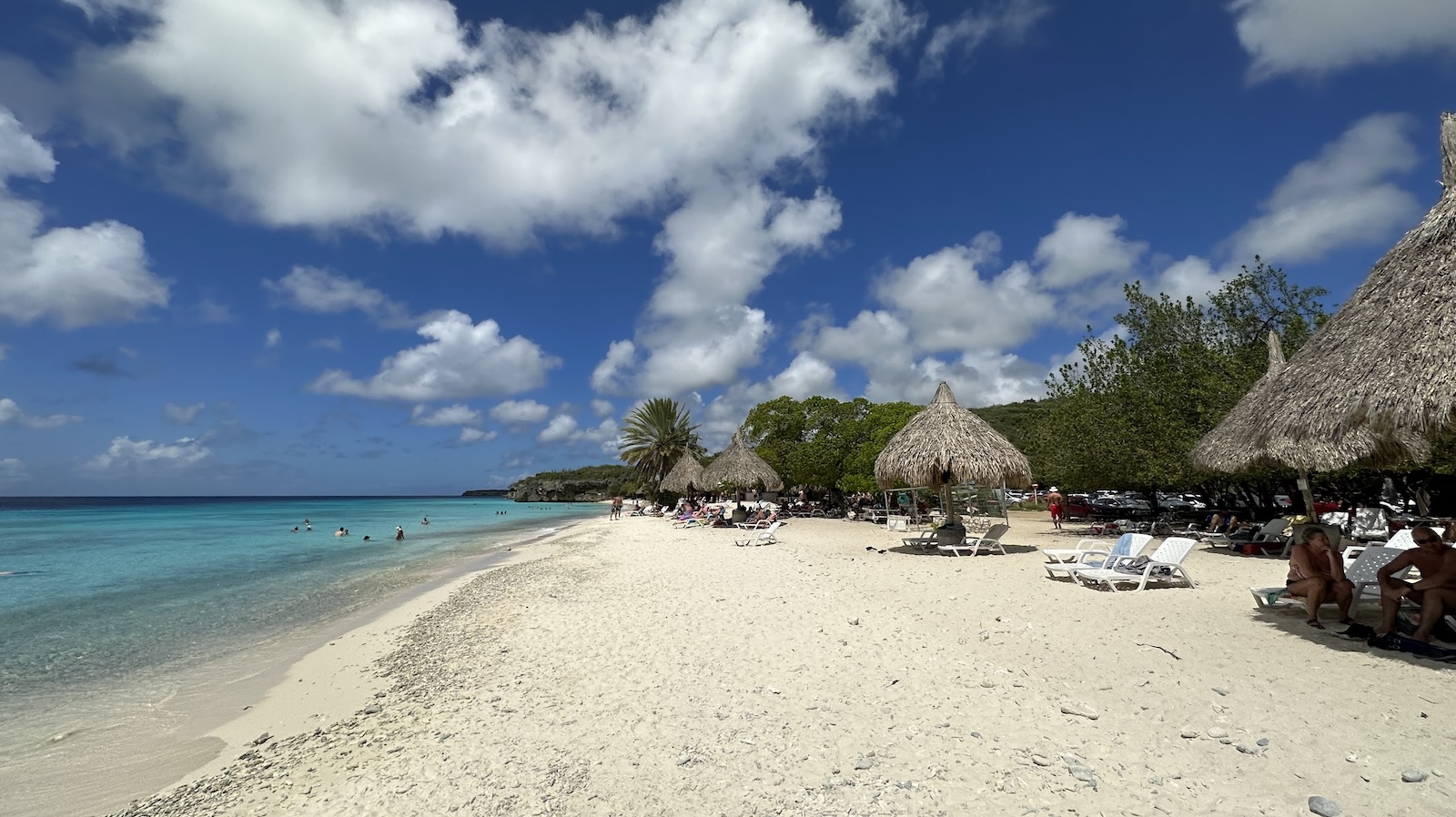
Mambo Beach delivers the resort experience with music, clubs, restaurants, shopping, and constant movement.
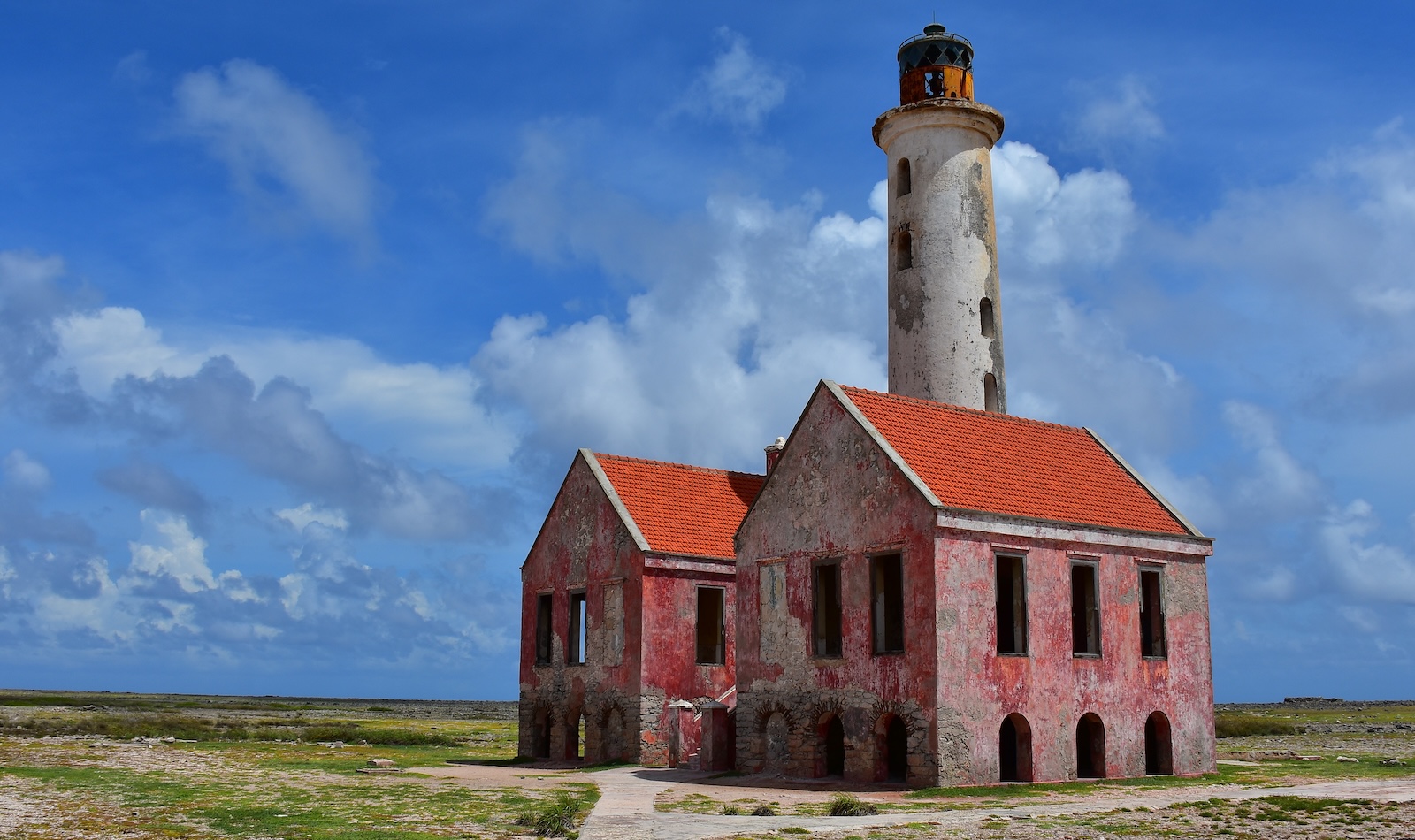
And then there is Klein Curaçao, about an hour and a half’s sail from Curaçao proper. Bone-white sand. Water so clear it feels unreal. You can walk trails to a lighthouse (yes you can climb the steps) or walk to an actual shipwreck on the far side of the island. It recalibrates your understanding of what snorkeling can be. Blue Finn Tours will take you there on a state-of-the-art catamaran, complete with breakfast, lunch, and an open bar. Insider tip: hang out on the nets on the way out for wave splashes. Skip them on the way back, when the sun is relentless and the water goes calm.
Most Curaçao beaches are passive. You claim or rent a chair. You snorkel. You float. You talk. Playa Piskado is tighter and more social. Mambo Beach is louder and more energetic. Klein Curaçao invites exploration. The rest offer tranquility and room to breathe.
There is a beach for everyone here. The island rewards curiosity. If you only visit one, you are doing it wrong.
Who Curaçao Is For
Curaçao works for almost anyone. Solo travelers. Couples. Families. It is not a heavy lift destination; it’s very flexible to your needs. There are direct flights from the East Coast, and it has a modern airport with car rental agencies on site. English is widely spoken, and the US dollar is accepted everywhere. Curaçao has left-hand drive cars on right-hand drive roads. This is not a place that requires you to struggle; you can just get there and go.
The people who will hate Curaçao are the ones looking for foam parties, loud beach clubs, and manufactured chaos. This is not a spring break island. There are no Señor Frogs moments here. Even the cruise port area feels restrained and civil, a pleasant place to wander for souvenirs. There you’ll find the Renaissance Wind Creek Curaçao Resort. It houses a casino, and just off the gaming floor is an excellent bar with outstanding craft cocktails and bartenders o good at what they do you’ll find yourself drifting back more than once.
Curaçao quietly challenges the assumption that the Caribbean is either a resort bubble or a party circuit. It offers something else. Culture. Neighborhoods. Food. History. It asks you to engage with it rather than consume.
Logistics That Matter
You need a car. Full stop. To do Curaçao properly, a rental car is mandatory. The beaches are spread out. The supermarkets are destinations in their own right. And doing excursions like Klein Curaçao requires movement through the island to get to the departure point. Do not try to do this island on foot, by bus, or by taxi alone.
Do not overpack. This is still the Caribbean. Shorts are acceptable everywhere, and you can leave the heavy clothes at home. Invest instead in your own snorkel mask and fins. Do not forget to bring an action camera if you have one. You will see turtles, rays, fish, and yes, octopus if you are lucky.
Where people mess this up is staying in the wrong area. Downtown Willemstad is where people work. It is busy, loud, and can feel sketchy in places. The correct move is to stay in the neighborhood of Pietermaai. It’s Walkable. Stylish. Calm. Alive at night without being chaotic. It is where I stay and where I recommend others stay.
If you rent an Airbnb, you need to read the listing carefully. Electricity systems can be prepaid. Some properties do not prioritize hot water because many locals simply do not use it. My first trip involved cold showers that were character-building in ways I did not ask for.
After that, I checked every listing. It’s amazing to live like a local, but read the fine print.
A Paradise for Foodies
Curaçao is a serious food destination.
Beyond BBQ Express, there is Black Jack, which evolved from a dive sports bar into a proper spot that will still work for any picky eaters you may have traveling with you. Mondo Bizarro delivers craft cocktails and local dishes with confidence. The Oceanfront Restaurant at BijBlauw offers fantastic dining on the sand at the ocean’s edge. The tapas at Kome are mind-blowing; you can’t go wrong with the chicken and waffles. There are countless others, from bakeries to street food to upscale kitchens, the island delivers consistently.
Eating here teaches you something important: Curaçao is not trying to impress you. It simply is good, and you are invited in.
Time Slows Differently Here
On my first trip, I killed my phone on the second day. There was a leaky “waterproof” pouch, saltwater, and a hard learned lesson. I had no GPS navigation. No music. No constant reference point. Time stretched…. I was able to do a lot of reflection. I had to memorize routes to get to places. I interacted more with people, while also going through digital withdrawal. It was an interesting and unexpected twist for my first time in an unfamiliar place, but it added perspective to how time moves on the island.
Downtown Willemstad moves fast. Pietermaai comes alive at night. Beaches dissolve the hours entirely. Curaçao does not demand that you do less. It allows you to do things differently.
Rush it, and you will miss the point. A week is the minimum to get a real feel for the place. I would recommend a week and a half as the ideal stay. And if you can manage staying longer, you won’t regret it.
The Day I Fed an Ostrich, and Other Things To Do
Somewhere between beaches and meals, you’re going to want to do other things. And this is when Curaçao reminds you that it is steeped in culture and also delightfully strange.
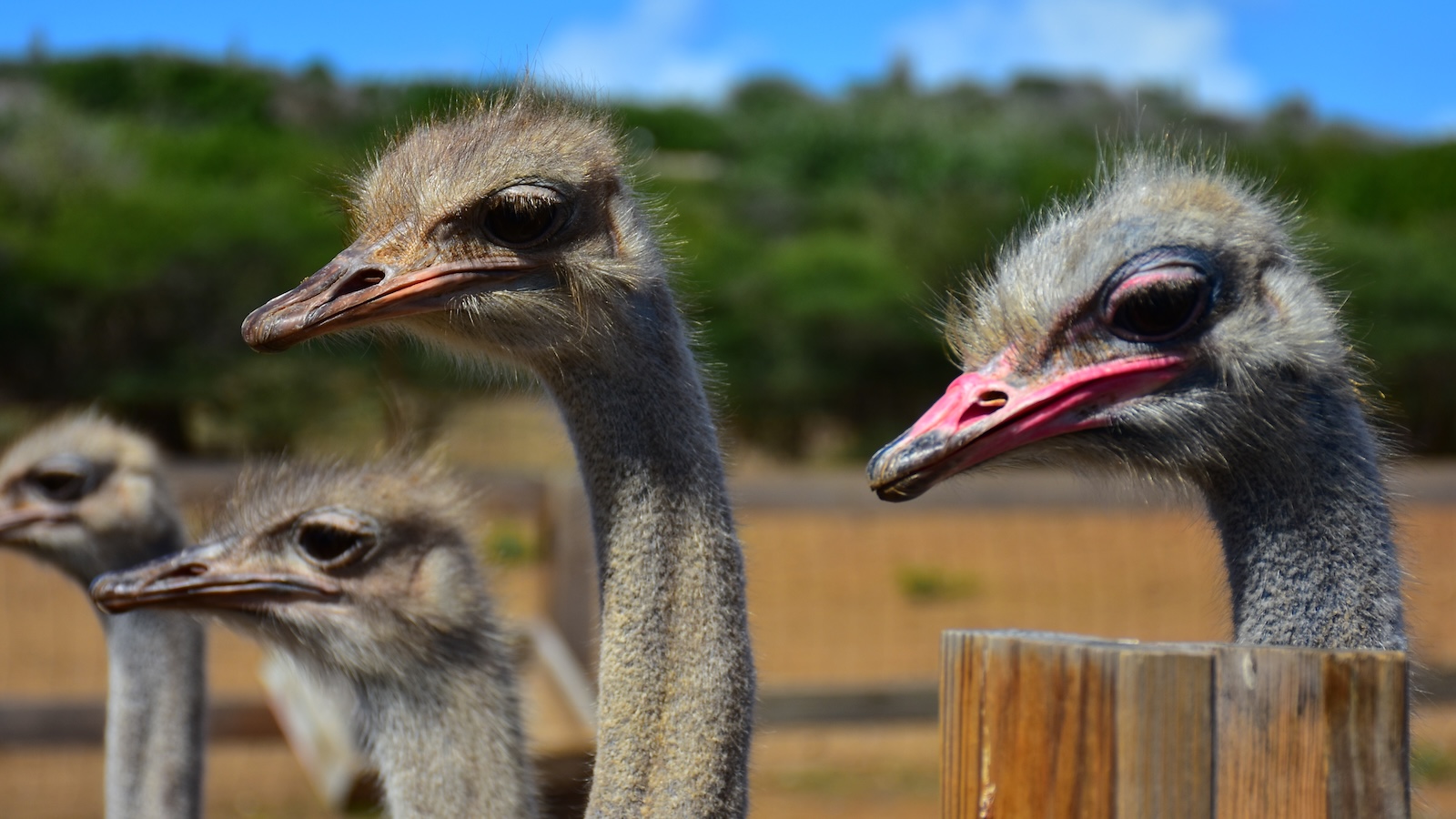
There is an ostrich farm on the island. It’s not a gimmick. This is an actual working operation. You tour the grounds. You learn how ostriches are raised. You feed them, which is equal parts hilarious and mildly terrifying. Then the experience ends at a restaurant where you eat ostrich burgers and steaks.
It is one of those days that makes no sense on paper and perfect sense in memory. Curaçao excels at those.
You can spend a couple of hours touring the distillery where they manufacture the Curaçao liqueur. You learn the entire process, and at the end, get to sample the various flavors they have to offer, as well as craft cocktails made with the liqueurs.
Finally, I was walking down the main drag of Pietermaai when I saw a tour group go by on full-size electric scooters. I found the tour group offering them, and spent 2 hours with a certified guide wheeling through the four very distinct districts of Willemstad. We covered history, architecture street art, and the complicated relationship between the island’s native population and the Dutch who colonized it. It was fascinating, fun, and one of the best things I did on the island.
What Curaçao Is Not
This is not Cancun. It is not an influencer playground; I saw very few instances of influencers in the wild. Loud Bluetooth speakers on beaches are rare and definitely not recommended. Environmental consciousness is taken seriously on the island. Reusable shopping bags are required. I’m still using my Curaçao-purchased shopping bags on the reg. Single-use plastics are discouraged, and there is a robust recycling program. The people truly care about their island, and that being the case, you should treat it with respect. Don’t litter, don’t use the beaches as an ashtray. The people care deeply about their island.
You should too.
If you bring stress, entitlement, or performative nonsense with you, you will feel out of place. Leave that at home. Let your shoulders drop before boarding the plane. Curaçao rewards people who meet it where it is.
The Takeaway
People return to Curaçao because it offers more than scenery. It offers substance.
You arrive for the beaches, but you come back for the neighborhoods, the food, the culture, and the realization that a slower, richer version of life might be achievable. You will start looking at real estate listings there. And you know what? It’s not an absurd notion. Curaçao’s digital nomad visa program, introduced during the pandemic, remains in place.
Curaçao is not a box you check. It stays with you. And when you leave, you will already be planning your return. That is the promise Curaçao delivers. If you go once, you will go back again. It is simply that good.