
Before my first trip to Costa Rica, I spent an embarrassing amount of time researching it on various travel guides.
Again and again, I encountered the same warnings. Don't drive at night. The roads are difficult. Local drivers are aggressive. Take it slow. Be careful.
The warnings convinced me to spend my first night in San José before making the drive to La Fortuna the following morning. Looking back, I don't regret the decision. I had landed after an early flight and was exhausted. The hotel gave me a chance to sleep, pick up supplies from a nearby supermarket, and ease into the trip.
What surprised me was how quickly those fears evaporated once I got behind the wheel.
Maybe Costa Rica's roads really do intimidate people from somewhere quieter. Maybe they are challenging by comparison to places where traffic is orderly and predictable. But after decades of driving in New Jersey, nothing about the experience felt particularly problematic. The roads were fine. The drivers were courteous. Within a few hours, I was heading north toward La Fortuna, wondering what all the fuss had been about.
Then Arenal appeared.
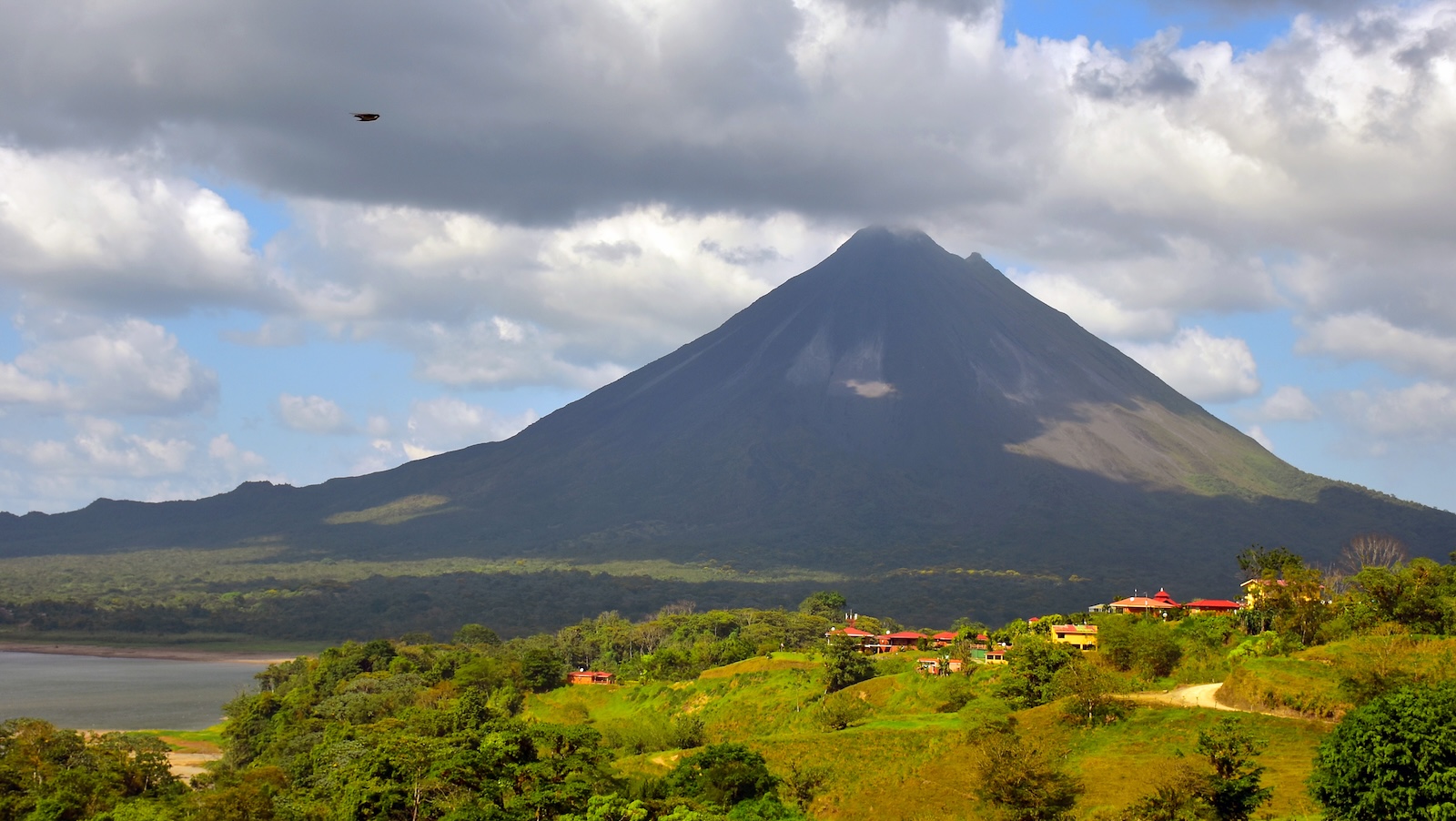
It wasn't a gradual introduction. One moment, I was driving through rolling countryside, and the next, there was a massive volcanic cone rising above the landscape. Perfectly shaped and impossible to ignore. It felt less like arriving at a destination and more like entering the orbit of something enormous.
That first glimpse set the tone for the entire week.
Years later, when I think about Costa Rica, most people assume my favorite memories come from the Pacific Coast. In many ways that's true. Manuel Antonio remains one of the most beautiful places I've ever visited, and Monteverde felt like stepping onto another planet entirely.
For a long time, that led me to describe La Fortuna as my least favorite stop in the country.
Writing this article made me realize how unfair that description was. There was nothing wrong with La Fortuna. Quite the opposite.
La Fortuna was my introduction to Costa Rica.
It was where I first encountered the country's wildlife, first experienced its famous hot springs, first learned what Pura Vida actually meant, and first discovered that some of the best travel memories have nothing to do with famous attractions at all.
Sometimes they're waiting on the deck of an Airbnb after a farmer has placed fruit on tree branches for the birds.
La Fortuna wasn't lesser. It was first. It was the place where I first learned about Pura Vida. It was my gateway, and gateways deserve more credit than they usually receive.
A Town Built Beneath a Volcano
La Fortuna is one of those places that feels immediately familiar, even when you've never been there before.
The town itself is relatively small, organized around a traditional central plaza anchored by a picturesque Catholic church. Streets branch outward in a tidy grid. Shops, restaurants, tour agencies, pharmacies, and markets fill the surrounding blocks.
Despite being one of the most visited destinations in Costa Rica, it remains remarkably walkable. Within a few minutes, you can cross most of downtown on foot.
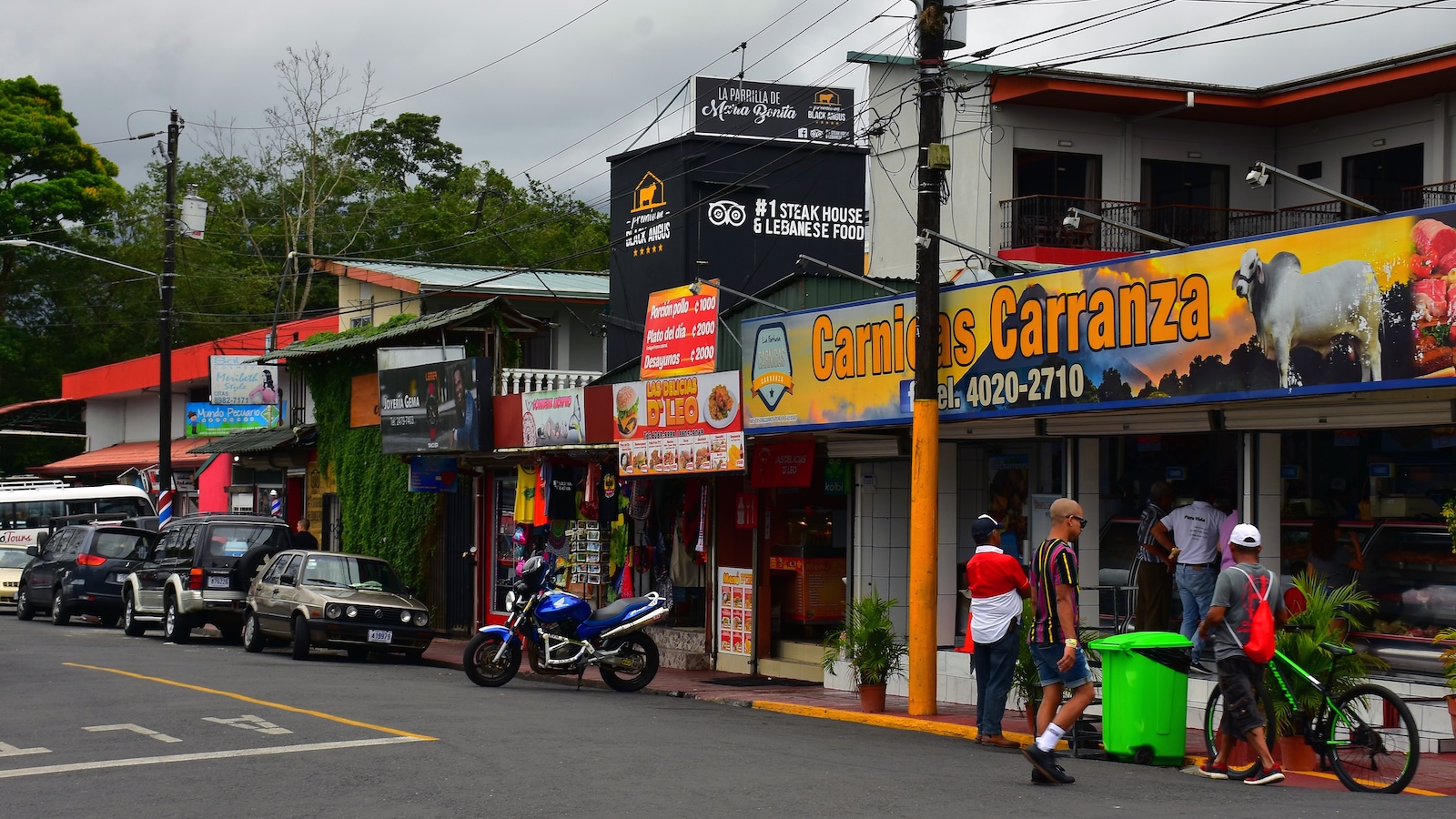
What makes the setting extraordinary is what rises beyond the rooftops.
On a clear day, Arenal Volcano dominates the horizon from nearly every angle. No matter where you stand, the mountain seems to be watching over the town. You see it while walking through the central park. You see it while eating breakfast. You see it while driving to attractions scattered throughout the surrounding countryside.
The volcano gives La Fortuna a sense of place that few destinations can match.
The town itself exists in an interesting balance between tourism and everyday life. It is undeniably a tourist destination. Souvenir shops sell t-shirts and carved wooden sloths. Tour operators advertise ziplining adventures, waterfall excursions, and white-water rafting trips. All the restaurants have menus that are printed in both Spanish and English.
But despite being a tourist hub, La Fortuna somehow never feels artificial.
There are no sprawling entertainment complexes attempting to recreate Costa Rican culture. There are no giant corporate chains dominating the landscape. The people selling tours, preparing meals, stocking grocery shelves, and relaxing in the central park are the same people who live there.
Schoolchildren in uniforms share sidewalks with backpackers returning from a day on the trails. Families gather in the plaza while travelers search for dinner after a day in the rainforest. The tourism economy exists alongside local life rather than replacing it.
That distinction ended up becoming one of my first real lessons about Costa Rica.
The country doesn't separate visitors from residents nearly as much as many tourism-heavy destinations do. Instead, everyone occupies the same spaces.
And it completely works.
The Airbnb I Still Think About
I've stayed in Airbnbs all over the world.
I've rented apartments in major cities, countryside cottages, vacation homes, and spaces that looked much better in photographs than they did in person. Most of them did their job well, but for the most part were forgettable. A few stand out because of the location. Even fewer stand out because of the people.
The Airbnb I stayed in outside La Fortuna remains one of my favorites for a reason I never could have predicted.
The property sat on a working farm about a mile from town. The rental itself was built from two shipping containers connected beneath a covered carport. It wasn't large, but it was thoughtfully designed. There was a kitchen, a bedroom, a private deck, and an outdoor jacuzzi complete with a decorative volcano waterfall that somehow managed to be both ridiculous and delightful.
The fake volcano wasn't the memorable part.
Every morning, before I woke up, the melon was already there.
Sometime before sunrise, the farmer who owned the property would place chunks of fruit on the ends of a large branch planted in the yard about fifteen feet from the Airbnb's deck.
By the time I woke up, brewed my first cup of coffee, and headed out to the deck, the birds had arrived.
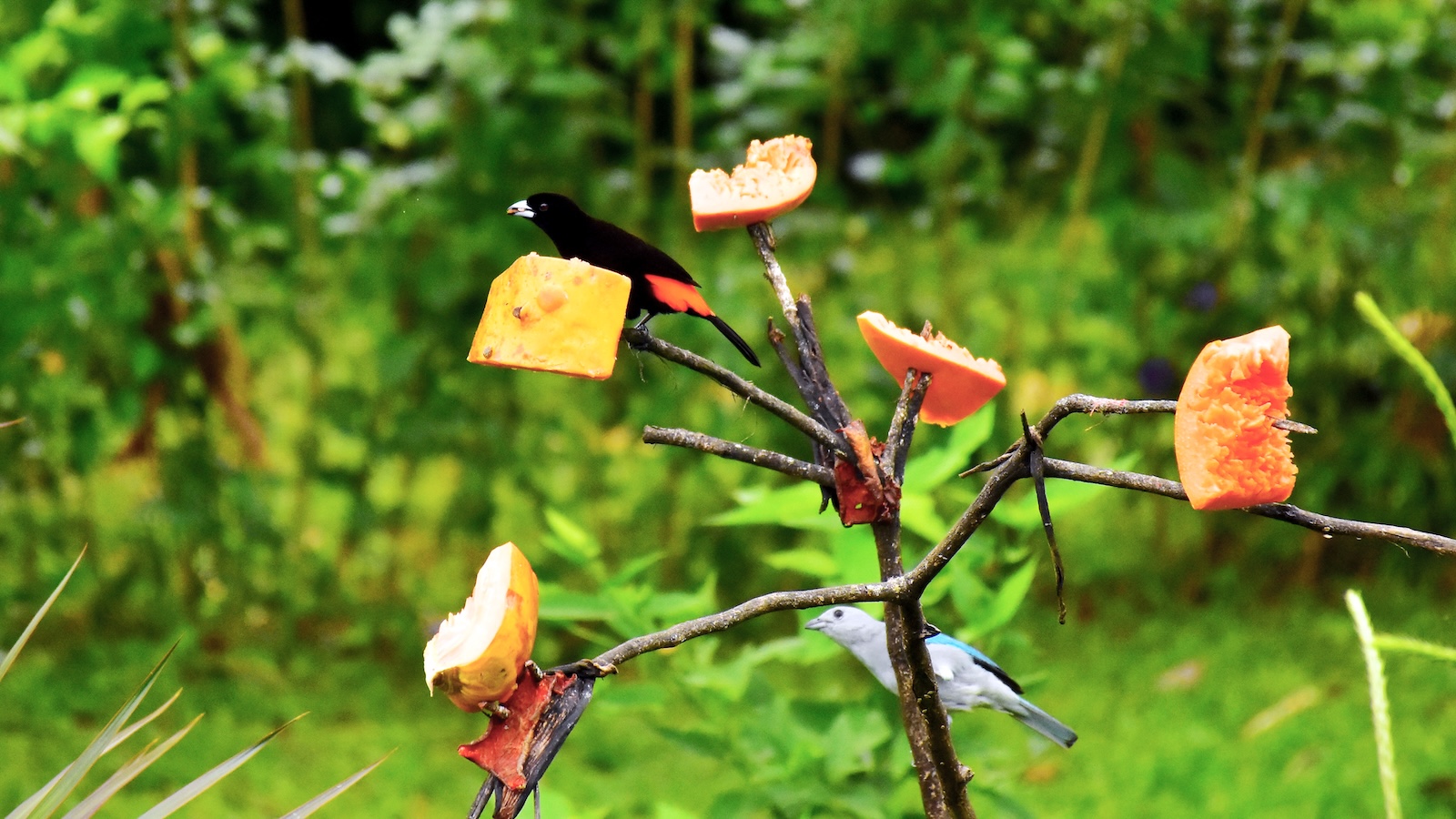
Not cardinals. Not blue jays. Not the backyard birds I was used to seeing back home, in Jersey.
Honeycreepers. Tanagers. Flycatchers. Thrushes. Woodpeckers. Warblers. Hummingbirds that zipped in from nowhere before vanishing just as quickly. Some glowed with shades of purple, blue, and green that looked almost artificial in the bright morning sunlight.
I would sit there with a cup of coffee in one hand and my DSLR in the other, trying desperately to capture birds that had no interest whatsoever in posing for photographs. The Passerini's Tanager nearly drove me insane.
Years later, I still have many of those photographs. More importantly, I still fondly remember the morning ritual.
It wasn't an amenity. It wasn't in the Airbnb description. It was simply a farmer feeding birds for our own personal enjoyment.
Nobody advertised it as an amenity. It wasn't listed in the Airbnb description. It wasn't part of some curated hospitality experience designed to earn five-star reviews.
It was simply a farmer feeding birds for our own personal enjoyment.
Yet it remains one of the most memorable things any host has ever done for me.
What made the experience even more meaningful was that we couldn't really communicate. This was before I started learning Spanish. The farmer spoke no English at all. I spoke virtually no Spanish. Our interactions consisted mostly of smiles, waves, and mutual goodwill.
This visit to Costa Rica became one of the reasons I eventually started studying Spanish.
The language barrier wasn't frustrating. It was motivating.
The Mountain That Never Leaves Your Sight
If the farmer became my favorite memory of La Fortuna, Arenal Volcano became the backdrop for all of them.
The mountain dominates the region in a way that photographs struggle to capture. It isn't simply visible from town. It feels present. No matter where you drive, hike, eat, or explore, the volcano somehow finds its way back into the frame.
Sometimes it appears dramatic and imposing.
Sometimes it hides behind clouds for days.
One of the most important things visitors should understand about Arenal is that it can be surprisingly elusive. The volcano sits in a region where weather changes quickly, and low clouds frequently swallow the upper portion of the peak. You can spend days hoping for the perfect postcard view and never get it.
We got lucky.
One of our clearest days happened to coincide with a visit to the Arenal Butterfly Conservatory.
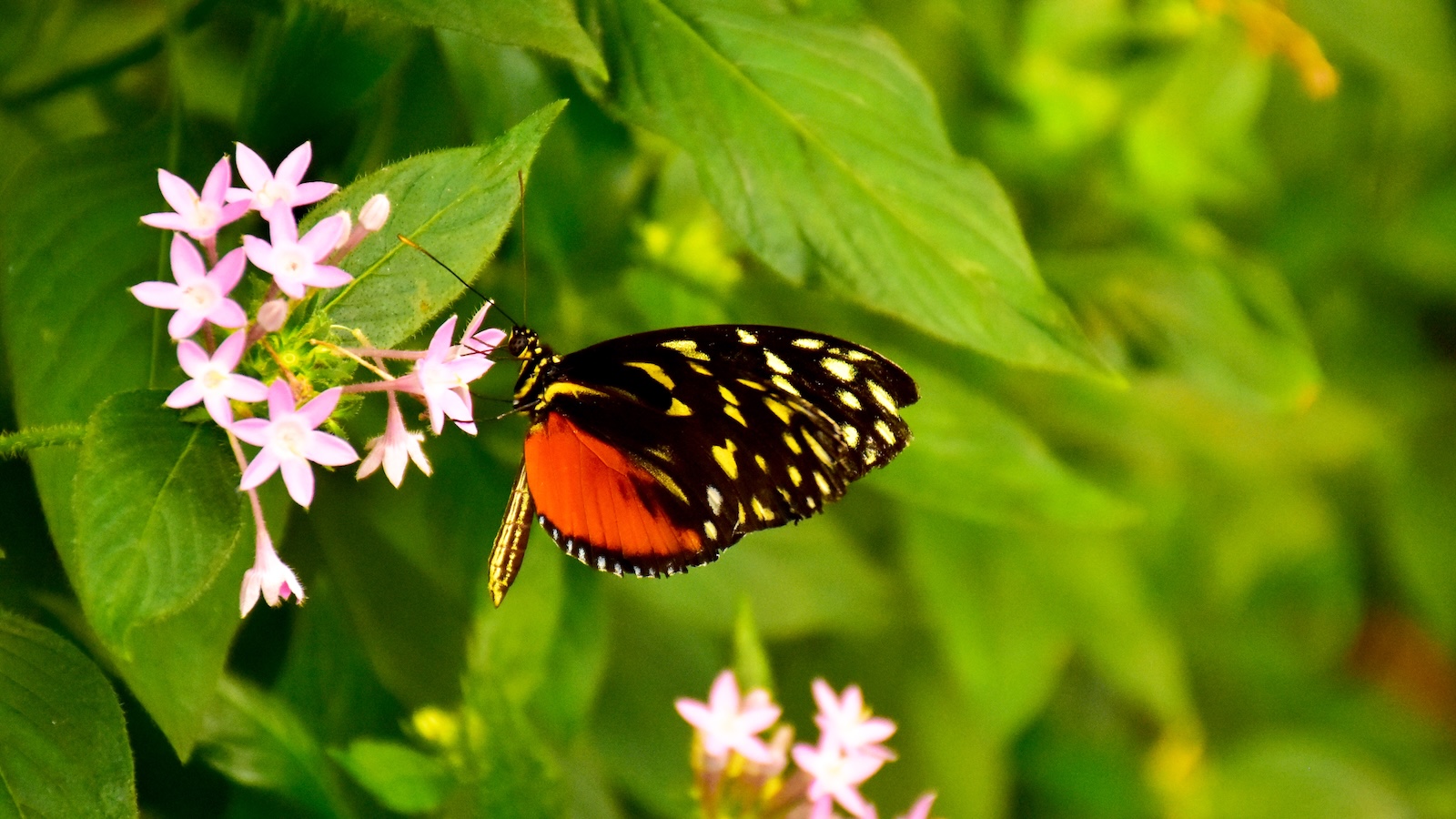
The conservatory turned out to be far more interesting than its name suggests.
Most people hear "butterfly conservatory" and picture a greenhouse filled with colorful insects. While it certainly has that, the property is actually part conservation project, part research center, and part rainforest experience. Located in the small community of El Castillo, about thirty minutes from downtown La Fortuna, the conservatory sits on an elevated ridge overlooking Lake Arenal and the volcano beyond.
The butterflies themselves are spectacular. Massive screened habitats recreate different microclimates found throughout the region, allowing visitors to walk among Blue Morphos, Glasswings, Owl Butterflies, and countless other species. As a photographer, it was impossible not to stop every few feet. The electric blue flash of a Morpho wing in sunlight looks almost unreal.
What surprised me most, however, was everything beyond the butterflies.
The property includes frog habitats, rainforest trails, and educational exhibits focused on conservation and ecological restoration. The entire experience feels less like a tourist attraction and more like an invitation to better understand the ecosystem that makes this region so unique.
And then there's the view.
From the overlook near the parking area, Lake Arenal stretches across the landscape while the volcano rises beyond it. On a clear day, it's one of those scenes that makes you stop talking for a minute and simply appreciate where you are.
It remains one of my favorite landscape photographs from the entire trip.
Later in the week, I spent time hiking through Parque Nacional Volcán Arenal. The trails wind through forests and former lava fields, creating an experience that constantly reminds visitors that this beautiful mountain is also a volcano with a remarkably active history.
The hiking itself wasn't particularly difficult. There was amazing wildlife. We saw more amazing birds and also our first coatis.
What stayed with me was the feeling that the volcano never stopped watching.
The Staircase to La Fortuna Waterfall
Every destination has an attraction that appears on every brochure, every website, and every social media feed.
In La Fortuna, that attraction is the waterfall.
Normally, that level of popularity makes me skeptical. The more aggressively something is marketed, the more likely I am to assume it won't live up to expectations.
La Fortuna Waterfall is one of the rare exceptions.
The waterfall plunges more than 200 feet into a turquoise pool surrounded by dense rainforest. From the viewing platforms below, the scene looks almost identical to the heavily edited photographs used to promote it.
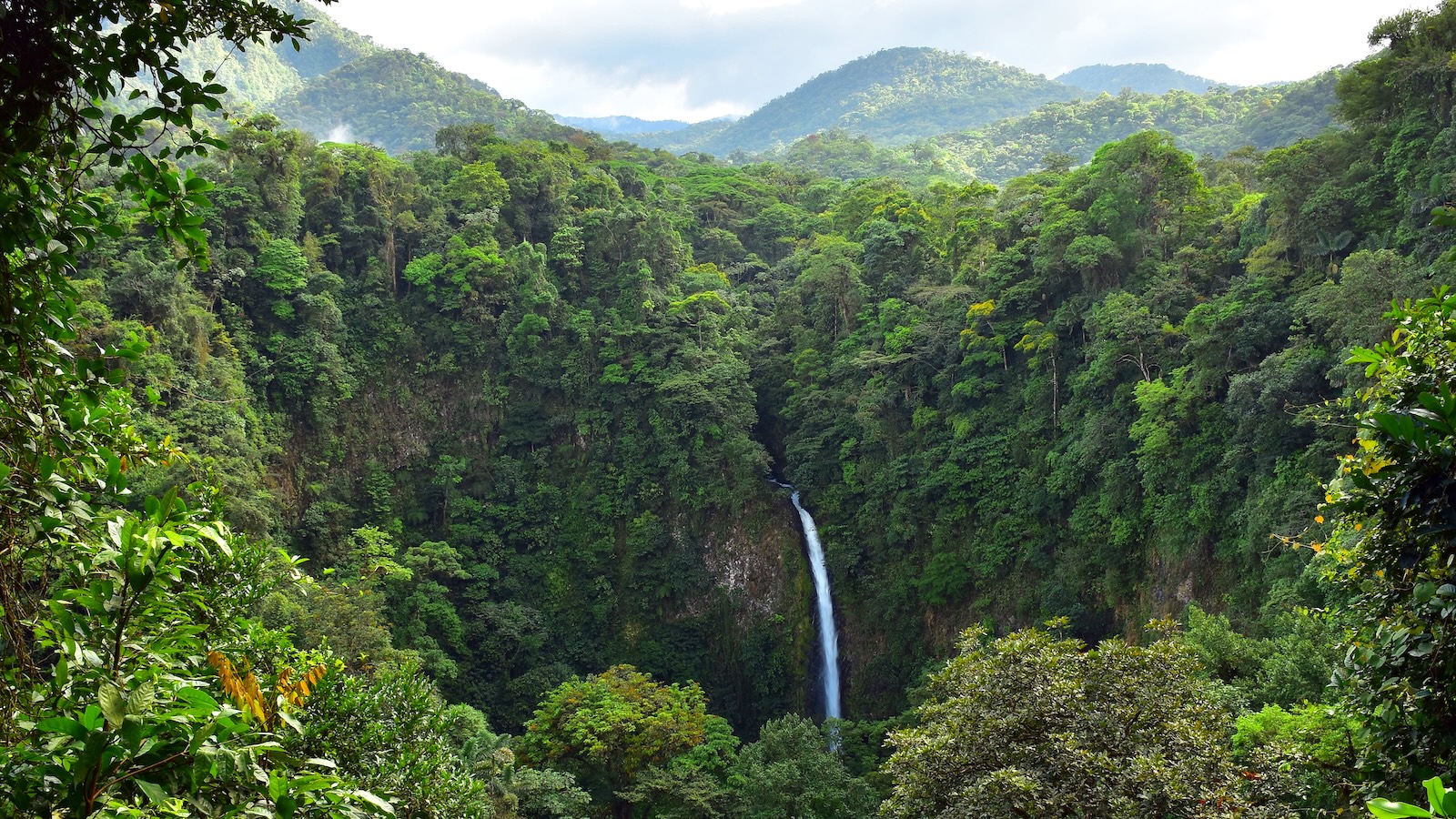
But getting there requires commitment.
After parking and paying admission, visitors descend more than 500 steps into the canyon. Going down is easy. Gravity handles most of the work.
The return trip is another story entirely.
What seems like a pleasant stroll on the way down transforms into a slow, humid negotiation with your cardiovascular system on the way back up.
The staircase itself is well-maintained with paved treads and sturdy handrails. There are frequent rest areas with benches where you can step aside, catch your breath, and let fast movers go by. Nobody should mistake it for a dangerous trek.
It is simply a lot of stairs.
At the bottom, I spent most of my time doing what photographers always do when confronted with moving water. I set up a tripod and started experimenting with long exposures.
The waterfall creates an endless variety of compositions depending on where you stand. Wide shots capture the full height of the cascade. Tighter compositions focus on the power of the water crashing into the river below.
We skipped the swimming. The water looked refreshingly cold, and plenty of visitors were enjoying it, but we had evening plans and didn't particularly feel like spending the rest of the day damp.
The climb back to the parking lot wasn't exactly fun. It was, however, worth every step.
An Evening With a Sloth Named Flash
One evening, while looking through Airbnb Experiences, we came across a listing that promised something simple.
Spend an evening learning about a rescued sloth. At the time, we jumped at the opportunity because we desperately wanted to see a sloth and hadn’t had any luck out in the wild on the trails.
La Fortuna was our first stop in Costa Rica. We hadn't yet learned that sloths, monkeys, and other wildlife would become surprisingly common sights later in the trip.
As far as we knew, this might be our only chance.
The experience took place at the home of a local family who had dedicated themselves to wildlife conservation and rehabilitation. Eddie and Lidiana welcomed visitors onto their property, where they taught guests about rescued animals and the challenges of protecting Costa Rica's biodiversity.
What made the evening special wasn't simply meeting Flash. It was meeting the family.
Their rescued sloth was named Flash. Flash had been discovered after being illegally kept as a pet. Rather than treating him as an attraction, the family was helping rehabilitate him until he could eventually be released.
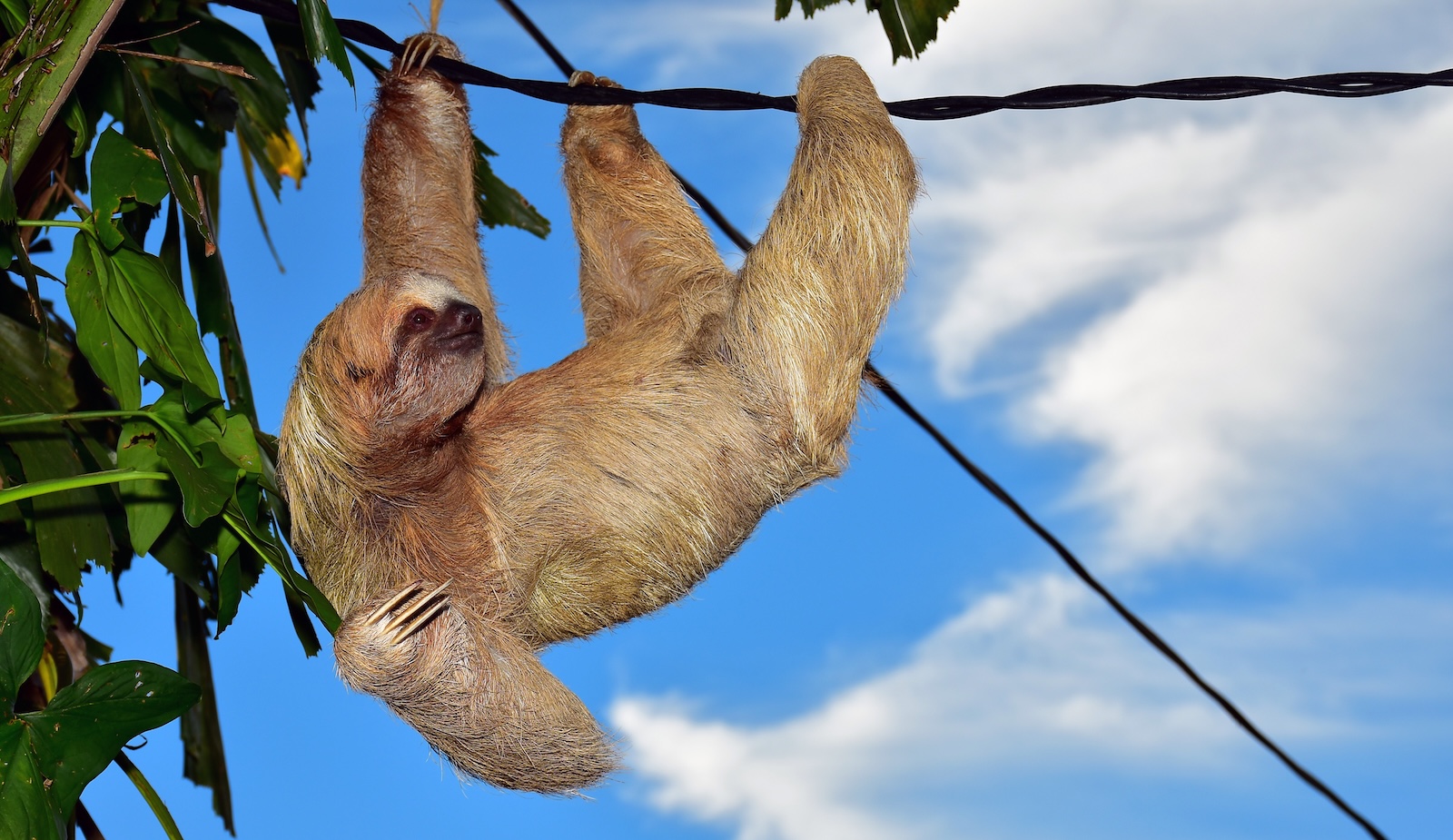
What made the evening special wasn't simply meeting Flash. It was meeting the family.
Their son, Edison, spoke excellent English and spent time teaching us about sloths, their habitats, and the conservation challenges they face. One fact in particular lodged itself permanently in my brain.
Almost every mammal on Earth has seven neck vertebrae. Sloths apparently decided that rule was optional. Two-toed sloths have 5, while three-toed sloths have 8 or sometimes more.
Meanwhile, Eddie and Lidiana prepared dinner in an outdoor kitchen while guests talked and learned. The meal was simple, homemade, and delicious.
More importantly, it felt real.
We weren't sitting in a theater watching a presentation. We weren't walking through a manufactured attraction designed to separate tourists from their money. We had been invited into someone's home.
That distinction made all the difference.
Why the Hot Springs Are Non-Negotiable
If there is one activity that every first-time visitor should experience in La Fortuna, it's the hot springs.
The area sits atop a remarkable geothermal system influenced by Arenal Volcano, creating dozens of naturally heated thermal pools throughout the region.
There are plenty of options. Some lean heavily toward luxury resorts. Others cater to families and large groups.
We chose Ecotermales Fortuna because the appeal was simple. It felt less like a resort and more like a sanctuary.
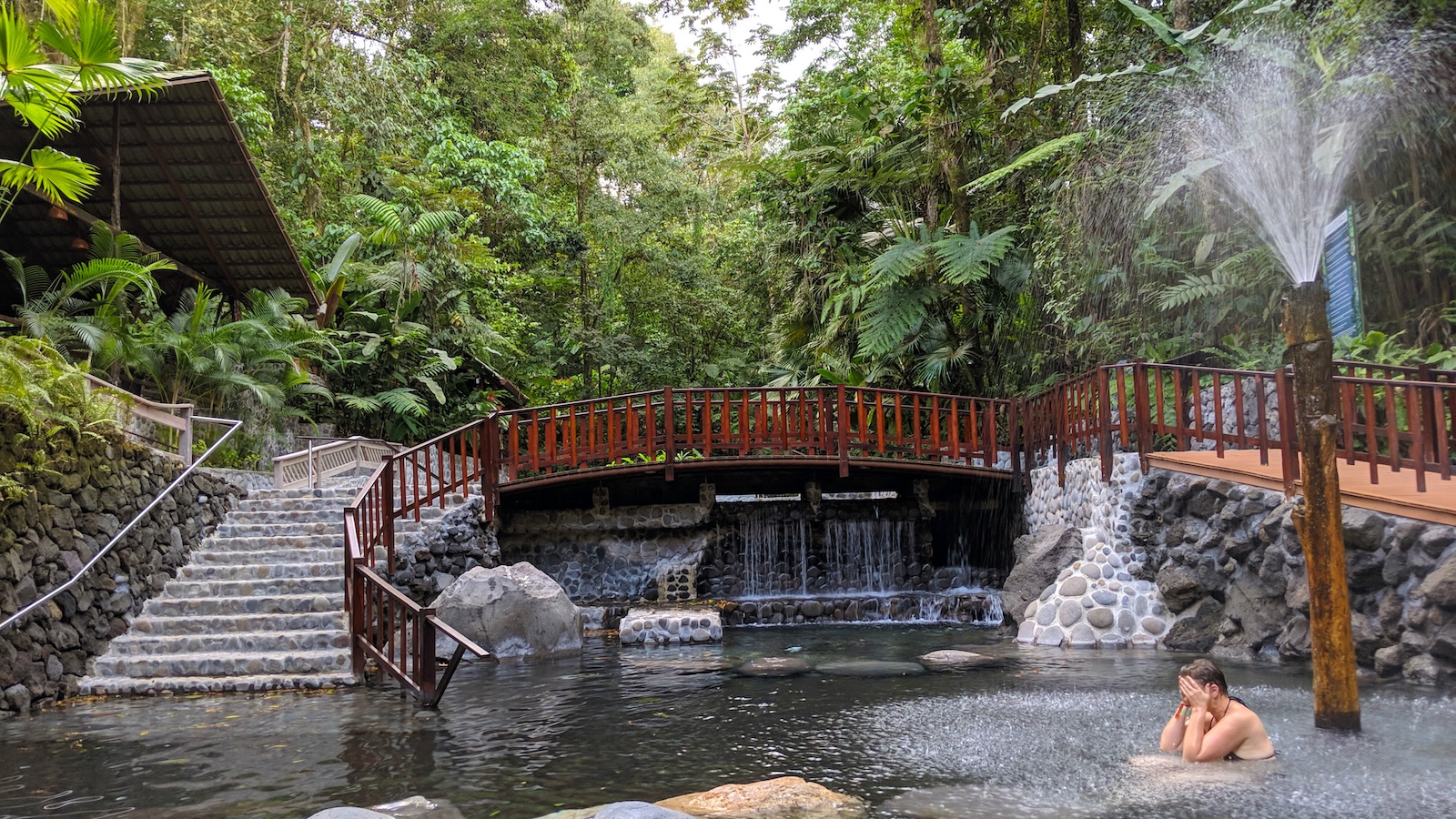
Guest numbers are intentionally limited, which creates a noticeably calmer and more manageable atmosphere. Instead of competing with crowds for space, visitors move leisurely between a series of thermal pools that gradually decrease in temperature as the water flows downhill.
We booked an evening session that included dinner and drinks.
By daylight, the property offers opportunities to spot birds, frogs, and other wildlife moving through the surrounding forest.
At night, everything changes. Steam rises into the darkness. Soft lighting illuminates the pathways. The rainforest becomes a collection of silhouettes and distant sounds.
It felt less like visiting an attraction and more like disappearing into another world for a few hours.
Combine that romantic atmosphere with craft cocktails and a dinner buffet, and I couldn't imagine a better way to end the day.
Costa Rica Happens at the Soda
To understand Costa Rica, you need to understand the soda.
Sodas are to Costa Rica as diners are to New Jersey. Not because the menus are similar, but because of the role they play in the community.
On any given day, you'll find construction workers, families, students, and travelers sharing the same tables.
Sodas are small, family-run restaurants serving traditional Costa Rican comfort food. They are informal, exceptionally affordable, and deeply connected to local life. They focus on fresh, hyper-local ingredients. The definitive staple is the casado… a massive, budget-friendly platter featuring rice, beans, a protein (like fish, chicken, or beef), fried plantains, a small salad, and a corn tortilla.
Our first real introduction came at Restaurante La Mesa de Mamá after a visit to the butterfly conservatory. The restaurant sat well away from the main tourist areas. Locals arriving on dust-covered dirtbikes stopped in for lunch. The atmosphere felt entirely uncurated.
And it was fantastic.
That meal became one of my favorites from the entire trip, not because it was extravagant, but because it felt authentic.
I could have listed plenty of restaurants we experienced, like Lava Lounge and La Street, but if you want my honest opinion, just stick to the sodas in La Fortuna. There’s always one available within walking distance.
Long before I understood Costa Rica, I understood that sodas were a vital part of it.
Looking Back
For years, I described La Fortuna as my least favorite destination in Costa Rica.
I don't think that's true anymore. What I really meant was that other destinations aligned more closely with my personal preferences.
At heart, I'm a beach person. Ocean views, coastal towns, and long stretches of shoreline will almost always win me over.
Manuel Antonio and Tamarindo delivered those experiences in ways that immediately resonated with me.
Monteverde offered something entirely different. Walking through the cloud forest felt like stepping onto another planet. It reminded me of the first time I saw the Sonoran Desert in Arizona. Photographs simply could not prepare me for the reality.
Compared to those experiences, La Fortuna definitely faded into the background of my memories.
Writing this article forced me to reconsider that.
La Fortuna wasn't lesser. It was first.
It was the place where I first encountered Costa Rica's wildlife, first experienced the country's hospitality, first learned about Pura Vida, and first realized how deeply nature shapes everyday life throughout the country.
It was my gateway.
And gateways deserve more credit than they usually receive.
If You're Planning Your First Visit
La Fortuna is perfect for travelers looking for an introduction to Costa Rica. It combines wildlife, adventure, relaxation, and culture in a way that feels approachable without feeling sanitized or inauthentic.
Rent a 4x4.
Get out early.
See the volcano before the clouds arrive.
Soak in the hot springs.
Meet a sloth.
Eat at sodas.
Connect with the locals.
Don't be surprised if your favorite memory of La Fortuna has nothing to do with the attractions everyone told you to see.
And if you're lucky enough to find an Airbnb on a farm, don't be surprised if your favorite memory has nothing to do with the attractions everyone told you to see.
Sometimes the best moments happen over a morning cup of coffee while tropical birds gather around a branch loaded with melon before the rest of the world has even woken up.
That's the version of Pura Vida I remember most.