
Most people don’t go looking for medical tourism. They arrive there after realizing they’ve run out of all other options.
In the United States, dental care, surgical procedures, and cosmetic work are framed as necessities right up until the moment the bill arrives. Then they become luxuries. And for many people, the choice turns brutal and binary: live with the problem, or take on debt that will follow you for years.
That’s when people start thinking outside the box.
The idea of leaving the country for care might seem overwhelming, but medical tourism is not a radical concept. It’s practical. If the system you were told to trust has priced you out of the care you need, you look elsewhere and find another system. Along the U.S.–Mexico border, entire towns have formed around that reality. Los Algodones, just across the border from Yuma, Arizona, is one of them.
Done right, this can be efficient, affordable, and genuinely life-changing. Done wrong, it can be stressful, confusing, and far more complicated than it needs to be. This guide exists because there is a right way to do it. We know, because we’ve been there and lived it.
We are not here to sell you on Los Algodones specifically. Tijuana, Ciudad Juárez, Cancún, and Mexico City all offer similar medical tourism care. We are writing about Los Algodones because we know it. We’ve crossed this border. We’ve navigated the logistics. We’ve dealt with the surprises. We’ve seen what’s possible on the other side.
This isn’t about convincing you to pursue medical tourism. It’s about giving you the information you need to make an informed decision for yourself.
Who This Guide Helps
This guide is for people who feel stuck with a health problem they haven’t been able to resolve. It may be something that has lingered for far too long. You are not reckless in your search for alternative solutions, but you are boxed in by a health care system that isn’t working.
You may be cost-conscious but uneasy about care in another country. You may be anxious about safety, outcomes, or simply the unknown. You’re here because you’re gathering details before committing to anything. Information is power.
And because health care is deeply personal, this may be something you want or need to handle on your own terms. You might be traveling solo. You might not want to explain the process to anyone until it’s done. That’s understandable.
What you’re really looking for is the reassurance of a well-thought-out plan that works. We can help with that.
How do we know?
Tattooed & Tweed’s founder is a lifelong dentophobe who needed a full smile makeover and made the decision to head to Los Algodones over three separate trips, spaced six months apart. Based in New Jersey, his treatment plan in the U.S. would have cost between $70,000 and $80,000. In Los Algodones, the same work cost $17,000, not including travel expenses and post-insurance claims.
Your experience may differ based on where you live and your insurance coverage. In this case, the receipts are real, verifiable, and earned.
What This Guide Is and What It Isn’t
This is not a vacation guide. Los Algodones is not a tourist destination. It’s a mission. Framing it that way will set your expectations appropriately.
This is not a list of miracle clinics promising guaranteed outcomes. We reference established providers with firsthand experience, but medical results are never guaranteed.
This is not a loophole or “hack the border” guide. Everything described here is legal, widely practiced, and aboveboard.
And this is not a fear piece. Los Algodones exists almost entirely to serve Americans and Canadians seeking care. Medical tourism is the lifeblood of the local economy, which makes the town far safer than many expect. That said, safety does not mean complacency. Going in blind is irresponsible.
Why Flying Into Phoenix Makes Sense
Yuma has a small regional airport with limited service. Only American Airlines flies directly into it, which allows them to charge whatever they like. The result is predictable: inflated prices and fewer options. A flight that costs a few hundred dollars into Phoenix can easily cost four times that into Yuma.
Phoenix Sky Harbor is a major hub. Flights are cheaper. Rental cars are cheaper. You have far more options for non-stop routes and arrival times. From there, Yuma is a straightforward two-and-a-half-hour drive through the desert. If you’ve never driven through the desert before, the scenery alone is worth the trip.
If budget matters, and for most people considering medical tourism it does, Phoenix is playing chess while Yuma is playing checkers.
Some clinics in Los Algodones offer airport pickup and lodging on the Mexico side to offset the cost of flying into Yuma. This usually requires paying for the hotel up front, then receiving reimbursement from your dentist via apps like CashApp once treatment is complete. That convenience comes with tradeoffs, which we’ll cover shortly. If you want control, breathing room, and the ability to decompress between appointments, having a car and basing yourself in Yuma is the better choice.
There’s another reason Phoenix matters. When this is over and you have accomplished your goals, you may want to take a victory lap to celebrate. Being a major metropolitan area, Phoenix, Tempe, and Scottsdale offer a myriad of ways to do that. Yuma… not so much.
Booking the Trip the Right Way
Health care comes first. Always.
Before booking anything, research your provider. Sani Dental Group, Supreme Dental, Rubio Dental Group, and Algodones Dental Center are all highly regarded. The Yuma subreddit and YouTube are invaluable resources for real patient experiences and town walkthroughs.
Most dentists have English-language websites where you can review pricing, book consultations, and schedule appointments.
If you have dental insurance, ask about insurance services. Many clinics will prepare pre-filled insurance forms, including treatment plans and X-rays, for a small fee. Most U.S. dental insurance caps out around $2,000 annually. Think of it as a $2,000 coupon for cross-border care. That matters.
Build flexibility into your schedule. Treatment plans often span multiple days or months, especially with implants. Ignore ads promising full smile makeovers in impossibly short timelines. Reality is slower and better.
Once appointments are set, then book flights, rental cars, and lodging.
Phoenix allows you to stock up before heading to Yuma. Big-box stores, groceries, pharmacies, everything you need is there. Don’t forget sunscreen. Yuma is literally the sunniest place on Earth.
Regarding rental cars, get what works best for you and your budget. You will mostly be on interstates and the roads in Yuma are well-paved. From late-fall through early-spring, a convertible is fantastic. Summer is not the time. It’s far too hot.
For lodging, we recommend staying in the area of Historic Old Town Yuma. It’s close to great amenities and less than fifteen minutes from the border.
Why You Sleep in Yuma, Not Mexico
First, there’s no gentle way of saying it, Montezuma’s Revenge is very real. If you stay in Mexico, you have to use bottled water for everything, including brushing your teeth and rinsing your toothbrush. You cannot get water in your mouth while showering or while swimming in a hotel pool. If you get sick, your entire treatment plan can be derailed. That should be reason enough to stay in Yuma.
Second, Los Algodones shuts down entirely around 5 p.m. Restaurants close. Streets empty. What remains is not particularly inviting. If you want to eat after that, you’re going to be left to what your hotel can provide you. There is nowhere to go and nothing to do.
Cab drivers have told us that the part Los Algodones directly over the border is strictly for tourists, and that the village proper where the locals live is a couple of miles to the southwest. That might continue to be lively after 5. But is that something you would want to deal with after undergoing medical treatments? It’s too far to walk, and we can’t speak to the availability of cabs to get you to and fro.
Also, it’s important to know that if you are parking overnight at the border parking lot, you have to tell them how many days you are staying and pay in advanced for those days. It is against the rules to remove your car from the lot, which puts supply runs to Yuma out of the question.
Yuma, on the other hand, is a normal American town. Restaurants. Dive bars. Pharmacies. Grocery stores. 24-hour Walmarts. You can rinse your toothbrush under the tap without thinking twice. That matters more than you might expect when you’re navigating what is already a stressful situation of undergoing health care.
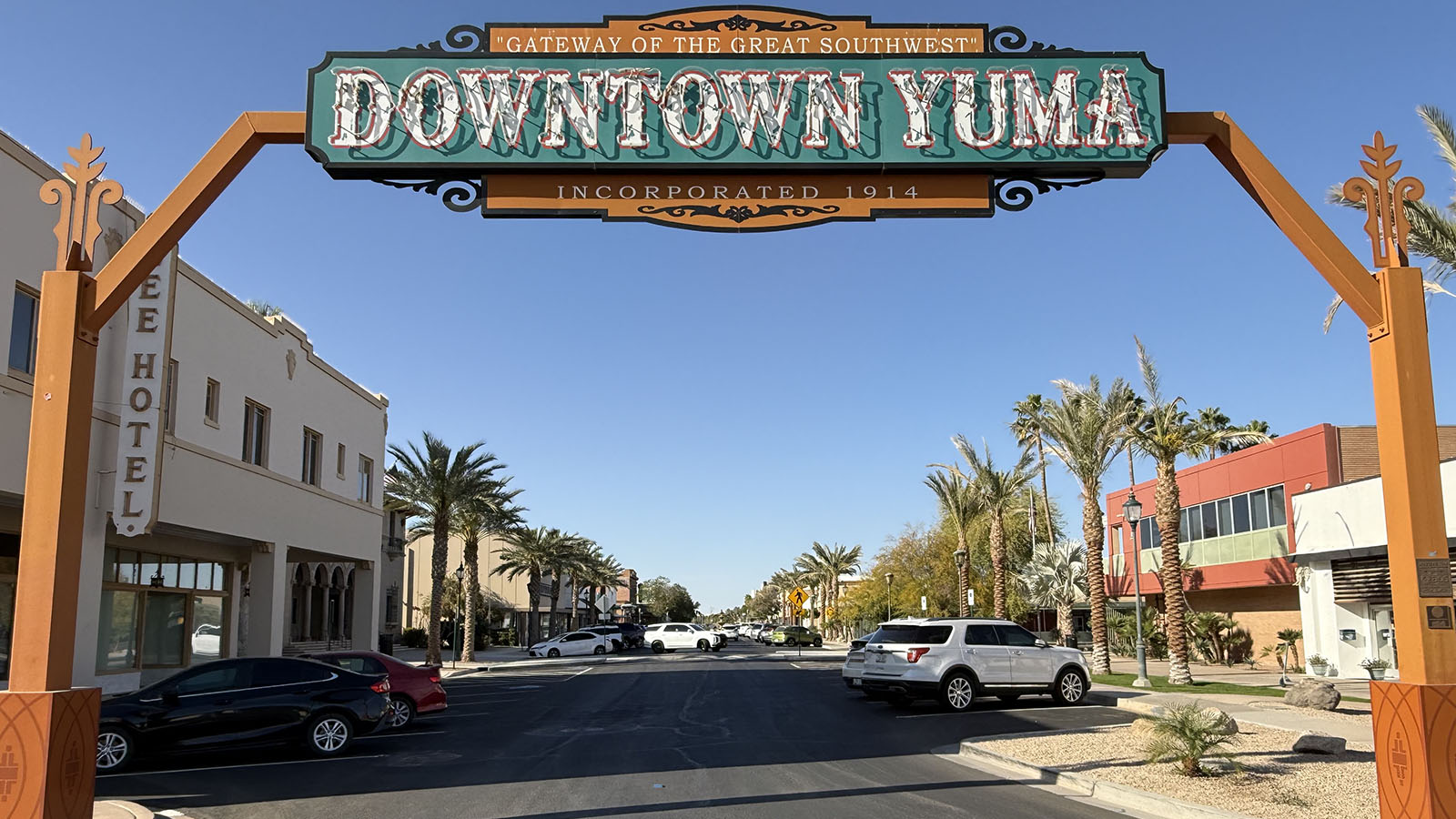
Crossing back into the U.S. at the end of the day and driving ten minutes to your lodging removes an entire layer of anxiety. It lets you rest, decompress, and prepare for the next day while knowing that if you need anything, you can get it.
If you’re undertaking a procedure that already carries emotional and physical weight, don’t stack unnecessary stress on top of it. Take our word for it and give yourself the gift of normalcy by staying in your own country.
Crossing the Border Simply
You cannot bring a rental car into Mexico without international insurance, something which many rental car agencies do not offer, and navigating that is rarely worth the hassle. Parking in Los Algodones is very limited. Lines to re-enter the U.S. by car can be brutal and extend through the entirety of the village. Save yourself the aggravation.
Park at the border and cross on foot. The Fort Yuma Quechan Indian Tribe operates a secure parking lot right at the crossing. Day rates are reasonable, overnight parking is available, and payment is simple; they accept cash, Apple Pay, and Google Pay. You can safely park your car and walk to the border crossing.
If your state offers a passport ID, you can bring that; otherwise, you’ll need your passport. Bring as little as possible with you when you cross the border. Speaking plainly, relations between the US and Mexico aren’t at their best, given the current administration. We mentioned previously that tourists coming over the border are vital to Los Algodones. But that doesn’t mean the immigration officers protecting Mexico aren’t going to pass on an opportunity to amuse themselves at your expense.
The more you carry, the more attention you invite. Small bags get a cursory look. Large bags get searched thoroughly. If you want a smoother crossing, travel light.
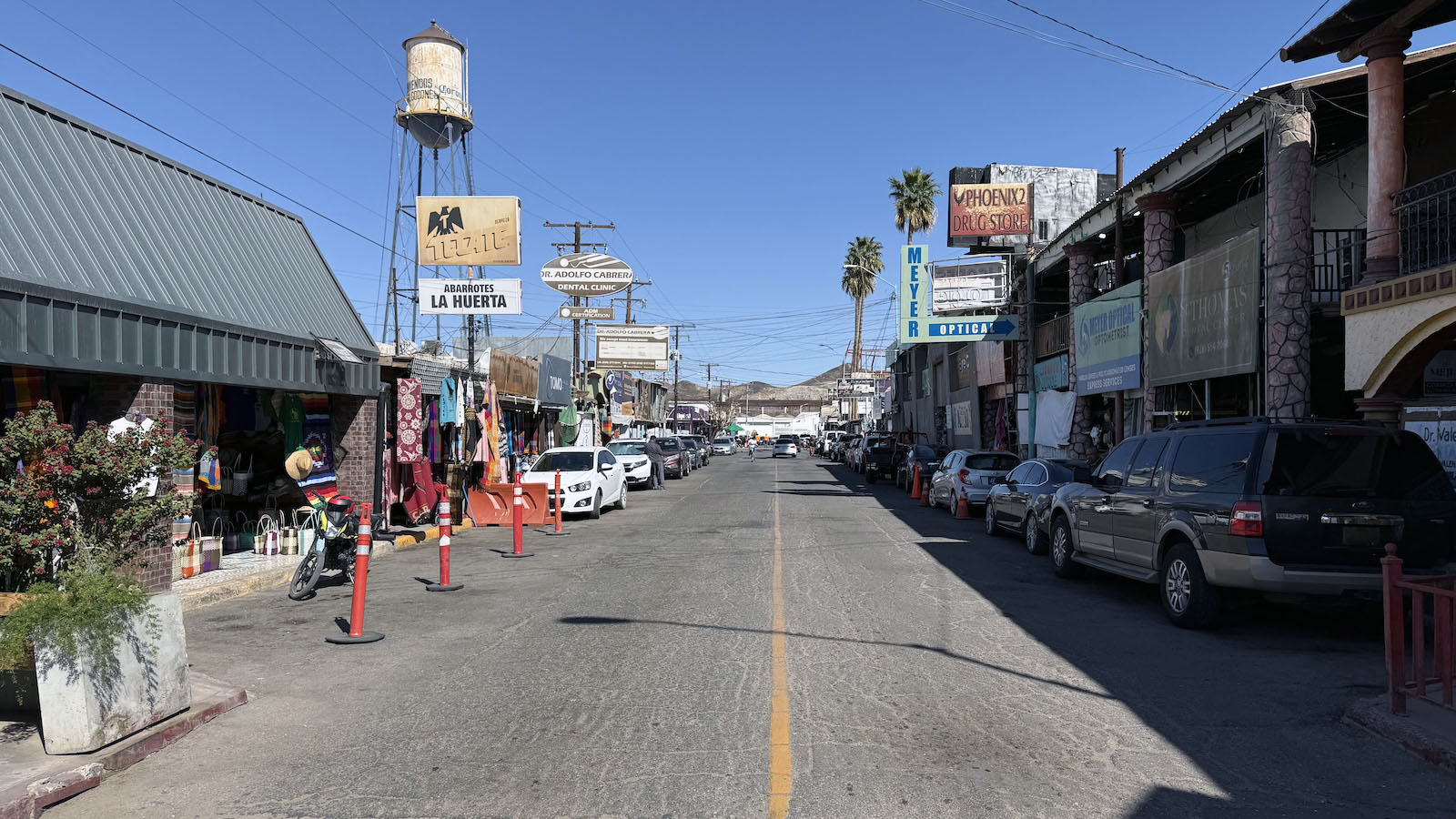
Once in Los Algodones, you’ll notice something immediately: the street barkers. There will be men on every corner asking if you need a dentist, a pharmacy, or an optometrist, and they are all competing for your attention. It will immediately feel overwhelming, but it’s also easy to defuse.
On the way in: “I’ve already had the work done. I’m heading to a follow-up appointment.” This will virtually shut down every street barker, except for the occasional wry “Well then you paid too much…”
On the way out: “I’m all set and heading home.” Which is usually met with genuine warmth like “Safe travels!” or “Come back soon!”
Be polite. Keep moving. They almost always respond in kind.
Los Algodones exists because of medical tourism. You are not intruding. You are the reason the town functions. There’s power in understanding that.
Things to Do in Los Algodones (Besides health care)
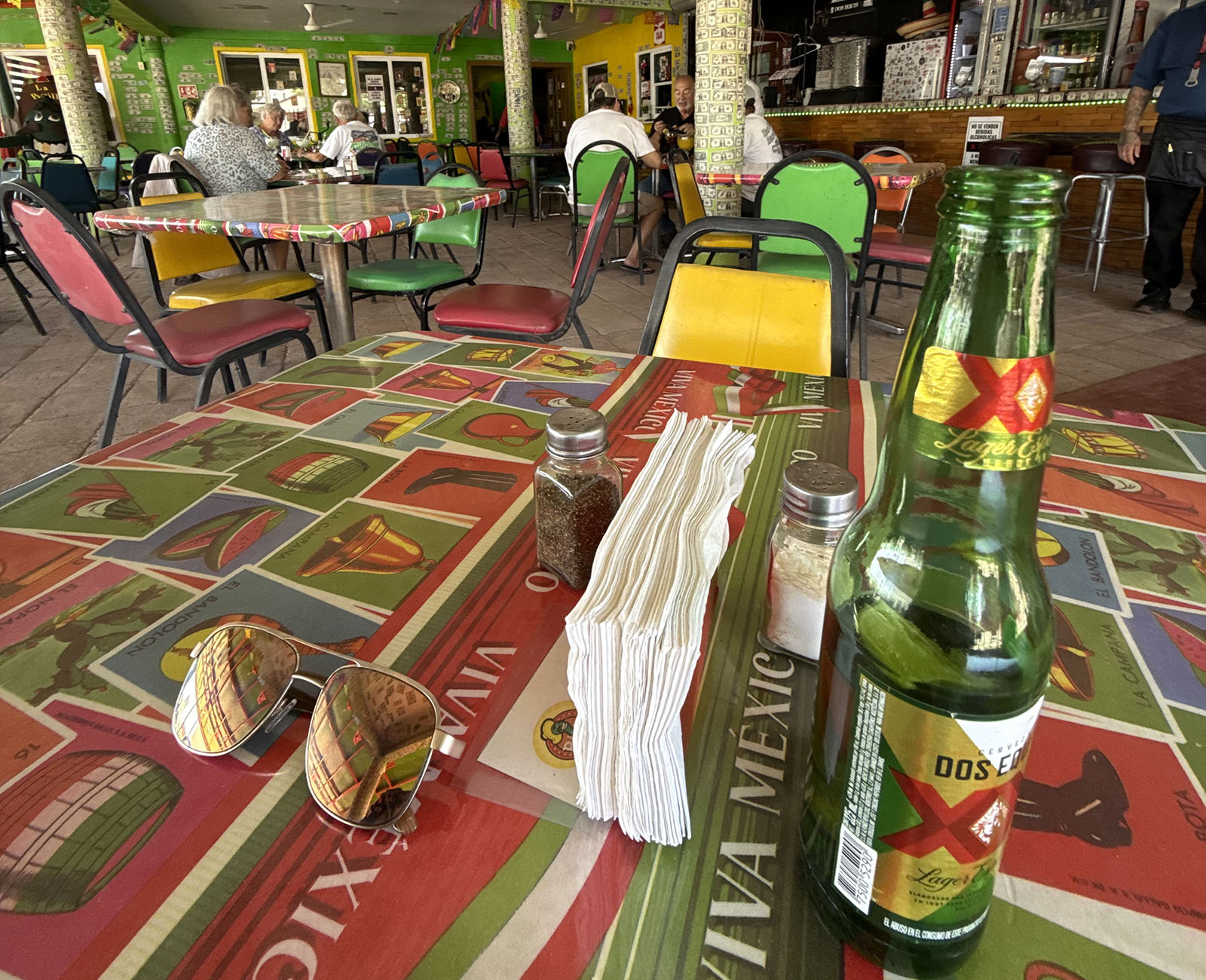
If you’re looking for a solid meal, Mi Casa Es Su Casa in Medi Plaza at C. Álamo 289 is excellent and affordable. La Parilla on Calz. Saratoga 139 had the best steak and eggs breakfast our founder has ever had.
Want a manicure or pedicure? There are salons everywhere, just ask a barker on a corner, and they’ll guide you. You won’t be disappointed.
Craving some ice cream? Beach Hutt Ice Cream on Av. B has you covered.
Given the state of relations between our two governments, Duty Free offerings are limited, but not non-existent. If you’re a tequila fan, stop in to Liquis Algodones on your way back to the border at Av. A 88 and grab a bottle.
Regarding pharmacies, your health care provider may provide you with prescriptions you can easily get fulfilled at any of the pharmacies in Los Algodones. These prescriptions for antibiotics and pain medication will be legitimate and affordable. Be cautious with over-the-counter medications. Don’t experiment. Get what you need as prescribed by your doctor and leave the rest.
Crossing Back Into the U.S.
Crossing back is relatively straightforward, but it is a different route. Re-entry starts on a different street. Follow Second Street north to the awning by the border wall. The length of the line will vary depending on the time of day, but it will always be far less than the wait to cross the border with a car.
There will be a quick passport check before you step through the border fence.
Before entering the Customs and Border Protection building, remove your hat and sunglasses.
You will be prompted with a chime to enter the building, where you will approach an officer and present your passport or passport ID card.
They will ask what you purchased; be honest. If you purchased medication at a pharmacy due to your procedures, tell them. If you purchased souvenirs, tell them. If you’re bringing back a liter of tequila, tell them. All of these are legal.
Once cleared, you proceed through the building, and congrats, you are back in the USA. Head to your car and back to Yuma.
Build in Buffer Days
Plans shift, appointments run long, and recovery has its own timeline. If you find yourself with an unexpected free day, Yuma offers enough to reset your nervous system. Walk the shops and restaurants in Historic Old Town Yuma. Spend an afternoon going back in time at the Territorial Prison State Historic Park. Float down the Colorado River in a tube. Sit in a dive bar like Red’s Bird Cage, take over the jukebox, and let your shoulders drop. Have an elevated dinner at River City Grill or a locally brewed beer at Prison Hill Brewing.
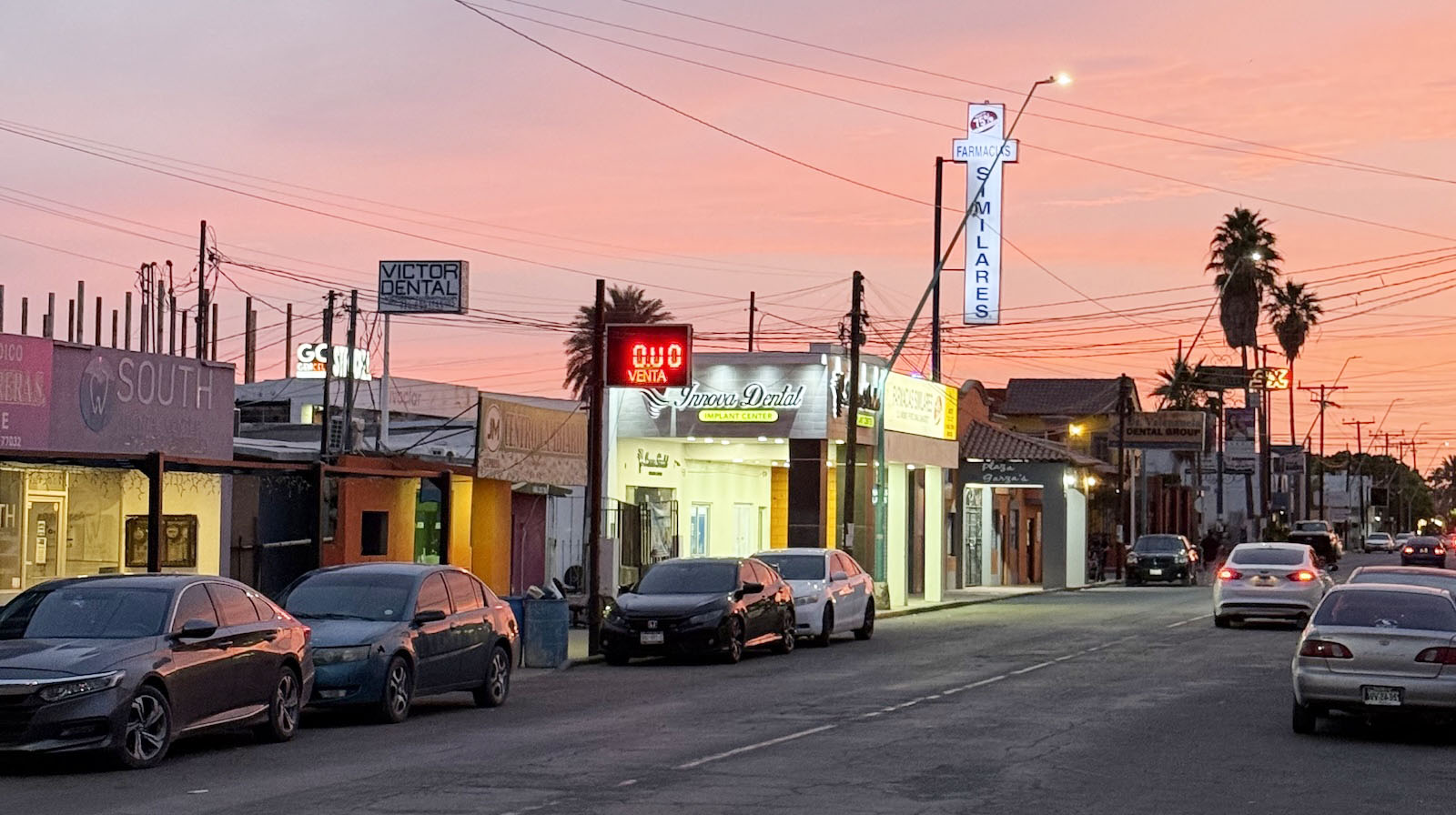
A few things most people don’t tell you:
Don’t bring weapons across the border, not even a pocket knife.
Don’t bring drugs across the border, not even a vape pen or a gummy.
If your instincts say something feels off, walk away.
Lower your expectations for lodging in Yuma. We’re more into vacation rentals as opposed to hotels. Having a washer and dryer means packing light. Having a full kitchen, when getting dental work done, can be a lifesaver. And having a pool to relax in when dealing with a mountain of stress can make all the difference in the world. But the facts are, your neighbor may be raising chickens, and a rooster will start crowing at 5 in the morning. Desert towns have quirks. You’re not in Kansas anymore, Dorothy. Roll with it… lean into it. You won’t be disappointed.
Culturally, Yuma is its own place. Meet it where it is, and you’ll be surprised how welcoming people can be when you drop your guard.
And finally, Los Algodones works because Americans crossing the border are its lifeblood. That doesn’t mean you get to abandon common sense. It does mean you’re not powerless here. Be aware, be polite, treat the people with respect, and they’ll give it back tenfold.
The Point of All This
When all of your options here in the States make you feel trapped, it’s easy to say fuck it. This guide exists to show you that there is another option, one that doesn’t require continuing to suffer with a health problem or acquiring massive debt.
If you do nothing else, do this:
Do your own research. Do the math. And don’t assume the system you’re in is the only one available to you.
When you’re ready, this guide will still be here.