
There are places you visit because you have always wanted to see them. Phoenix was not one of those places for me.
The first time I went there, the trip was all about people. I had longtime friends in Arizona, and visiting them was reason enough to get on a plane. Immediately falling in love with the Sonoran Desert minutes after I left Sky Harbor Airport was an entirely unintended consequence.
I had never seen anything like it.
Coming from New Jersey, where green is the default color of the landscape for much of the year, Arizona initially looked almost extraterrestrial. Reds and browns dominated everything. Mountains rose in the distance behind enormous open stretches of land. The saguaros appeared beside roads like giant green exclamation points, joined by agaves, cholla, paddle cactus, palo verde, and palms. The sky somehow looked impossibly larger than it did at home, stretching over everything with an almost oppressive amount of space.
There were times when I would drive out of the city, watch the buildings disappear, and find myself on a ribbon of pavement surrounded by nothing but the desert.
I can still remember thinking it might as well have been Mars. It was that alien to me and the environment I was used to.
I visited Phoenix half a dozen times before eventually moving there and calling the Valley of the Sun home for three years. It remains the only place outside New Jersey where I have ever lived, and perhaps some of my affection for it comes from just how completely different those two places are.
Phoenix is hot, sprawling, dry, occasionally ridiculous, and impossible to understand if you think the city itself, or the distinct communities surrounding it, are the entire destination.
The Sonoran Desert is the reason it works. And if you want to experience the best version of it, wait until summer loosens its grip.
Go After the Furnace Turns Off
Phoenix hotel rates can become very tempting in summer. There is a reason for that.
The summer heat in the Valley is not simply normal hot weather turned up a few degrees. It fundamentally changes what you can safely do. Iconic hiking destinations frequently close during extreme heat warnings. A leisurely afternoon beside a pool can become considerably less leisurely when the deck burns your feet, and the water temperature is so hot it has stopped feeling refreshing. Getting into a parked car can involve waiting for the steering wheel to become physically touchable.
I have burned myself on seatbelt buckles. More than once.
Late fall is when Phoenix becomes the version of itself I most want people to experience. It was always my favorite time of year.
By late October and into November, daytime temperatures become comfortable enough for hiking, outdoor dining, wandering around the city, and spending hours outside without treating the sun as an adversary. The pools can still be usable, particularly at properties where they are heated, and the brutal spring crush of baseball fans, major events, and seasonal visitors has not taken over the area, driving up prices and increasing congestion.
Spring weather can be equally beautiful, but spring is when the Valley fills up. Spring training alone brings enormous crowds, and major events stack on top of one another. Late fall gives you much of the same glorious weather with considerably less competition for restaurant tables, hotel rooms, and rental cars.
There is one thing newcomers need to understand: desert temperatures can swing dramatically. An afternoon that feels made for a T-shirt can become a jacket night shortly after sunset. The dry air does not hold heat the way humid air does. Pack layers. Layers are your friend.
And carry water. Lots of water.
The Arizona dry heat cliché exists because it is absolutely true. Ninety degrees in Phoenix can feel bizarrely comfortable compared with a humid eighty-degree day on the East Coast. That comfort is deceptive because sweat evaporates so quickly that you may not realize how much water you are losing.
Pack a reusable water bottle or two and drink before you are thirsty. Then drink some more.
The Desert Is Not the Background
The easiest way to misunderstand Phoenix is to see the desert only as the empty space between attractions. It is the attraction.
The easiest way to misunderstand Phoenix is to see the desert only as the empty space between attractions.
It is the attraction.
The Sonoran Desert is surprisingly alive once you know what you are looking at. Saguaro tower overhead. Jumping cholla wait patiently to punish anyone who wanders too close. Lizards scatter across rocks. Roadrunners appear with delightful regularity. Coyotes, javelinas, snakes, and other wildlife become more likely as the city recedes and the landscape gets wilder.
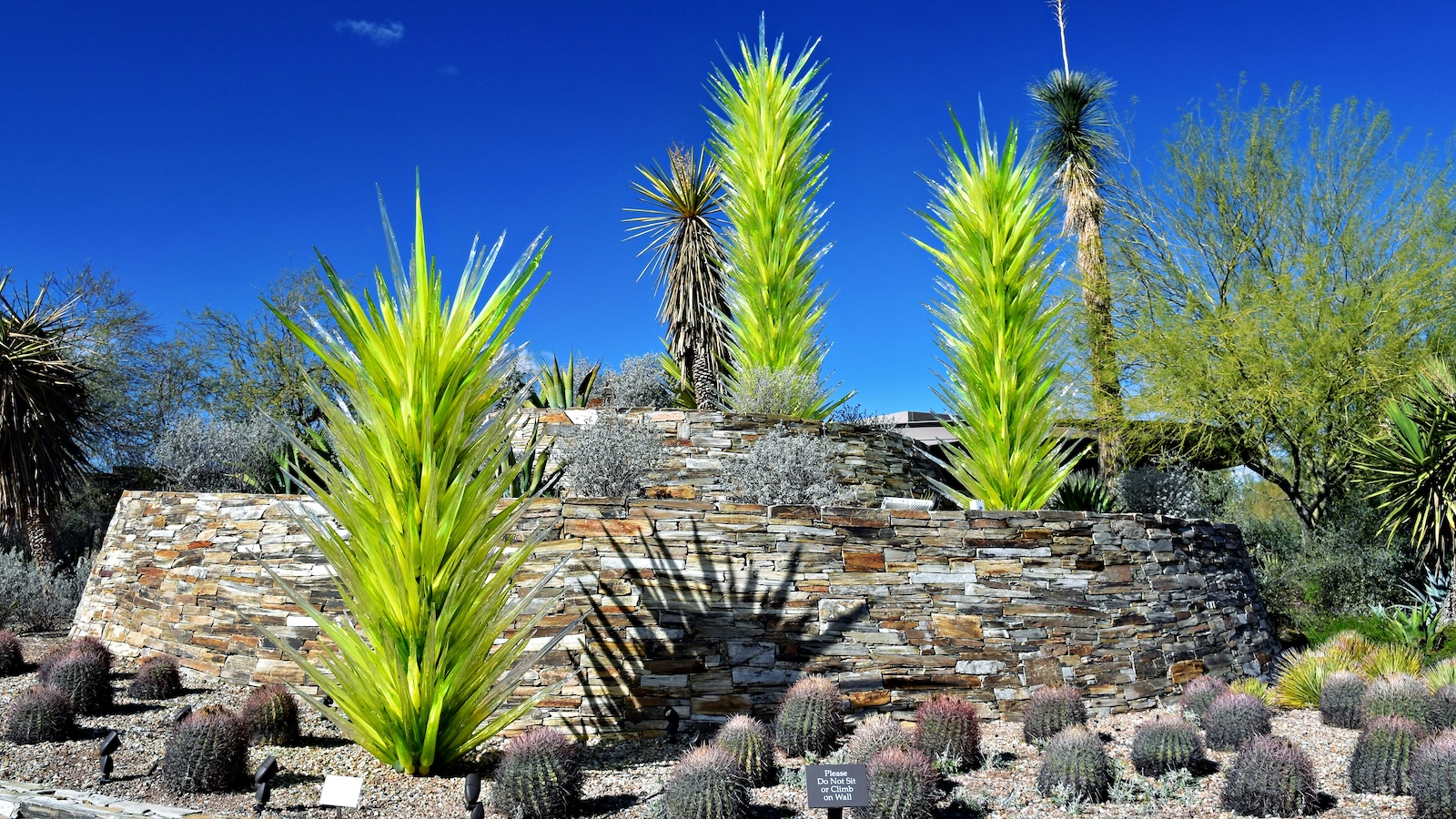
One of the best places to begin understanding the incredible beauty and diversity of all of this is the Desert Botanical Garden.
I had already spent plenty of time in the desert before I visited. I had hiked Lost Dutchman. I had climbed Camelback. I knew what the landscape looked like.
The Desert Botanical Garden became a decoder ring to the Sonoran Desert.
Instead of seeing a blur of cactus and rock, I started recognizing how different species survive, what they are doing, and how much diversity exists inside something that can initially look barren. Saguaros stopped being generic desert icons and became enormous living structures with their own histories. The green bark of palo verde suddenly made sense. Cholla became more than the plant I had learned to swear at.
The garden deserves more than a rushed photo stop. I would give it several hours and, in late fall, arrive in the afternoon so the visit can gradually slide toward sunset.
That golden transition is one of Phoenix’s great pleasures.
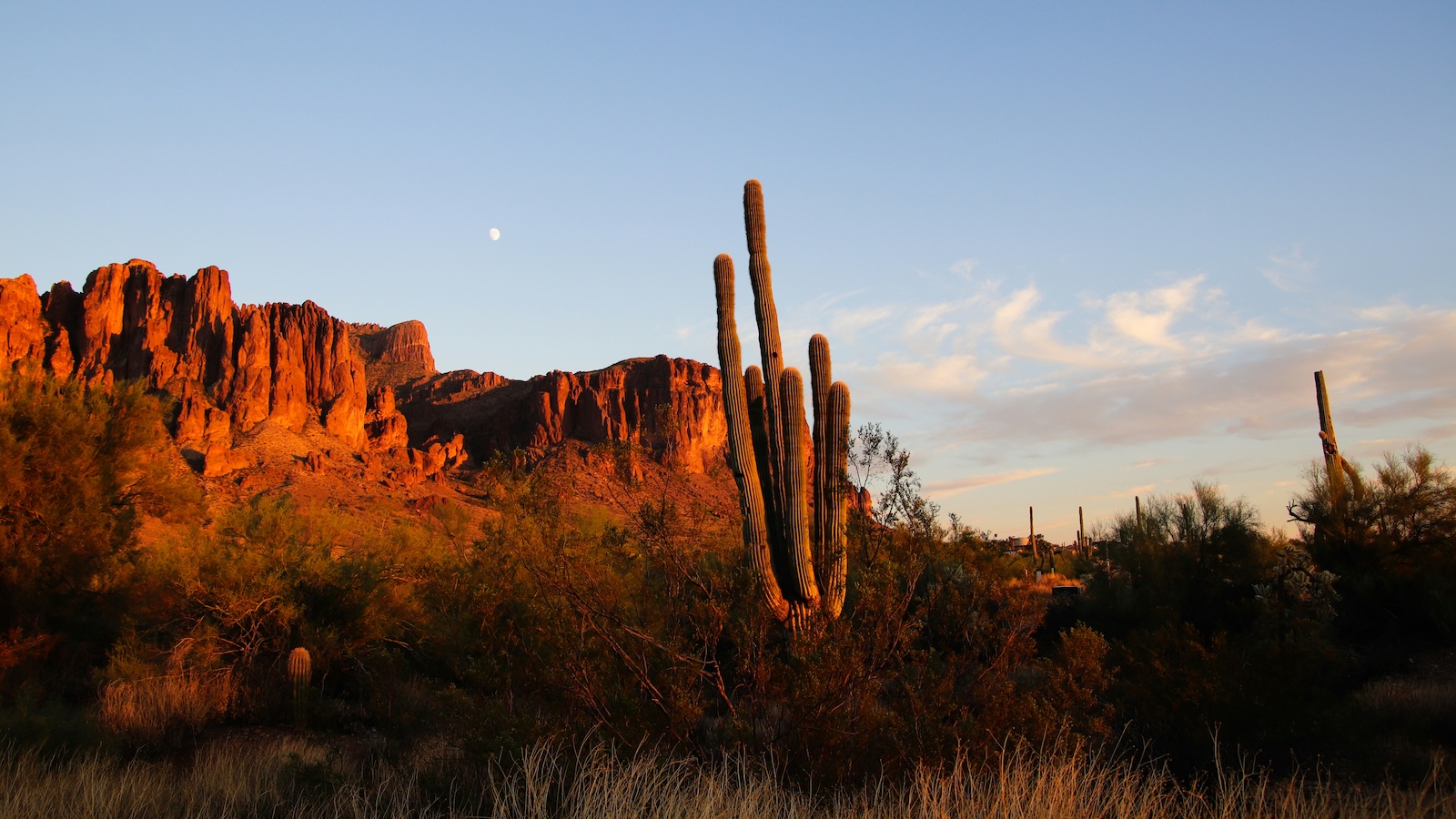
The desert changes by the minute as the sun lowers. Mountains deepen into reds and purples. Saguaros turn into silhouettes. The giant sky that felt almost too large in the middle of the day suddenly becomes a canvas.
Phoenix sunsets really are as good as people say, and evenings at the Desert Botanical Garden are a wonderful and unique experience.
Not Every Desert Walk Needs to Become a Survival Story
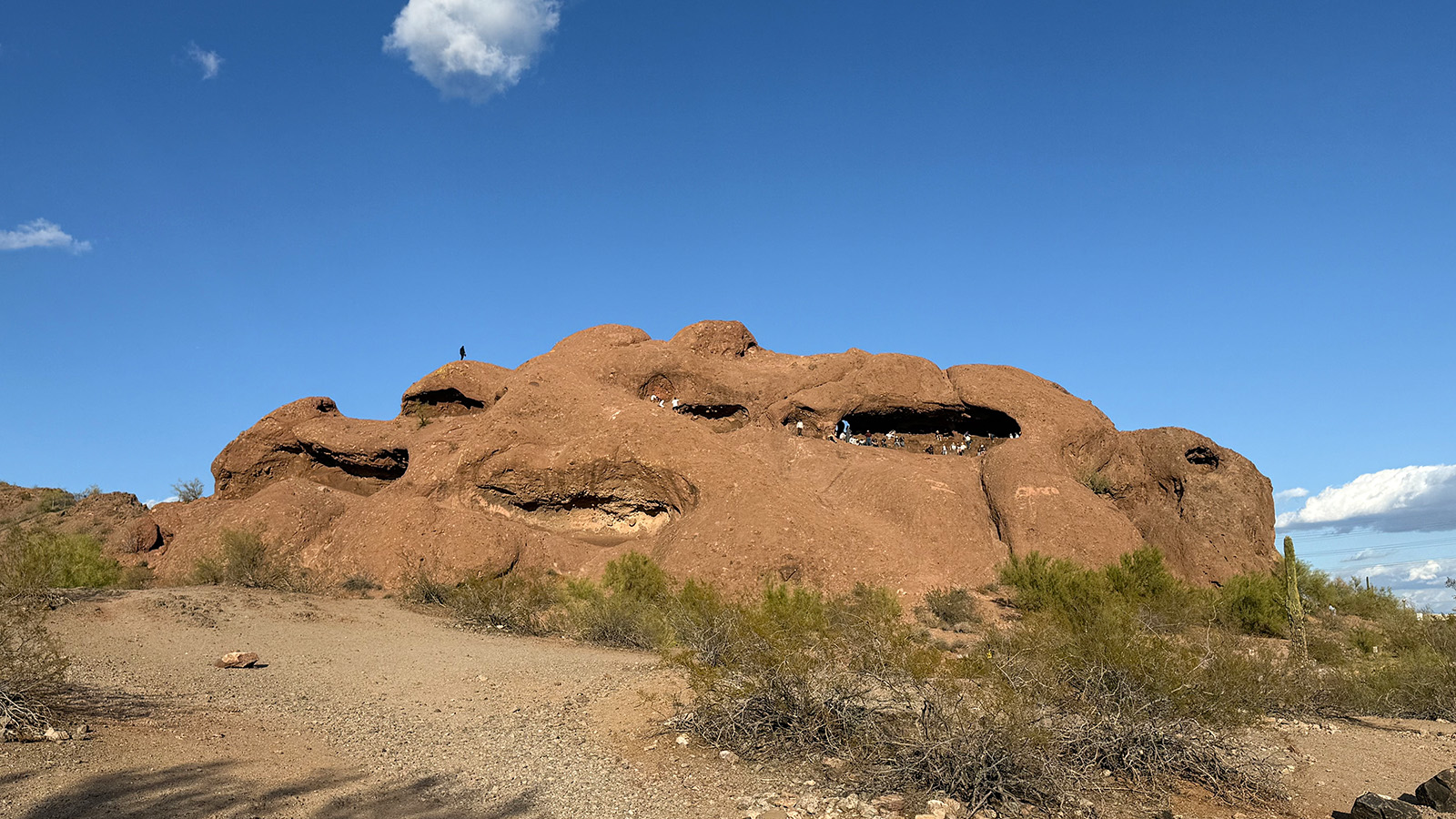
You do not need to climb a mountain to experience the landscape. Papago Park proves that.
Its red sandstone formations are immediately recognizable, and Hole in the Rock offers one of the best effort-to-payoff ratios anywhere in the Valley. The walk is short, easy, and approachable for people who have no interest in spending several hours scrambling over rocks.
It is also popular, so you are unlikely to have the place to yourself.
That has never bothered me. People move through the opening, take their photos, sit for a few minutes, and eventually move on and give someone else the view.
Papago is also close enough to the Desert Botanical Garden that combining the two makes sense. Spend the afternoon learning how to read the desert, then climb into Hole in the Rock and watch the sun begin to disappear over the Valley.
That is a very easy day to recommend.
Lost Dutchman, however, is something else entirely.
Where the Desert Starts Feeling Wild
Drive east toward the Superstition Mountains, and Phoenix slowly lets go of you.
Traffic thins. Buildings disappear. The suburbs fall away, and the desert takes over.
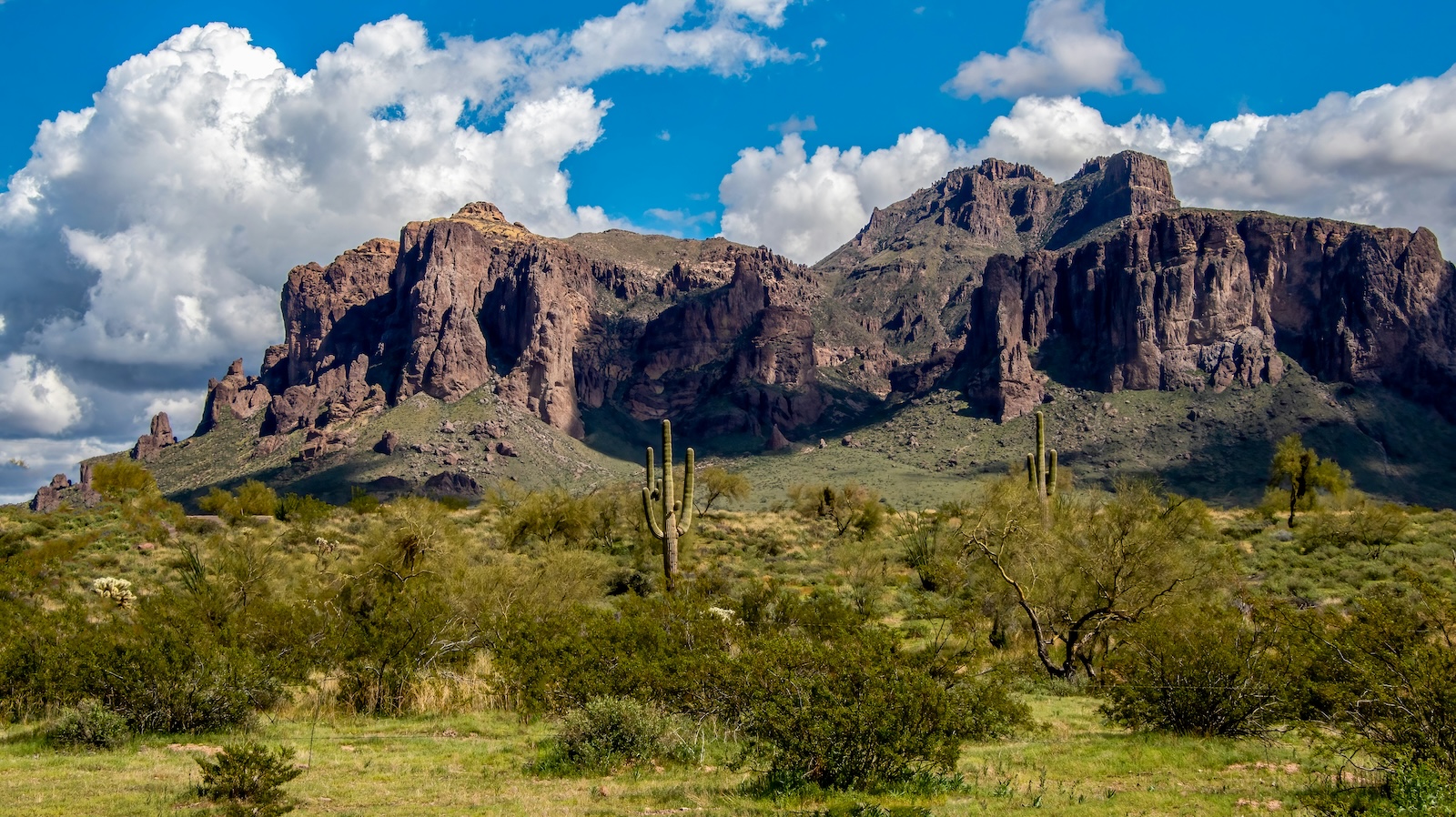
Lost Dutchman State Park was one of the first places where the desert stopped feeling like something surrounding a city and started feeling properly wild.
The Superstitions rise abruptly from the landscape, more jagged and severe than the mountains around central Phoenix. The whole place carries the kind of exaggerated Old West drama that would feel corny if the mountains themselves were not standing there proving the point.
I do not remember which trail I first hiked. I remember that it was considerably easier than Camelback, with long stretches of manageable crushed-gravel trail and enormous views across the park.
I also remember meeting jumping cholla.
The name makes them sound supernatural, as though the cactus actively launches itself at passing hikers. It does not. It simply has segments that detach with such ridiculous ease that getting slightly too close can feel indistinguishable from being attacked.
Give cholla more room than you think it needs. And carry something like a plastic comb so you can remove a segment without grabbing it with your fingers and turning one bad decision into two.
I also learned another useful desert lesson at Lost Dutchman: a trail ending at a rock face does not automatically mean the universe is inviting you to climb it.
I once reached a section where the trail seemed to stop and assumed the route continued upward. Camelback involves scrambling, so I figured this must too.
I climbed. Then I climbed some more.
Eventually I reached a roughly vertical section, worked my way up it, sat down on the landing above, and experienced a moment of clarity with the sudden return of adult judgment.
I was alone. My friends were on another trail. I had never rock climbed in my life. I had no equipment. If I fell, injured myself, or knocked myself unconscious, nobody knew exactly where I was.
I climbed back down very carefully.
The desert gives you an enormous amount of freedom. That does not mean every possible thing you can do is a good idea.
Camelback Makes You Earn It
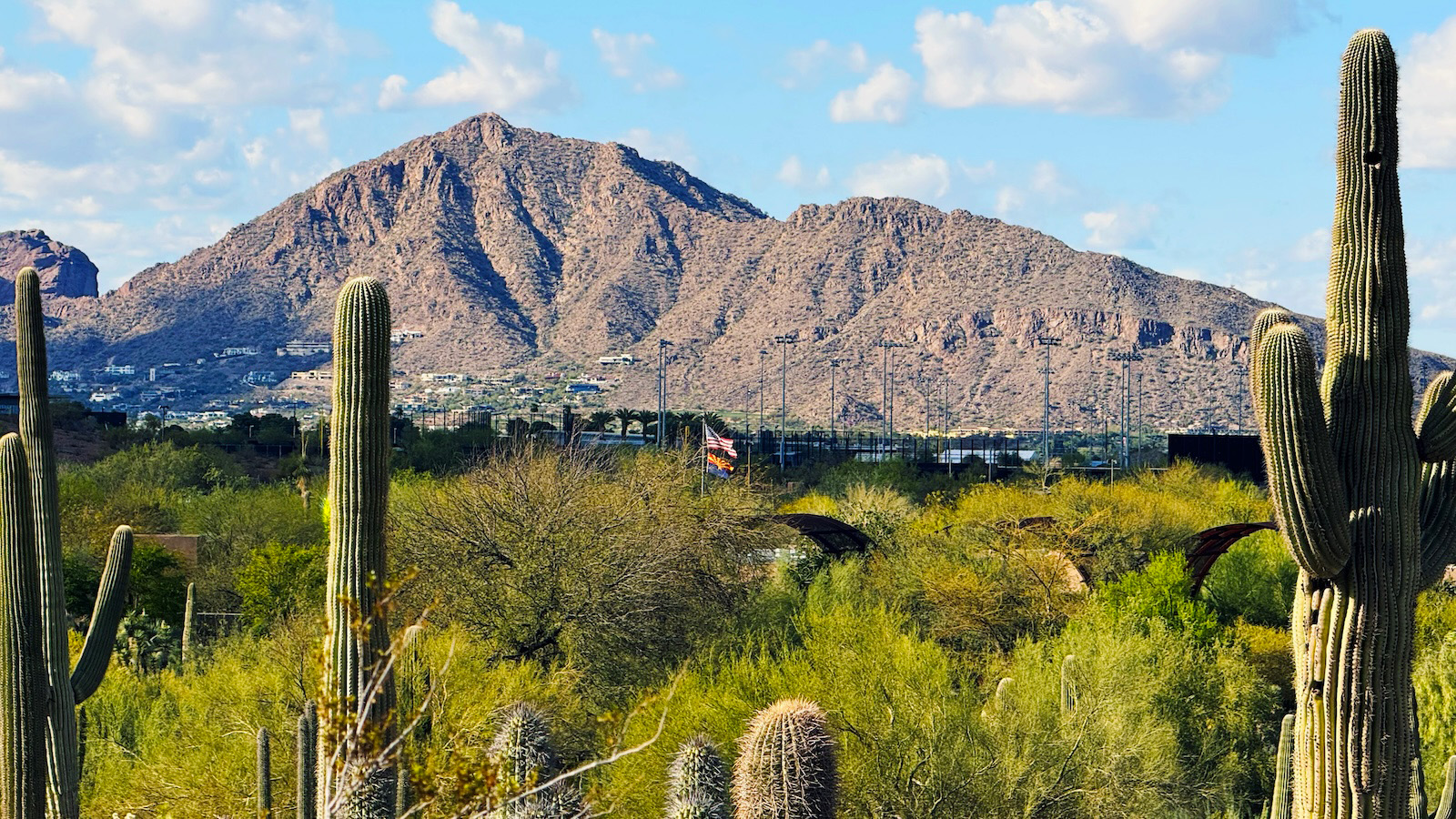
Camelback Mountain is probably the most famous hike in Phoenix, and that familiarity can make it dangerously easy to underestimate.
It sits right in the middle of the metropolitan area. You can see houses, resorts, roads, and city life all around it. That proximity can make it feel like a neighborhood hike.
I promise you it is not.
I have always climbed the Echo Canyon route, and I would describe it less as a long walk and more as a full-body negotiation with a mountain.
The climb comes immediately with a seemingly never-ending series of steps. That transitions into large rock steps, steep sections requiring handrails to pull yourself up, and stretches of boulder fields where you are using hands as much as feet. I am 6'4" with long legs, which means some obstacles that require a genuine scramble for other people amount to a large step for me. I do not want that advantage to minimize the difficulty.
People have started the hike with me and turned around before reaching the halfway point, opting to wait for the group down at the parking lot facilities.
That is the right decision when it needs to be made.
If you are reasonably fit, comfortable scrambling, properly hydrated, and wearing good footwear, Camelback is incredibly rewarding.
If you have significant knee problems, poor balance, a serious fear of heights, or simply no desire to spend part of your vacation hauling yourself over boulders, Papago will still love you.
The summit is worth the ordeal.
There is a moment after reaching the top when the first reaction is simply triumph: “Fuck yes. I just did that.”
Then the adrenaline settles, and the view takes over, and everything becomes still, contemplative even.
The Valley spreads in every direction below you. Planes take off and land at Sky Harbor. Roads, buildings, pools, desert, and mountains become part of one enormous map. You suddenly see the ridiculous scale of the place and how completely the city has wrapped itself around the landscape.
I have taken visiting friends and family up Camelback repeatedly.
One year, my brother came to Arizona around my birthday and climbed it with me. Only after returning home did he learn that a coughing fit the previous week had collapsed one of his lungs.
He remains extremely proud of this. “I climbed a mountain with one lung” is now part of the family mythology.
I cannot argue with the résumé.
Yes, There Is Water in the Desert
One of my favorite Phoenix memories begins with a bend in a road just 9 miles past Lost Dutchman State Park.
Friends took me toward Canyon Lake for the first time, driving through the Superstitions along a winding stretch of desert highway. Everything around us was rock, cactus, and mountains.
Then we came around a corner, and below us, blue water appeared between the canyon walls. The visual makes no sense the first time you see it.
After hours or days of acclimating to an environment defined by dryness, Canyon Lake feels almost impossible. Deep blue water sits between volcanic cliffs covered in saguaros. Boats of various shapes and sizes move through narrow channels. People swim beneath rock walls that look as though they belong in an entirely different ecosystem.
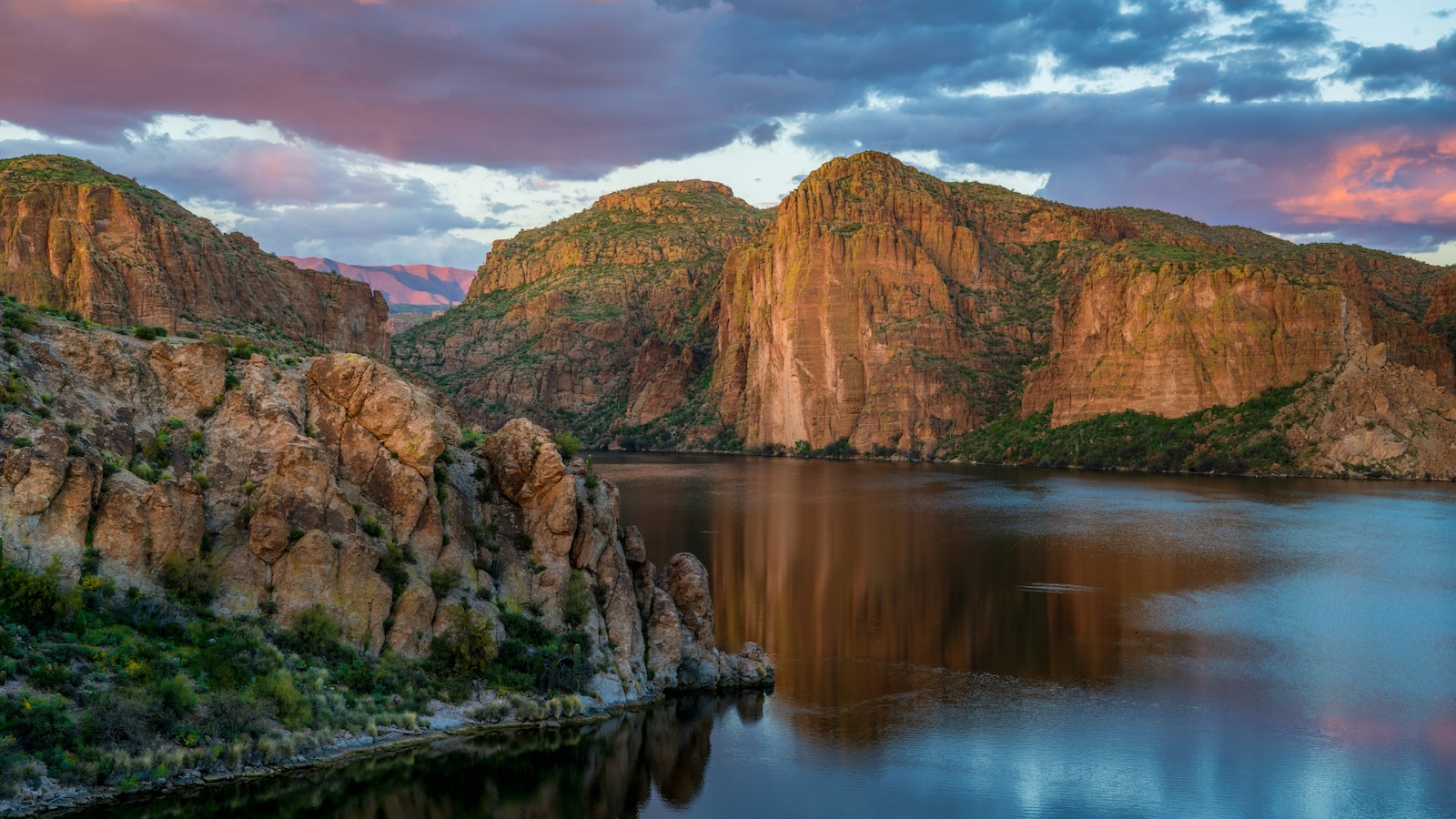
My friends and I rented a pontoon boat, essentially a floating backyard deck with an engine. We loaded it with food, water, and beer, cruised until we got hot, stopped to swim, then kept going.
It was one of the best days of my life, so much so that I repeated it whenever family visited.
My parents came to see me around Father’s Day one year, and my gift to my dad was another pontoon rental. We spent the day on Canyon Lake together. They still talk about it.
So do I.
For anyone planning a trip in late 2026, however, Canyon Lake comes with a major temporary caveat: maintenance work is scheduled to close the lake and its public recreation facilities through the late-fall season. That makes this particular recommendation one to save for a future visit or replace with another nearby water experience until the lake reopens.
The important point is not simply Canyon Lake itself. It is the surprise that there is this much water woven through the desert at all.
The Lower Salt River offers another version of it.
Tubing there can be either a giant floating party or something much quieter depending on season and timing. I have done it with friends, drifting through the desert while wild horses appeared along the river.
It is not something every visitor needs to do, particularly because operations are seasonal, but when conditions and timing cooperate, floating through the Sonoran Desert is an experience that rearranges your understanding of what a desert can be.
Rugged in the Morning, Robe by Afternoon
One of the things Phoenix does unusually well is allow you to move between extremes without leaving the same landscape.
You can spend one morning covered in trail dust and the next afternoon wandering around a spa in a robe.
Or, better yet, do both on the same day.
I have written before about my first proper day-spa experience at Inspire Day Spa in Scottsdale. I booked it after completing a long and difficult dental journey, and the experience fundamentally changed how I thought about self-care.
Phoenix and Scottsdale are perfect places for that kind of reset.
Spa culture feels completely natural there because so much of the architecture and landscaping already blurs the boundary between indoors and outdoors. Pools, stone, cactus gardens, courtyards, mountain views, and open air all combine to become part of the atmosphere.
There is also something deeply satisfying about earning the indulgence.
Spend the morning asking your legs to get you up Camelback. Then spend the afternoon asking absolutely nothing of them.
Spend the morning asking your legs to get you up Camelback. Then spend the afternoon asking absolutely nothing of them.
That is my kind of balance.
Scottsdale Polishes It, Tempe Turns Up the Volume
The greater Phoenix area is not one city with interchangeable suburbs. The personalities change dramatically depending on where you are.
Scottsdale is the polished one.
Old Town can be touristy and, on weekend nights, parts of the entertainment district can cross into performative chaos. Bottle-service crowds, expensive cars, bachelorette parties, and high-gloss nightlife are not necessarily what I mean when I talk about loving the desert.
But that is only one slice of Scottsdale.
During the day and early evening, Old Town becomes much easier to appreciate. Galleries, public art, museums, restaurants, Southwestern architecture, patios, and the Scottsdale Civic Center area create a walkable district that feels substantially different from the sprawling Valley around it.
It is a great place to spend an afternoon and let it turn into dinner.
Tempe is not interested in being polished. Tempe is interested in volume.
Mill Avenue sits beside Arizona State University and behaves accordingly. On a fall weekend, it can become an enormous moving mass of college students, bars, music, food, sports fans, and questionable decisions.
I have very fond memories of the mayhem.
Tempe Beach Park hosts a fantastic Oktoberfest, and the combination of drinking beer outside all day, taking advantage of the light rail, and eventually migrating toward Mill Avenue with a big group of friends produced exactly the sort of evenings that sounded like a great idea at the time and became even better stories later.
One of my favorite stops was Low Key Piano Bar, a basement dueling-piano room directly on Mill. It closed in August 2026 after more than a decade, which is unfortunate timing for anyone reading this and thinking it sounds like their kind of place.
It absolutely was.
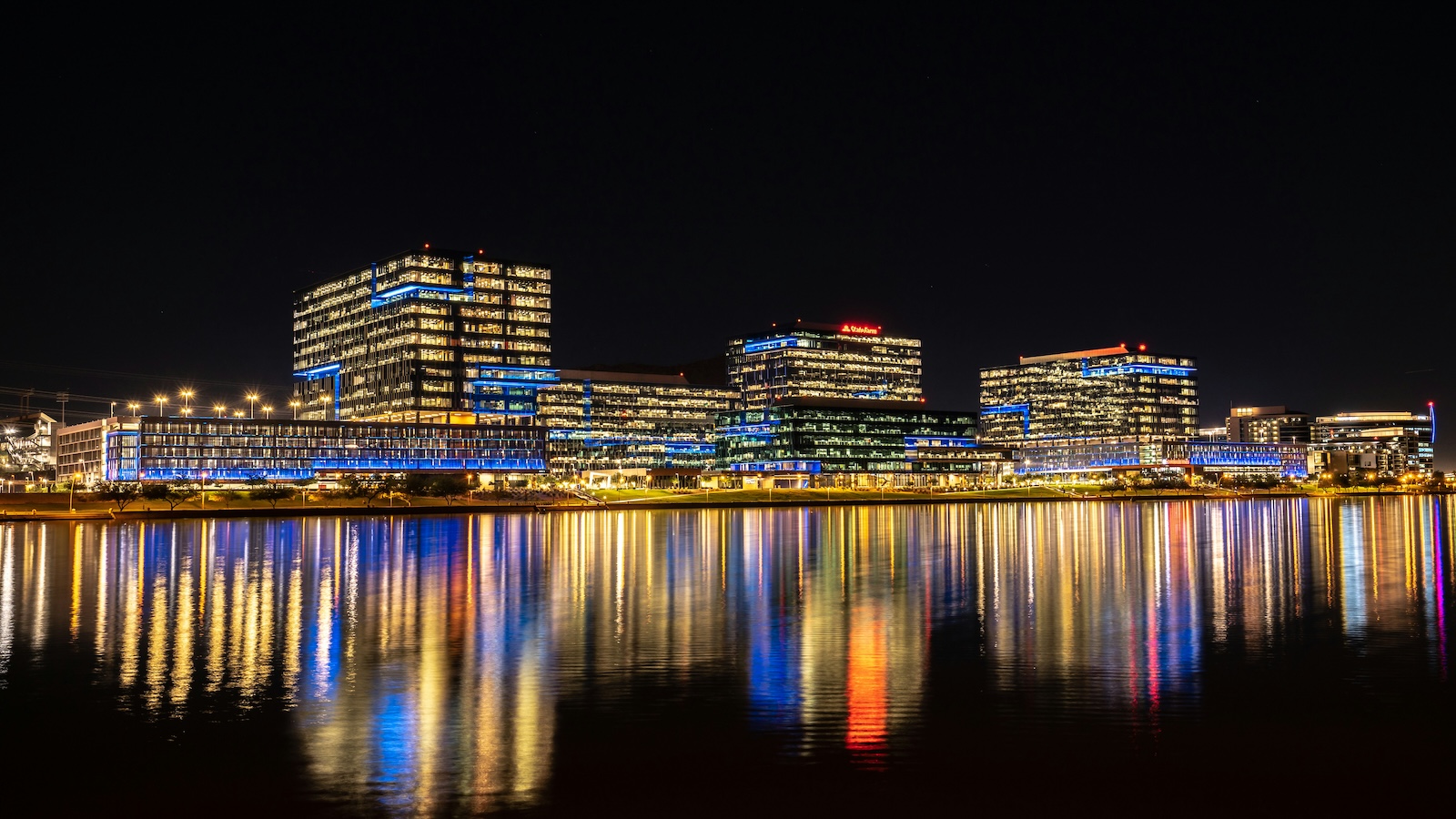
Tempe Town Lake nearby offers the quieter side of the same neighborhood. During the day, people run, cycle, paddle, and wander the waterfront. At night, the bridges and skyline light up across the water.
It is a good reminder that Tempe does occasionally lower its voice.
The Best Stuff Is Not Always in the Tourist Districts
Living in the Valley taught me that some of its most memorable places are nowhere near the standard Phoenix vacation itinerary.
Mesa has developed a thriving Asian District centered around Dobson Road, packed with markets, restaurants, bakeries, and businesses representing cultures from across Asia.
One of my longtime favorites is Asian Cafe Express.
The Cantonese food was enough reason to go, but what made the place unforgettable was the collection of vintage tiki mugs behind the bar.
A friend of mine who loved mid-century design became obsessed with them and repeatedly attempted to negotiate the purchase of various mugs from Kam, the family matriarch who helped run the restaurant. It depended entirely on the mug.
For some pieces, she would begrudgingly relent, and my friend would head home with more than just a doggie bag of leftovers. Other pieces were so precious to her she refused to budge.
Kam died in 2024, but the restaurant continues, now led by her son Michael. That tiki collection will always remind me of those dinners and my friend’s unwavering belief that one of those mugs would be going home with him.
Mesa is also home to Organ Stop Pizza, which sounds like something invented during a fever dream. The basic idea is pizza plus an enormous theater organ.
The actual experience involves a gigantic Wurlitzer rising out of the floor while an organist takes requests and somehow turns dinner into a full theatrical production involving pipes, percussion, lights, and an audience that is completely on board with the absurdity.
You do not go because Phoenix desperately needed another pizza restaurant. You go because apparently somebody once asked what would happen if a pizza parlor had the soul of a Vegas stage show.
Then there is Joe’s Real BBQ in Gilbert.
If I landed in Phoenix tonight and had to pick somewhere familiar for dinner, Joe’s would be at the top of the list. Smoked meat, historic brick surroundings, long communal tables, and absolutely no need to turn dinner into theater.
Phoenix has plenty of upscale restaurants. But it is the weird little institutions and intensely local favorites that tend to stay with me.
Eat the Desert
Phoenix food has changed enormously since I lived there, and many places I loved are gone. That is inevitable in any city. What remains distinctive is how much the landscape itself influences the food.
Mesquite smoke matters here. Sonoran Mexican food matters. Native ingredients matter. The proximity to Mexico matters.
Phoenix taught me that ‘Southwestern’ does not need to mean somebody sprinkled black beans and corn over grilled chicken and put chipotle mayonnaise on the menu.
Phoenix taught me that “Southwestern” does not need to mean somebody sprinkled black beans and corn over grilled chicken and put chipotle mayonnaise on the menu.
There is a regional identity here that comes from the desert.
Modern Phoenix has also become far more ambitious as a food city, with nationally recognized chefs and restaurants drawing attention well beyond Arizona. I would rather treat that as an invitation to explore than pretend I have personally eaten at every famous restaurant that has opened since I left.
My own list is far more nostalgic.
The Orange Table, now gone, produced one of my favorite hangover breakfasts, a Loco Moco served with a Tequila Sunrise because apparently the solution to the previous evening was to negotiate with it.
Chino Bandido remains one of the Valley’s glorious culinary oddities, mixing Chinese, Mexican, and Jamaican influences in ways that sound impossible until you start eating.
The Fry Bread House offers something more culturally grounded, centered on Native American frybread and the indigenous food traditions of the region.
The point is not to build a master restaurant list.
You could spend an entire trip eating through Phoenix and still leave with work unfinished.
Phoenix Is Enormous
One practical reality becomes unavoidable very quickly. The Valley is huge.
Phoenix, Scottsdale, Tempe, Mesa, Gilbert, Chandler, Paradise Valley, and the surrounding communities blend together into an enormous metropolitan area, but distances that look manageable on a map can consume significant time.
There is no way to sugarcoat it. You have to rent a car.
There are exceptions. Tempe is particularly easy to navigate with light rail and walking, and someone spending a short weekend entirely inside Old Town Scottsdale could survive happily with rideshares.
But if your plans include Camelback, Lost Dutchman, Mesa, Gilbert, the Salt River, and the outer reaches of the desert, trying to stitch the trip together without your own vehicle becomes needlessly complicated.
Choosing where to stay matters for the same reason.
I am personally biased toward Mesa because I lived there and know how comfortable it is. For a first-time visitor planning to explore widely, however, somewhere central around Scottsdale or Arcadia probably makes more logistical sense.
I generally prefer vacation rentals because I like having an entire property, but Phoenix is also one of those places where a resort stay can make enormous sense.
My parents once stayed at a four-star resort while visiting me and scored an absurd off-season deal. My dad played golf. My mom used the spa.
At some point I would like to return for a week or two and do exactly that: stay at a resort. Perhaps I am evolving. Perhaps it’s that I was broke when I lived there and would like to experience the luxurious side of the Valley.
Pretty sure it’s the latter.
The Desert Sets the Rules
Phoenix can make the outdoors feel deceptively accessible.
Mountains rise out of neighborhoods. Trailheads sit beside expensive houses. Parking lots have drinking fountains and bathrooms. It can be easy to forget that the landscape does not care how convenient the access looks.
The desert gives you an enormous amount of freedom. That does not mean every possible thing you can do is a good idea.
You have to respect it.
Bring more water than you think you need.
Wear sunscreen even when November temperatures feel comfortable.
Use real footwear for serious hikes.
Give cholla an almost comical amount of personal space.
Do not wander off into a rock-climbing adventure because a trail ended somewhere confusing.
And moisturize. I am going to spare you the very specific physiological story that taught me that last lesson.
You are welcome.
The Only Other Place I Called Home
Phoenix will probably always have a strange hold on me because it occupies a unique place in my life.
I visited repeatedly before moving there. Then I spent three years living inside a landscape that could not have been more different from the one where I grew up.
It is a city of transplants, eccentrics, giant roads, strange laws, spectacular restaurants, endless suburbs, college chaos, luxury spas, cactus forests, mountains, reservoirs, and people occasionally walking through supermarkets dressed in ways that would require far more explanation in New Jersey.
It is wild in more ways than one.
But when somebody mentions Phoenix, those are not necessarily the first things I remember.
I remember cocktails during sunsets.
I remember how huge the sky looked.
I remember turning a corner and seeing Canyon Lake for the first time.
I remember sitting on top of Camelback after the adrenaline faded.
And more than anything, I remember the smell of creosote after rain.
Rain is uncommon enough in the desert that you notice it differently. The landscape changes. The air changes. The smell rises from the ground and announces that something rare has happened.
That is Phoenix for me.
It’s never simply a city dropped into an empty landscape.
It’s a city whose personality cannot be separated from the Sonoran Desert surrounding it.
If you visit Phoenix expecting only a city, you may miss the best part.
The desert is the reason to go.