
Why a full-size workhorse, a tiny travel tool, and an old favorite all make sense for different reasons.
A good multi-tool earns its place every time it saves you a trip to the toolbox for a simple two-minute fix. That is really the entire argument.
My actual tools live in the basement, organized inside a multi-level mechanic’s chest beside my workbench. If I am repairing something substantial, that is where I am going. A folding pair of pliers with a handful of attachments is not going to replace a proper ratchet, full-size screwdriver, or dedicated set of cutters.
But most problems around the house aren’t substantial.
A battery compartment needs to be opened. A pair of glasses has a loose screw. A package arrives. Something needs to be grabbed with pliers. A bracket needs tightening. There is some tiny mechanical irritation standing between you and whatever you were doing five minutes ago.
Going downstairs for a screwdriver adds complication to a simple task.
That is why a multi-tool has lived within arm’s reach of my desk for roughly fifteen years. For most of that time, it was a Gerber Suspension.
Seven months ago, after I had finally abused nearly every working edge on the thing beyond reasonable limits, it was replaced by a Leatherman Wave Plus.
But when I leave the house, neither comes with me. That job belongs to a Gerber Dime small enough to disappear inside my cross-body bag.
After owning and using all three, I have become convinced there is no single perfect multi-tool. Rather, there is simply the right amount of tool for the problem you might encounter.
I have become convinced there is no single perfect multi-tool. Rather, there is simply the right amount of tool for the problem you might encounter.
The One That Earned Its Retirement
Gerber Suspension
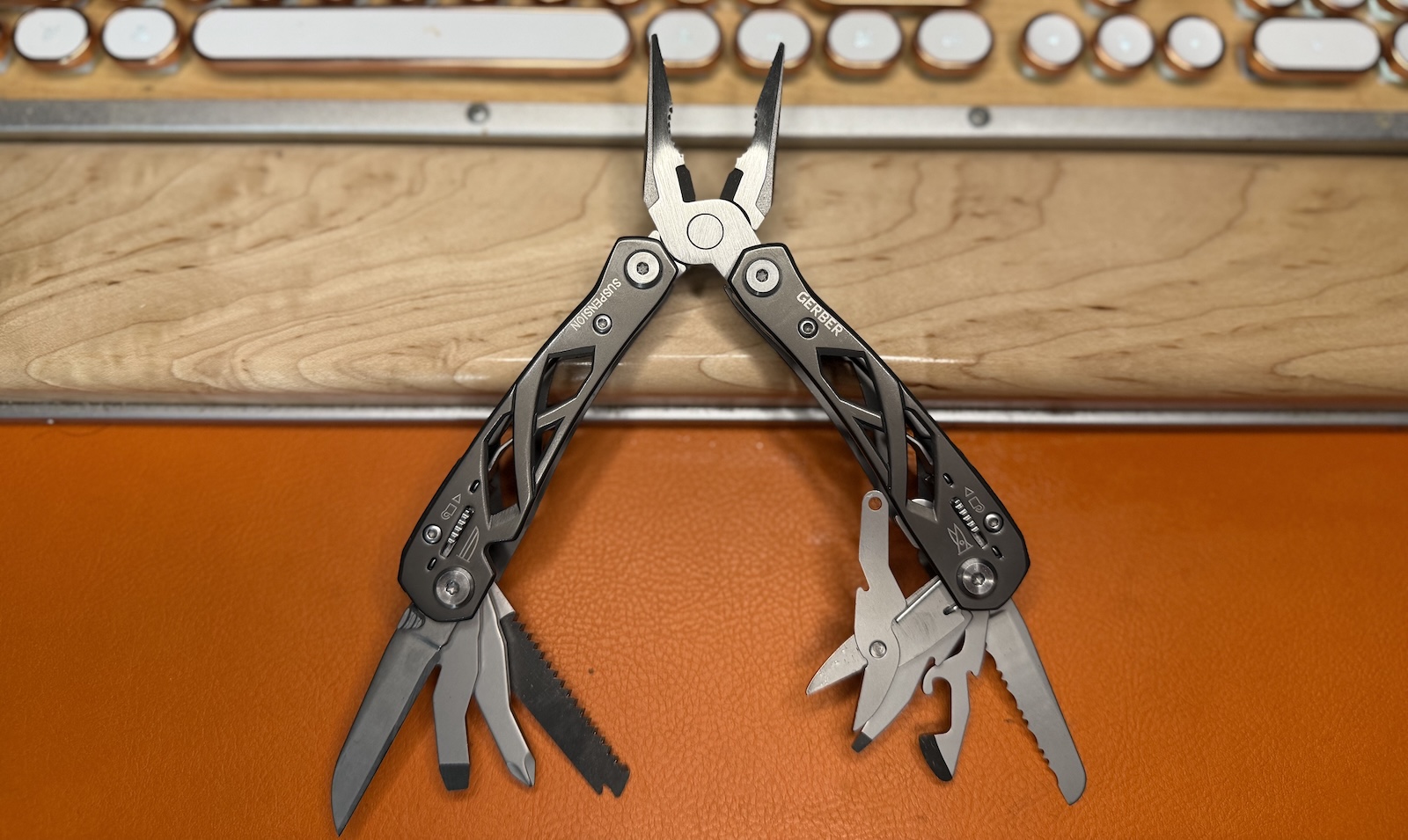
I bought my original Gerber Suspension before I started carrying a pocket knife regularly.
It was never part of some elaborate everyday-carry philosophy. It sat on a shelf beside my desk because having pliers, screwdrivers, scissors, blades, and a few other basic tools within reach was incredibly convenient. And I proceeded to use the hell out of it for about fourteen years.
The damage accumulated gradually.
The straight blade tip broke off. The same thing happened to the serrated blade. The saw teeth were chipped. The flathead screwdriver eventually lost a corner of its edge. Even the cutters inside the pliers had nicks from jobs they probably should not have been asked to perform.
The can opener suffered a more dramatic fate.
At some point, I was trying to bodge together a repair involving plastic. I needed something metal that I could heat and use to melt, cut, and shape part of it.
All I had on me was my Suspension, and I remember looking through the tools, realizing that something was going to be sacrificed. The can opener volunteered.
I had never used it for its intended purpose. It was still practically new, and while I can’t remember the specifics of the repair, getting the job done mattered more at that moment than preserving the pristine condition of a tiny folding implement designed to open a can of beans.
The repair worked. The can opener did not survive with dignity.
It was scorched, discolored, and painful to look at afterward. I still kept using the Suspension for another year or so because apparently fourteen years of loyalty makes you willing to overlook quite a lot. Eventually, though, the cumulative damage became impossible to ignore.
The holidays were approaching. My family was asking what I wanted, and replacing my multi-tool finally seemed less like an indulgence and more like putting an elderly employee into a very well-earned retirement.
Why There Is Still a Brand-New Suspension in My Basement
The funny thing about retiring my original Suspension is that I still own another one that has never been used. It lives in an emergency bag in the basement, still in its original packaging.
That bag exists because Hurricane Sandy taught me an uncomfortable lesson about being prepared.
When Sandy hit New Jersey, I was caught completely flat-footed. We lost power for about a week, and the cold eventually became the worst part of the experience. My emergency lighting was limited. I had some camping gear, a propane lantern, and whatever batteries happened to be in the house.
By the end of that week, we were seriously contemplating abandoning the house temporarily and staying with family who had power again. The cold was that rough.
Afterward, I started putting together supplies gradually. Not an apocalypse bunker. Not shelves of beans waiting for civilization to collapse.
Just enough equipment so that if the power disappears for an extended period, or I am told to leave the house quickly, I am not starting from zero.
That includes lighting, heat, communications, first aid, shelter, food, and basic tools.
The unopened Suspension went into that bag because I already trusted it.
If I had to throw one bag into my Jeep and leave, a compact tool capable of cutting, gripping, tightening, and improvising solutions seemed like an obvious thing to include. Ideally, I will never need it.
That is the entire point.
The Serious Upgrade
Leatherman Wave Plus
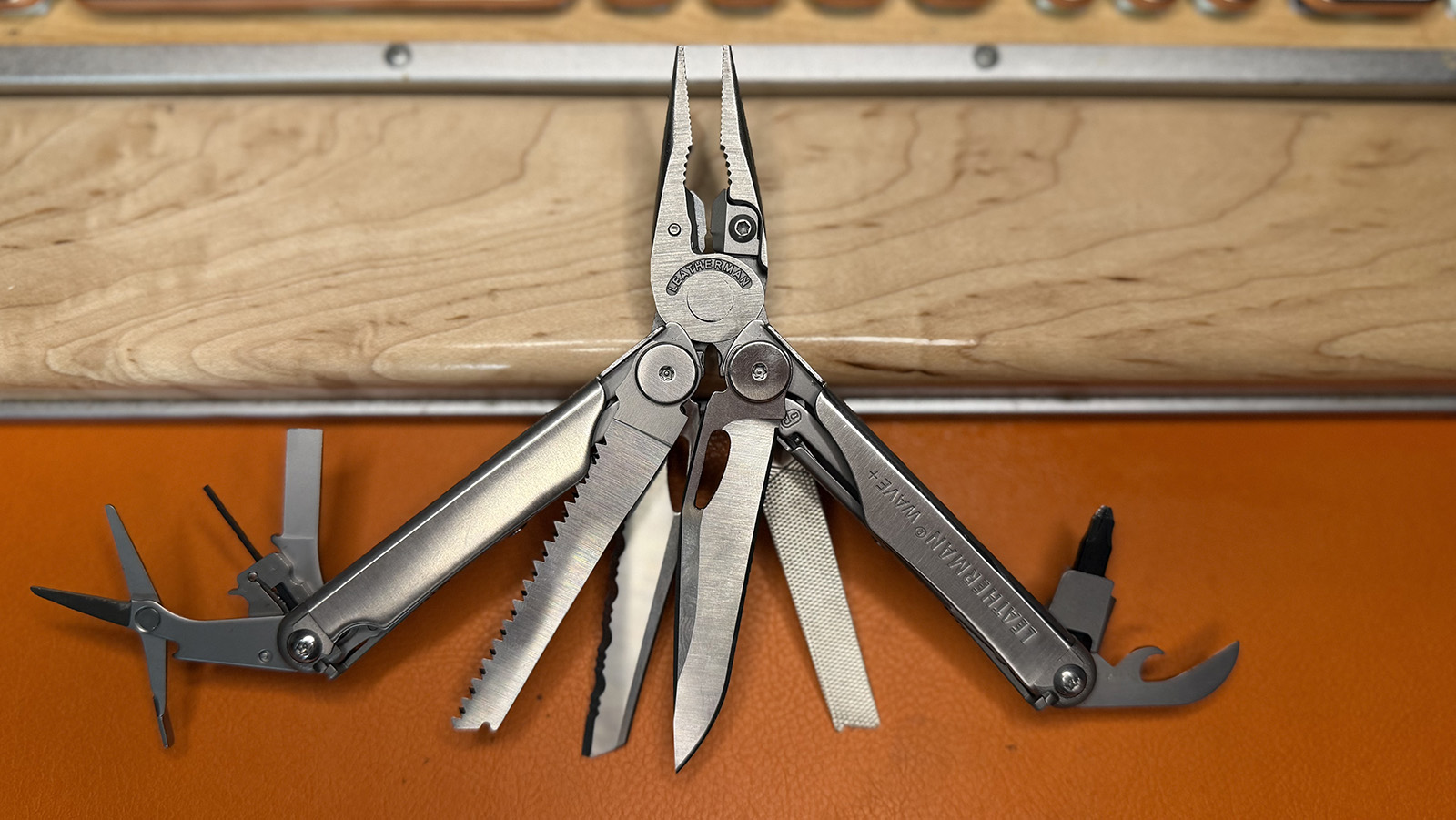
I did not spend months disappearing into online multi-tool forums or comparing the tolerances of different types of stainless steel. I searched for highly rated full-size multi-tools at a reasonable price and looked for patterns.
Again and again, the Leatherman Wave Plus appeared near the top.
That was enough to make me investigate it more closely, and once I looked at the tool layout, I could immediately see features that addressed several things I had learned from years with the Gerber.
The most important is almost embarrassingly simple. The blades are on the outside.
With the Suspension, using a knife meant unfolding the pliers, digging out the blade, closing the handles again, and then getting to work.
On the Wave Plus, the main blades, file, and saw can be accessed while the tool is still closed.
That sounds like a tiny convenience. It is not. I use that feature constantly.
A package arrives, and my pocket knife is still upstairs on my nightstand? Thumb flick.
Something needs cutting while I am sitting at the desk? Thumb flick.
No unfolding the entire contraption just because another Amazon box has arrived at the house.
The second thing I noticed immediately was the build quality. Everything feels tighter. The locking mechanisms are intuitive. The pliers feel substantially better engineered. The interchangeable bit driver adds useful flexibility without requiring a pile of full-size screwdriver attachments that have to be carried separately.
The replaceable wire cutters matter too, particularly because I had already managed to damage the cutters on the Suspension. If I eventually chew these up as well, I do not have to replace the entire tool.
Then there are the blades. My God.
When the Wave Plus arrived, I was genuinely startled by how ridiculously sharp they were. Seven months later, they still demand respect.
I learned that lesson while opening a forty-pound bag of dog food. I put my thumb against what my brain apparently decided was a harmless section of the straight blade.
It was not.
The Wave Plus bit me once. We now understand each other.
Better Pliers Matter More Than They Sound
There is another design issue with folding multi-tools that rarely sounds important until you actually try to use the pliers aggressively.
Depending on the design, the open edges of the handles can dig directly into your palms when you squeeze.
That creates an irritating paradox.
You technically have pliers, but using enough force to make the pliers useful hurts your hands. I have experienced that on other tools and always hated it.
The Wave Plus still puts the open sides of the handles against your palms in pliers mode, but the edges are beveled enough that I can actually squeeze hard without feeling as though the tool is punishing me for trying. That matters.
A multi-tool is built entirely around compromise. None of its individual implements is going to outperform the dedicated version sitting in my toolbox.
The pliers do not need to be the best pliers I own. They simply need to work well enough that I do not immediately wish I had gone downstairs to get the real ones.
The Wave Plus crosses that threshold easily.
The Tiny One Has a Completely Different Job
Gerber Dime
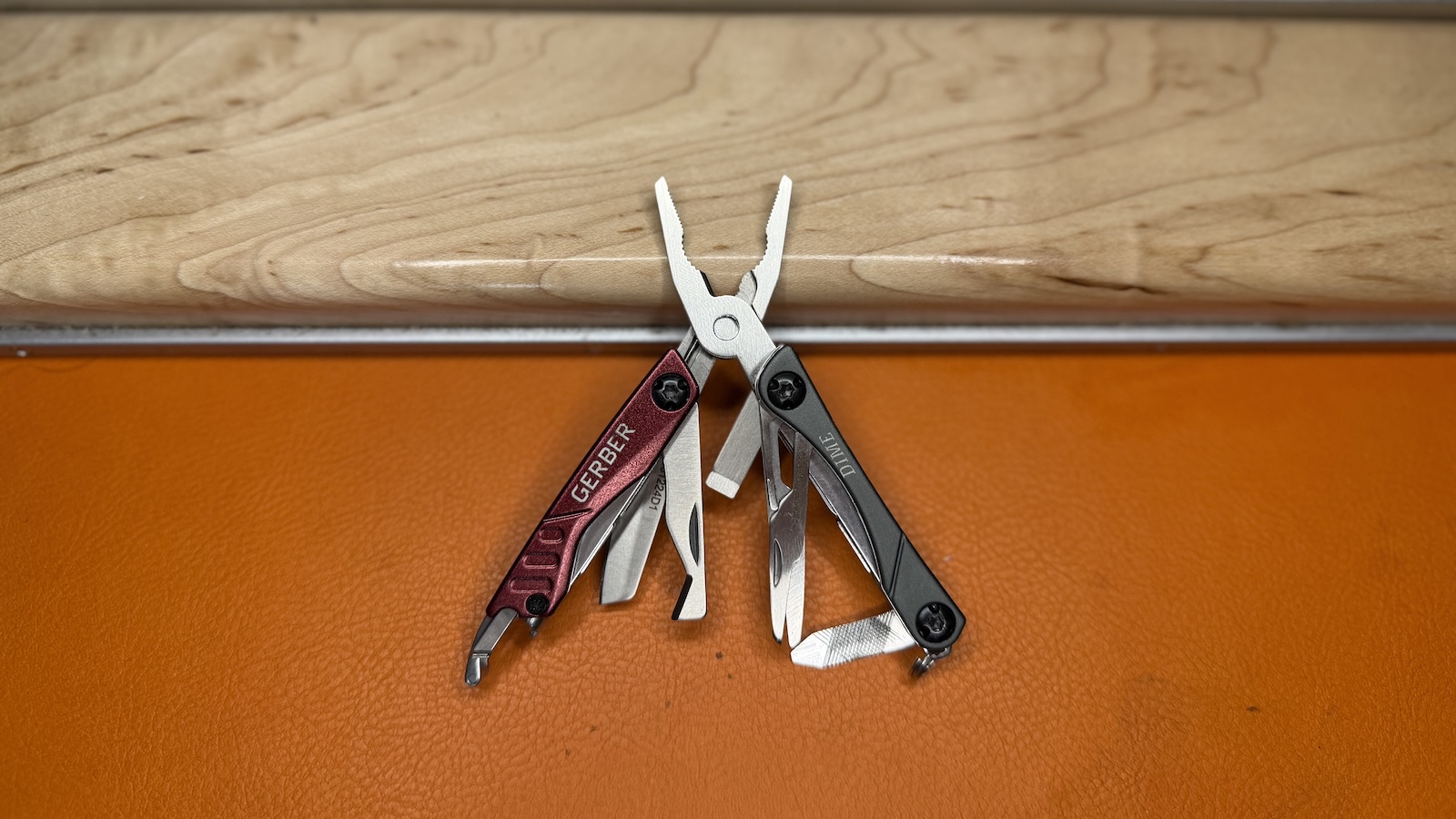
If the Wave Plus is so capable, why do I not carry it everywhere? Because I do not need a full-size multi-tool everywhere.
This is where the Gerber Dime comes in. The Dime is tiny. It can attach to a keychain, although I find it a little heavy for that. Instead, mine lives in the front pocket of whichever small cross-body bag I am carrying.
That means it is with me at the beach, at work, running errands, and on vacation.
It is not pretending to replace the Wave Plus. It solves a completely different problem.
I’ve written before about the best travel philosophy I’ve learned: pack for the trip you are actually taking instead of packing for anxiety. You cannot prepare for every possible problem without eventually dragging the contents of your entire house behind you.
The Dime fits perfectly into that philosophy. Dime? Logical. Wave Plus? Packing for anxiety.
I’ve used the tiny pliers to adjust monitor mounts in the office and the small screwdriver to tighten my camera equipment. I am particularly paranoid about keeping tripod mounts tight after once watching an SLR detach and crash onto a Chicago sidewalk. The flathead in the Dime adds peace of mind that the mounts will stay put.
The tweezers have removed splinters. The small flathead has fixed eyeglasses.
It has even assisted with threaded piercings and captive bead rings when my fingers could not get enough grip to loosen them.
None of these jobs makes for an especially exciting survival story. That is precisely the point.
A multi-tool earns its keep through hundreds of annoying little moments where the alternative would have created even more hassle.
Small Enough to Carry Means Small Enough to Compromise
The Dime does have limitations. The most irritating one is the lack of a proper Phillips screwdriver.
It has a full-size flathead and a tiny flathead at the tip of the file. With enough care, I have managed to use that smaller driver on many Phillips screws.
It works. Mostly.
But this is where the difference between the Dime and a full-size tool becomes obvious. The Dime exists because it disappears into a small bag. If Gerber tried to give it every capability of a larger multi-tool, it would stop being a Dime.
That compromise is worth making.
I would rather have a limited tool with me than a spectacular tool sitting three feet from my keyboard while I am hundreds of miles away. I know this because I lost my first Dime. I replaced it immediately.
There was no debate, no fresh round of research, and no attempt to find something newer.
I already knew it was completely capable of filling the role I needed it to.
I would rather have a limited tool with me than a spectacular tool sitting three feet from my keyboard while I am hundreds of miles away.
Not Everyone Needs a Belt Holster
Every full-size multi-tool seems to come with some kind of sheath designed to hang from your belt. There are situations where that makes perfect sense.
If I still worked in public safety, as I did nearly twenty years ago, I would absolutely carry one. The same goes for tradespeople, technicians, mechanics, and anyone who regularly needs tools while moving between jobs.
In a corporate office? No. I am not clipping a Leatherman to my belt before walking into a marketing meeting. That does not mean someone working at a desk has no use for one. Quite the opposite.
I think most people would benefit from keeping a capable multi-tool in a desk drawer, kitchen junk drawer, glove compartment, workshop, or wherever those irritating little problems tend to appear.
Tinkerers will get more from them because we are naturally inclined to fix, adjust, modify, and improvise.
But people need tools. Basic ones, at least. A multi-tool is simply a remarkably compact way to make sure some of them are always nearby.
The Best Tool Is the One That Fits the Job
The Gerber Suspension lasted about fourteen years because it was exactly what I needed at the time. Eventually, I destroyed enough of it that retirement became an act of mercy.
The Leatherman Wave Plus replaced it because I wanted something better built, easier to use, and easier to repair. Seven months later, I would replace it with the exact same model if something happened to it tomorrow.
The Gerber Dime does not compete with either one. Its job is to go where the other two do not.
That is why trying to identify one perfect multi-tool misses the point.
The Wave Plus is perfect sitting beside my desk because capability matters more there than size.
The Dime is perfect in my cross-body because size matters more there than maximum capability.
And the unused Suspension in the emergency bag represents something else entirely: a tool I trusted for fourteen years, and trusted enough to buy again for a situation I hope never happens.
None of them replaces a real toolbox. They are not supposed to.
Their job is much simpler: to save you a trip to the toolbox when all you need is a simple two-minute fix.
Latest From Style & Substance
Two Fall Scents, Done Right
Two fall fragrances, two very different moods. Layton brings warmth and ease; Halfeti brings depth, structure, and cold-weather drama.
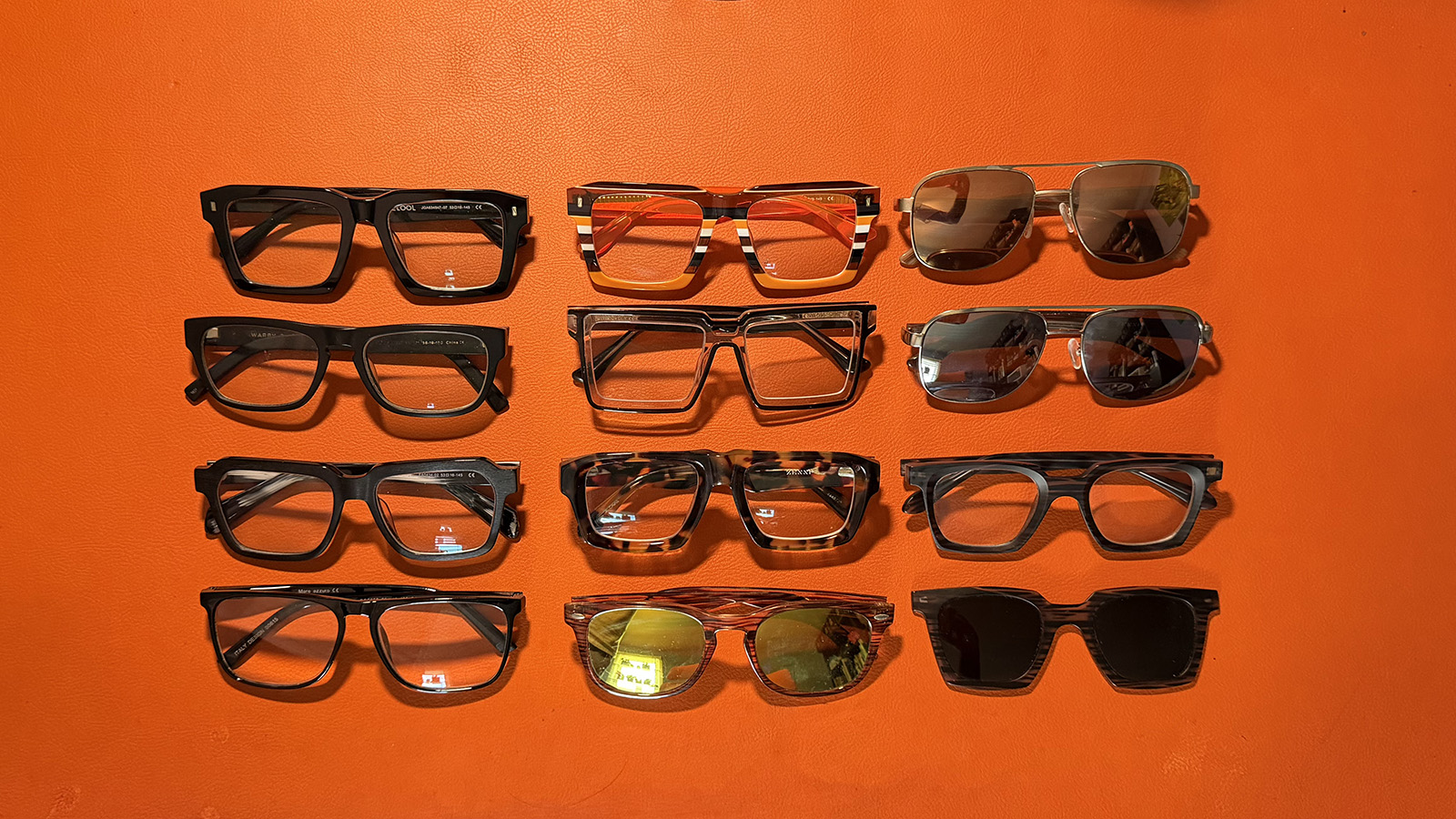
The Case for a Wardrobe of Glasses
Cheap glasses changed more than the price. They turned eyewear into part of the wardrobe, with room for color, risk, and personality.

The Beach Day Isn’t Over Until You Recover From It
A beach day is worth the sun, salt, sand, and sweat. But when you get home, recovery is part of taking care of yourself.