
How affordable eyewear turned a medical necessity into part of the wardrobe.
For most of my life, buying a pair of glasses was an annual event.
I have worn them since I was about thirteen, and for decades the rhythm barely changed. I would get an eye exam, pick a frame, work through the lens options, and find out what insurance would cover. That single pair of glasses would cost somewhere between $400 and $600. I would then have that one pair of glasses for essentially everything until the following year. And if my prescription didn’t have any significant changes, I might have it for longer than that, as long as they were holding up.
I have never treated glasses as something to hide. They were always part of my style, and I usually chose frames I considered interesting at the time. But when one pair costs several hundred dollars and has to survive every outfit, season, occasion, and mood for a year, even an adventurous choice carries a certain amount of pressure.
That changed entirely when buying prescription glasses online became practical.
Warby Parker was my first escape route. I started buying from them around 2015, and their home try-on program completely changed the experience. Five frames would arrive at the house. I could live with them for a few days, narrow the field, order another group, and eventually settle on a favorite without sitting beneath fluorescent lights in a mall while someone hovered nearby, waiting to discuss lens upgrades.
The difference in price was just as dramatic. Suddenly, glasses that had routinely cost me hundreds of dollars were closer to the price of a decent pair of shoes.
And that completely changed the question.
Instead of asking, Which single pair of glasses can work with everything? I could start asking, Why do I need only one pair?
When Glasses Became Part of the Wardrobe
The first expansion was simple. I liked one frame in black. It also came in tortoiseshell. I bought both.
Then I started thinking about glasses the same way I already thought about the rest of an outfit. Some clothes live comfortably in cooler palettes built around black. Others lean into browns, cognac, olive, cream, and warmer earth tones. There was no reason the thing sitting directly in the center of my face had to remain neutral while everything else changed around it.
That realization sounds obvious now, but it completely rewired how I thought about eyewear.
Glasses are more visually consequential than almost any other accessory we wear. A watch may disappear beneath a cuff. Shoes spend most of the day several feet below eye level. A belt exists largely to hold the operation together.
Glasses frame your eyes, and they’re one of the first things people notice when they look at you. They are sitting in the middle of your face during every conversation you have.
Once I stopped treating them as a singular medical necessity and started treating them as part of a wardrobe, things got so much more interesting.
Affordability Gives You Permission to Get Weird
The best thing inexpensive glasses offer is not simply the opportunity to own more of them. It is the freedom to make mistakes.
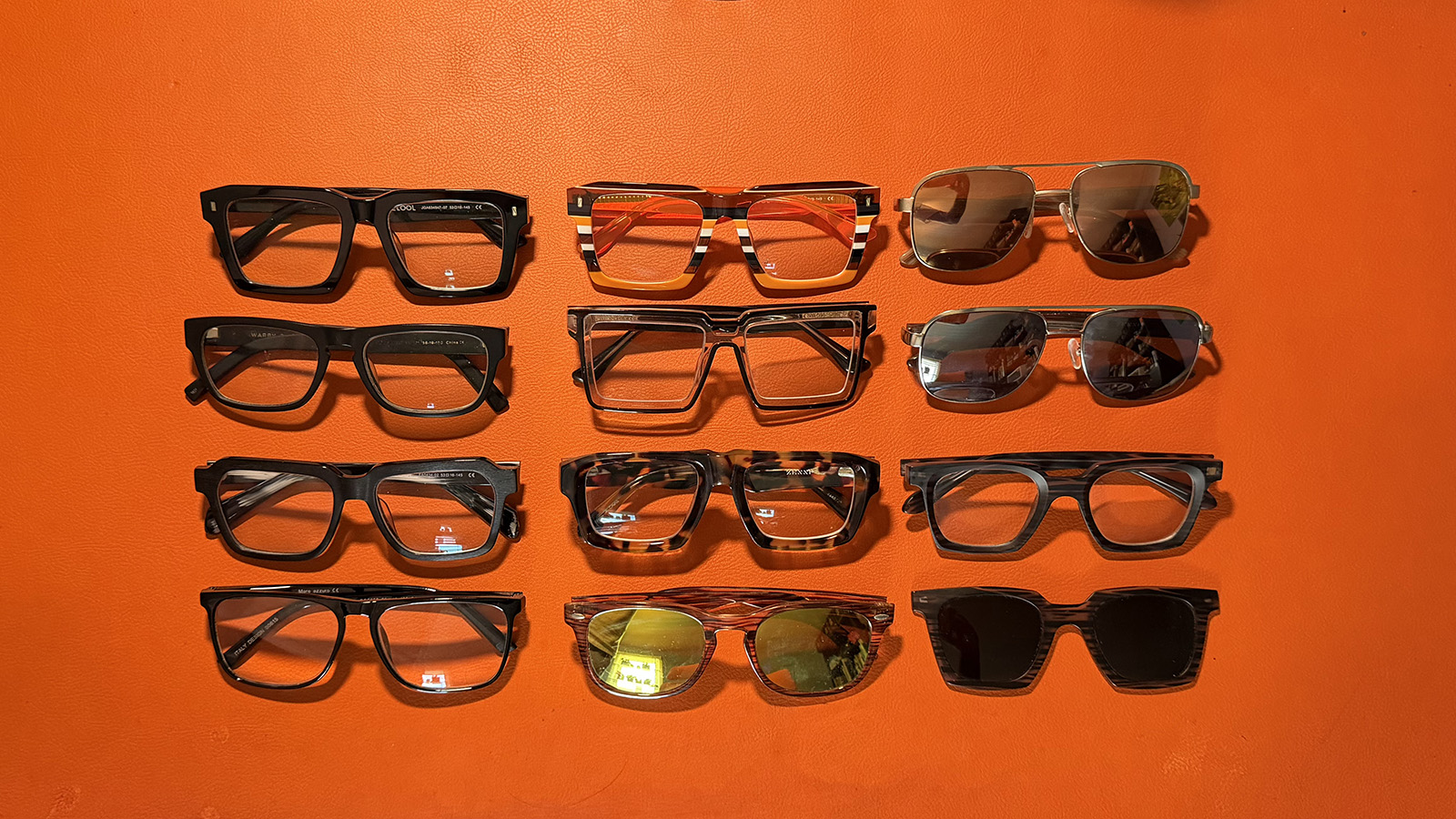
I have bought frames knowing from the beginning that they were ridiculous. Giant shapes. Thick acetate. Dramatic tortoiseshell patterns. Bright orange. Deep brown paired with yellow. Translucent colors that would have seemed far too risky if I were making a several-hundred-dollar commitment.
Some of those experiments became favorites.
The best thing inexpensive glasses offer is not simply the opportunity to own more of them. It is the freedom to make mistakes.
One particularly bold pair from Zenni had such an aggressive tortoiseshell pattern that I was not entirely sure about them when I ordered them. They were big, colorful, bold, and absolutely unapologetic. Creatives and designers I worked with complimented them immediately. Even someone close to me who was initially skeptical eventually admitted that they had grown on her.
I still own them and wear them occasionally, even though they are an older single-vision prescription. Zenni has them listed as retired, but every once in a while I check to see whether the frame has returned. I would buy them again immediately if I could have them in my current prescription.
Not every experiment worked quite that well.
Another pair looked fantastic online: oversized orange tortoiseshell with a translucent green section across the top. In person, that green landed directly above my eyes and made it look as though I had acquired enormous, perfectly straight, extremely angry green eyebrows.
I burst out laughing when I put them on. I wore them a few times. Then they quietly retired.
That was a roughly fifty-dollar mistake, and I can live with that.
There is a huge psychological difference between taking a fashion risk at that price and gambling several hundred dollars on something you need to wear every day for the next year. Low-cost eyewear lowers the consequences enough that experimentation becomes fun instead of financially irresponsible.
You Still Need a System
Owning several pairs does not mean randomly grabbing whichever one is closest to the door. For me, choosing glasses is now part of getting dressed.
The clothes establish the palette. Then come the shoes, belt, watch, glasses, and scent. Warm tones tend to pull the whole thing in one direction. Cooler colors and black accessories pull it somewhere else.
Sometimes the glasses are restrained because the shirt is already doing enough work. A loudly patterned shirt does not necessarily need another loud pattern sitting six inches above it.
You do not need to put a hat on a hat.
Other days, restraint has left the building entirely, and that can work too, as long as it looks intentional.
The point is not that every pair needs to shout. The point is that glasses can participate in the outfit rather than merely coexist with it out of necessity.
The point is not that every pair needs to shout. The point is that glasses can participate in the outfit rather than merely coexist with it out of necessity.
And because they sit directly on your face, they often become the thing people notice first. I get more compliments on unusual frames than almost anything else I wear, with the possible exception of some particularly enthusiastic floral shirts.
People notice something they are not accustomed to seeing, and they often say something about it.
That is part of the fun.
The Online Eyewear Rabbit Hole Gets Deeper
Warby Parker opened the door for me, but my relationship with online eyewear changed again when I moved into progressive lenses.
My prescription became more complicated, and the price advantage I had enjoyed began narrowing. That sent me looking elsewhere, which is how Zenni, Zeelool, and Fytoo entered the rotation. All three occupy slightly different corners of the same low-cost online world.
Zenni feels like the broadest general-purpose option. The selection is enormous, the customization options are extensive, and it has become my default for prescription sunglasses. My gold aviators with rose-gold mirrored lenses came from Zenni, as did the silver version I eventually ordered later.
Pricing has become less predictable for me over time, particularly once lens upgrades are involved, so I tend to wait for sales, coupons, or rewards when the total starts creeping upward.
Zeelool is where I go when I want the weird stuff. Their selection leans much harder into oversized shapes, unusual color combinations, chunky acetates, and frames that look as though someone in the design department was specifically instructed to keep their foot pressed firmly on the gas pedal.
That is exactly what I want from them.
Most of my everyday prescription frames now come from Zeelool, and my experience with the finished glasses has been excellent. I have ordered progressives with the lens upgrades I need, and they have been clear, comfortable, and durable. Shipping has also been faster than I expected, particularly considering where the glasses are coming from.
Then there is Fytoo, which entered my life because of one very specific feature: magnetic sunglass clips. I am exceptionally sensitive to bright light from a previous injury, so sunglasses are not an occasional accessory for me. If I am outside, I am usually wearing them regardless of whether the sky is blazing blue or threatening a thunderstorm.
Prescription frames with magnetic sunglass fronts solve a very particular problem beautifully. The clip snaps onto the front of the frame, disappears into a bag or pocket when I walk indoors, and eliminates the need to carry a second pair of glasses.
The frames I own from Fytoo are relatively restrained by my standards, but the functionality earned them a place. If I’m running out for quick errands, I almost always grab the Fytoo pair with the magnetic sunglass clip.
That is ultimately how I think about these retailers now. I do not need one winner.
Zeelool gets most of my regular prescription business. Zenni gets my sunglasses. Fytoo gets the call when I want magnetic clips.
Warby Parker Still Deserves Credit
It is easy to forget how disruptive Warby Parker felt when it first appeared.
Traditional optical shopping had become an elaborate production shaped by enormous vertically integrated companies like EssilorLuxottica and VSP Vision, whose businesses span combinations of vision benefits, eyewear brands, lenses, labs, retail, and online sales.
Warby Parker stripped much of that friction away.
The price was understandable. The frame selection felt curated rather than overwhelming. The home try-on box made choosing glasses enjoyable rather than stressful.
I have not bought from them in years, and my own needs eventually pushed me toward less expensive competitors, but I still have enormous affection for what they changed.
They taught me that buying glasses did not need to feel like I was trapped in a system I have no control over.
The companies that followed simply pushed that idea further.
Measurements Matter More Than Brand Names
There is one catch to buying glasses this way: you need to know what works on your face.
When you order online, nobody is standing beside you adjusting the bridge or telling you that a frame is too narrow. The measurements listed on the product page have to do that work instead.
Fortunately, glasses make this relatively easy.
Look at a pair you already own that fits well, and you will usually find a series of measurements printed inside the temple arm. Those numbers tell you the approximate lens width, bridge width, and temple length. Learn them.
Once I knew what constituted a genuinely large frame on my face, online shopping became dramatically easier. I could filter enormous catalogs down to the sizes that had a realistic chance of working and ignore everything else.
That knowledge also made virtual try-on tools less important to me. I care more about the actual dimensions than whether a digital overlay looks vaguely convincing on a photograph of my face.
For anyone trying online glasses for the first time, those measurements are probably the most useful thing to understand before browsing.
Your prescription matters, obviously. Pupillary distance matters. Lens type matters.
But frame dimensions are what keep those beautiful bargain glasses from arriving and looking as though you accidentally ordered them from the children’s section.
Progressives Changed the Equation Again
Moving to progressive lenses could easily have sent me back to traditional optical stores. Instead, I discovered that the online retailers could handle them remarkably well for my needs.
That was the real game changer.
The finished glasses became more expensive than my old single-vision bargain pairs, of course, particularly once I added the higher-index lenses and coatings that work best for my prescription. But I can still get a complex pair of progressives in an interesting frame for roughly what I once paid for basic single-vision glasses from Warby Parker.
More importantly, they work.
I can read. I can work at a computer. I can look across a room. I do not spend the day searching for some microscopic optical sweet spot while wondering whether I accidentally ordered the wrong thing.
That does not mean everybody with a complicated prescription should blindly order the cheapest progressives they can find online. Multifocal lenses require more precision than simple single-vision glasses, and some prescriptions or fit issues may benefit from being measured and adjusted in person by an optician.
But my experience has been consistently excellent.
The assumption that inexpensive automatically means unusable has simply never matched reality for me.
Spend Money Where It Actually Matters
Cheap frames do not mean every option during checkout should automatically be declined. Some upgrades matter.
For my own glasses, anti-reflective treatment is essential. Strong prescriptions may benefit enormously from thinner high-index lenses. Scratch resistance matters if you want a pair to survive normal life without looking as though you cleaned them with sandpaper.
Prescription sunglasses are another place where I will happily pay for the option I actually want. Polarized lenses make a noticeable difference for me, particularly around water, wet roads, and glare.
Other upgrades feel far less necessary.
I have never been persuaded by blue-light lens treatments, for example. Plenty of people like them, but they are not something I spend extra money on.
The useful mindset is not buy everything or buy nothing.
It is the same principle I apply to most gear: understand what each feature does, decide whether it solves a problem you actually have, and spend accordingly.
Cheap eyewear is still a bad deal if you save forty dollars by making the glasses miserable to use.
There Is Such a Thing as Too Many Glasses
I know this because I found it. During the pandemic, when I first discovered how inexpensive some of these retailers could be, I went a little feral.
At one point I bought around six pairs on the same prescription. This was fun until I opened the nightstand drawer where I kept them.
Some came with proper hard cases. Others came with soft fabric sleeves that slid around, opened up, and allowed frames to bump into one another every time I went digging through the drawer.
Suddenly my inexpensive little wardrobe had become clutter. Moving to progressives gave me a convenient excuse to reset and donate the frames that had outdated prescriptions.
These days, I think a smaller rotation makes more sense. I generally keep two primary pairs in my current prescription and another couple from the previous one, assuming the prescription has not changed enough to make them uncomfortable. That gives me plenty of options without requiring a dedicated eyewear armoire.
The lesson here is that affordability creates freedom, but freedom does not require accumulation.
The lesson here is that affordability creates freedom, but freedom does not require accumulation.
Stop Trying to Make Your Glasses Disappear
For generations, glasses were treated as something corrective that should ideally become invisible. Thin frames. Neutral colors. Rimless lenses. Anything that minimized the fact that you were wearing them.
The cultural baggage around glasses has always been strange. They were associated with aging, bookishness, weakness, or the dreaded childhood accusation of looking like a nerd.
But if glasses are going to sit in the middle of my face for most of my waking life, I have no interest in pretending they are not there. I would rather make them part of the presentation.
That does not mean everyone needs fluorescent orange frames or enormous blue tortoiseshell rectangles. Expressive does not have to mean maximalist. It simply means recognizing that eyewear can make a choice.
If someone told me they had worn essentially the same conservative frame for twenty years because it “goes with everything,” I would ask them to imagine doing that with any other part of their wardrobe.
You would not buy one shirt and wear it every day for two decades because the color was neutral. You would not insist that one pair of shoes had to work at the beach, in an office, at dinner, and with a suit.
Why should the thing sitting directly on your face be held to a different standard?
The Freedom to Choose
Affordable glasses have changed my relationship with eyewear more than any particular frame ever could.
The savings are nice. Escaping the old conglomerate-controlled optical-shopping ritual was even better. But the biggest change was psychological.
Glasses stopped being a once-a-year decision. They became a choice. They became fun.
The best thing affordable glasses gave me was not saving money. It was the freedom to decide who I want to be when I look in the mirror that morning.
Some mornings I want black. Some mornings I want warm tortoiseshell. Sometimes the clothes are doing enough work, and the glasses stay restrained. Sometimes I want the frames to be the first thing anyone notices.
That freedom turns something I have needed since adolescence into something I genuinely enjoy choosing.
The best thing affordable glasses gave me was not saving money. It was the freedom to decide who I want to be when I look in the mirror that morning.
A medical necessity became part of the wardrobe.
And once that happened, there was no reason for it to ever be boring.
Latest From Style & Substance
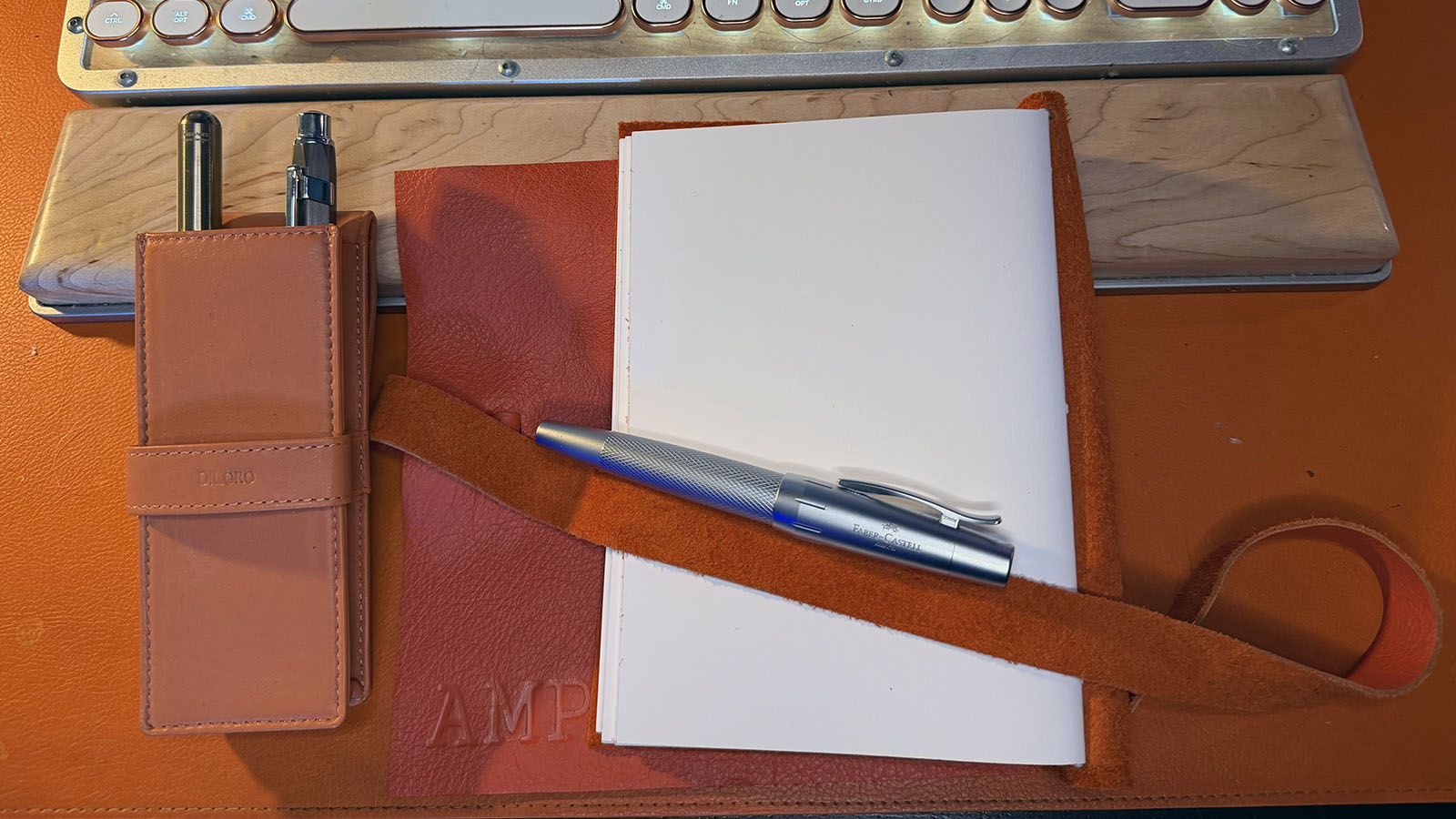
Faber-Castell e-motion Fountain Pen (Pure Silver)
A heavyweight fountain pen with a bold medium nib, the Faber-Castell e-motion proves that the right pen and ink make writing a pleasure.
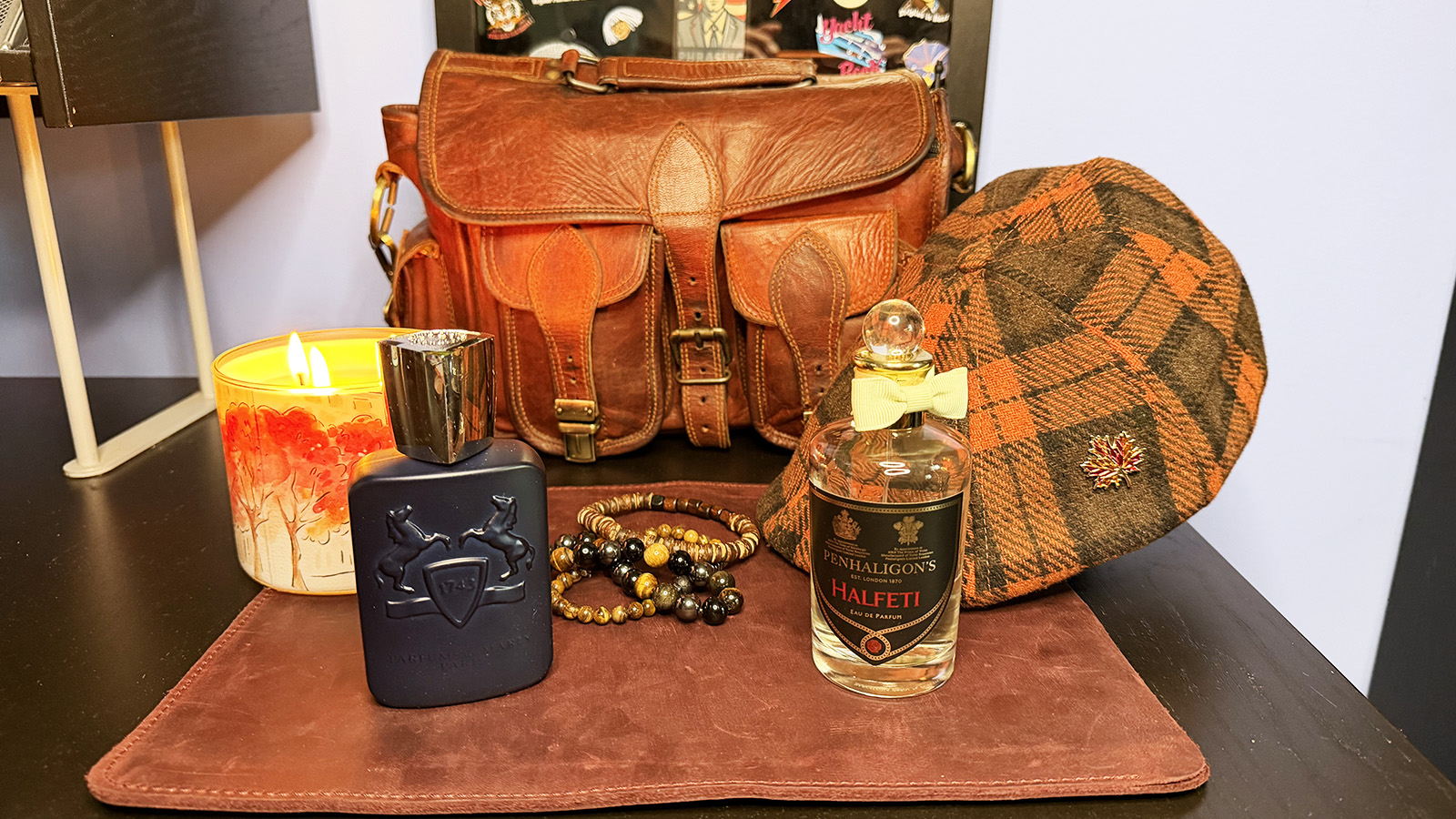
Two Fall Scents, Done Right
Two fall fragrances, two very different moods. Layton brings warmth and ease; Halfeti brings depth, structure, and cold-weather drama.

Three Multi-Tools, Three Different Jobs
Three multi-tools, three different jobs: a desk-side workhorse, a tiny travel companion, and an old favorite still earning trust today.